Luxgrove ad: Jessie Watkins
Luxgrove
1 active ads🇬🇧
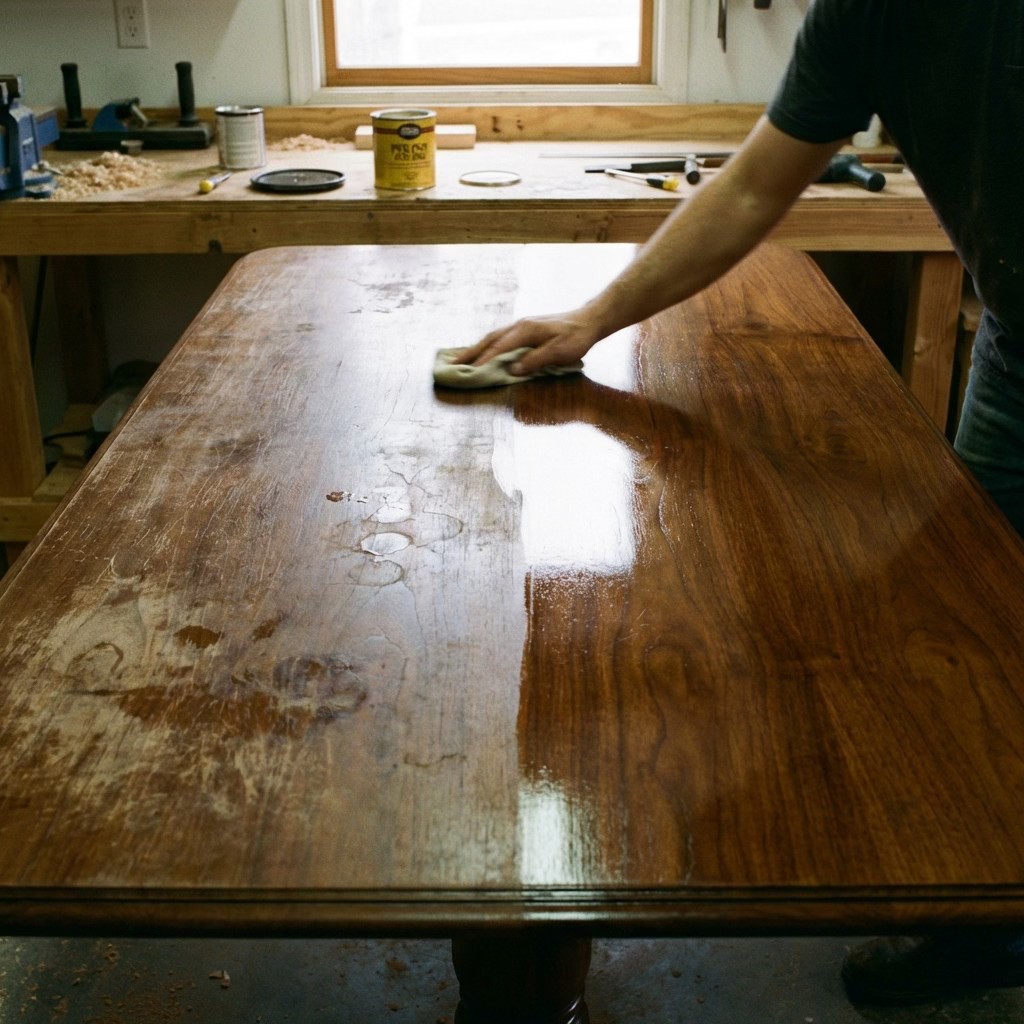
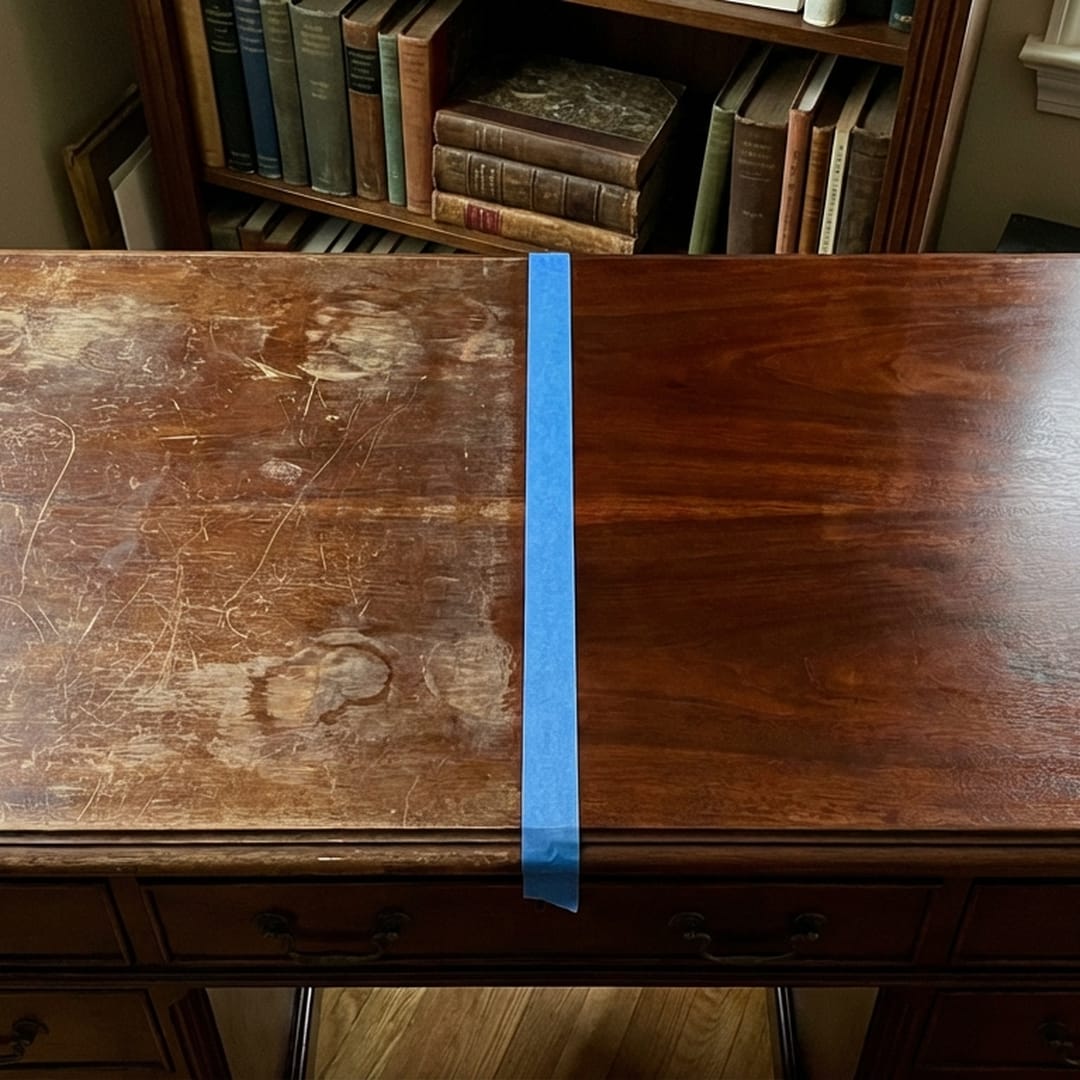
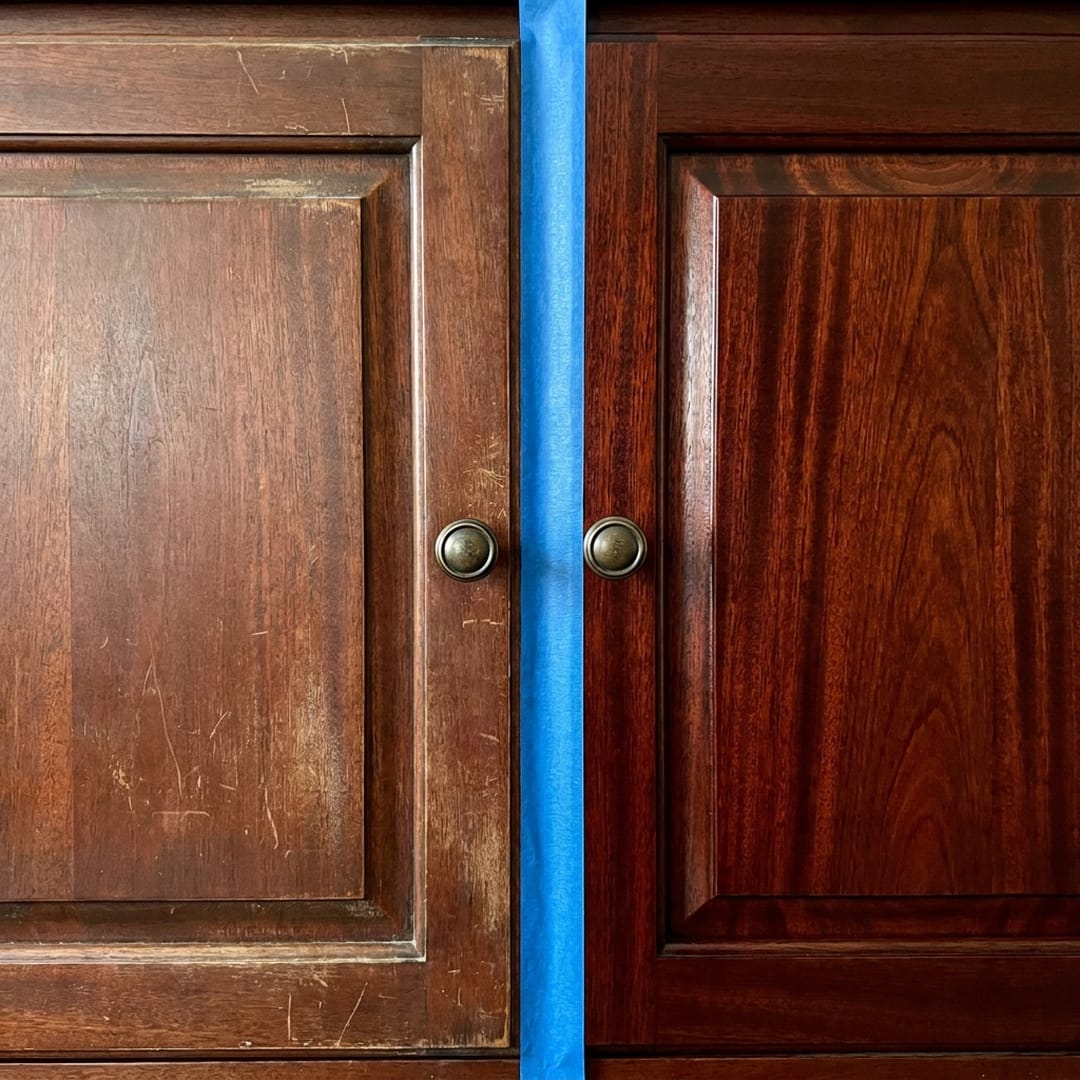
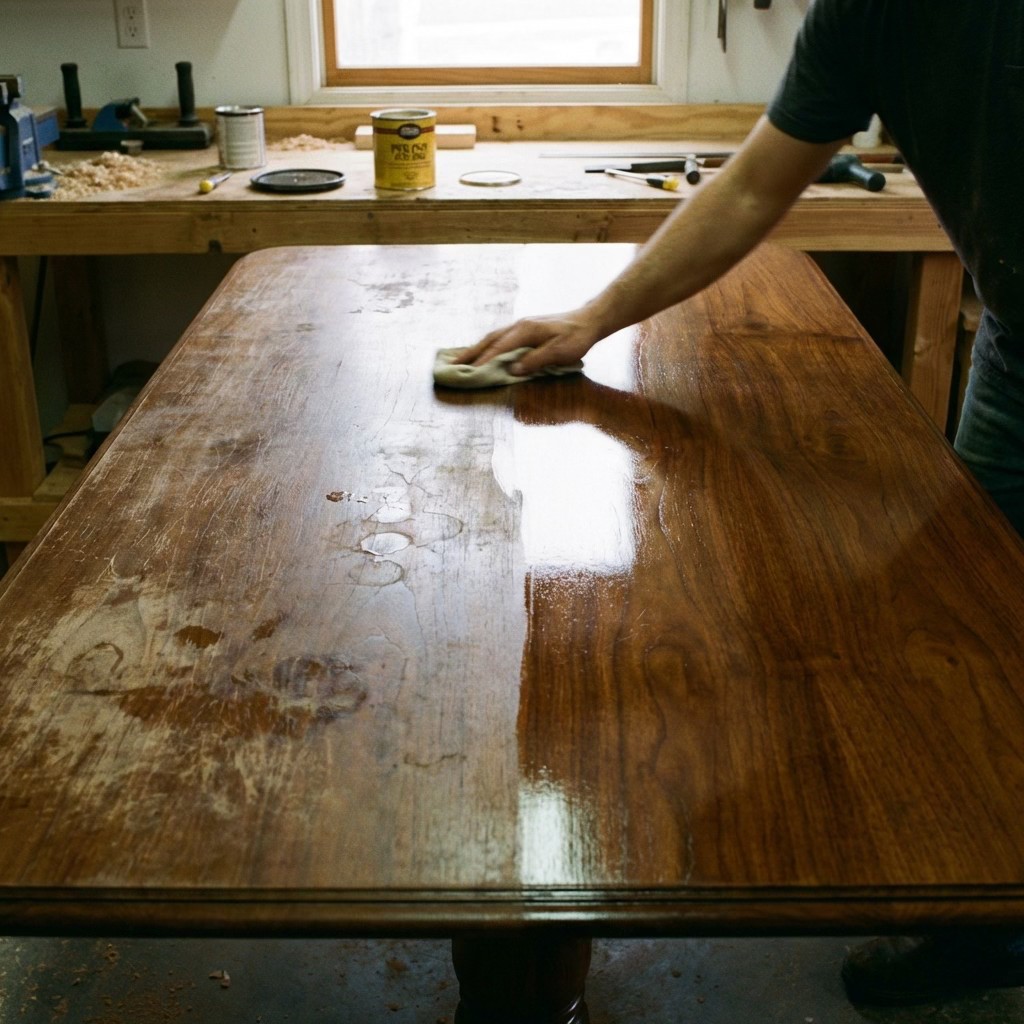
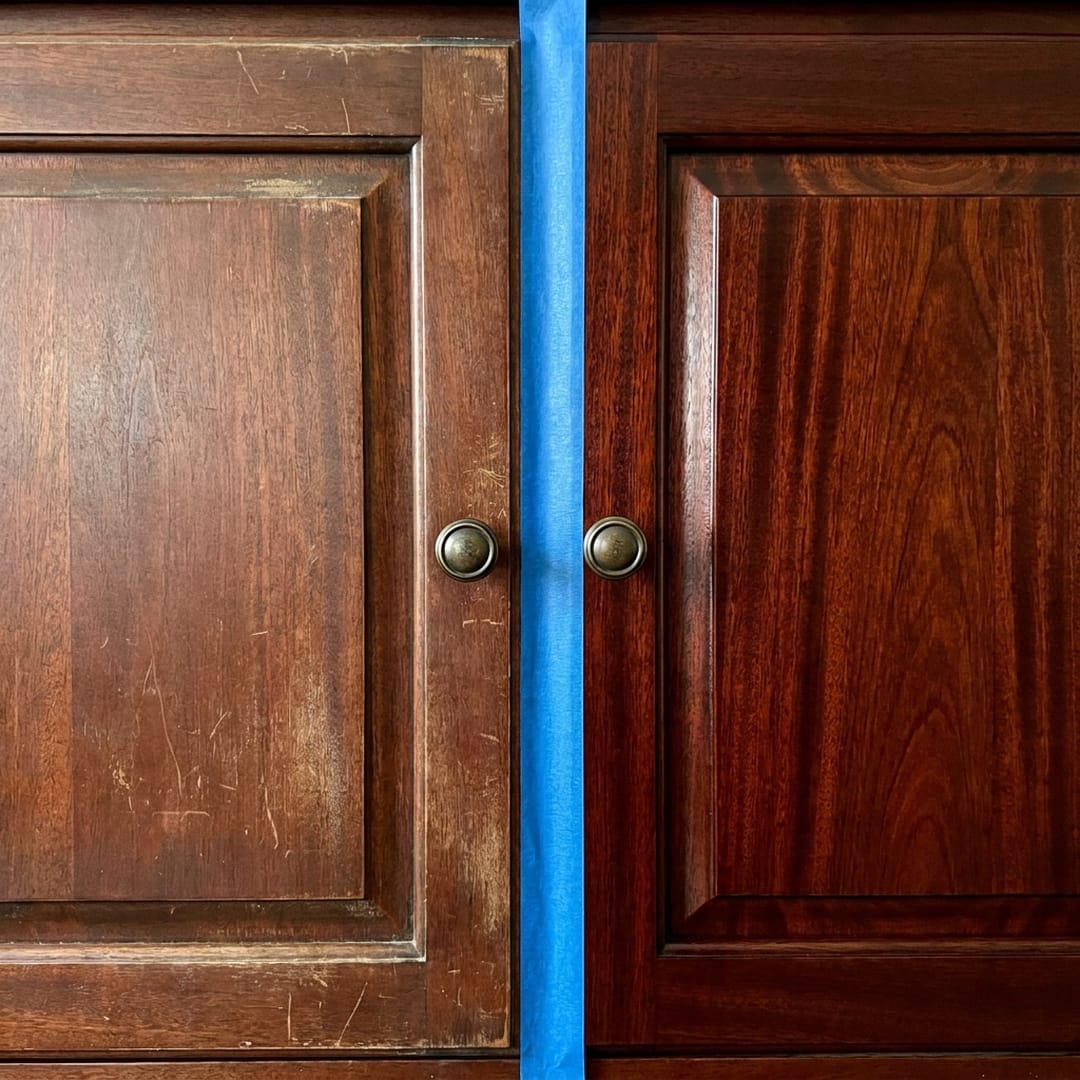
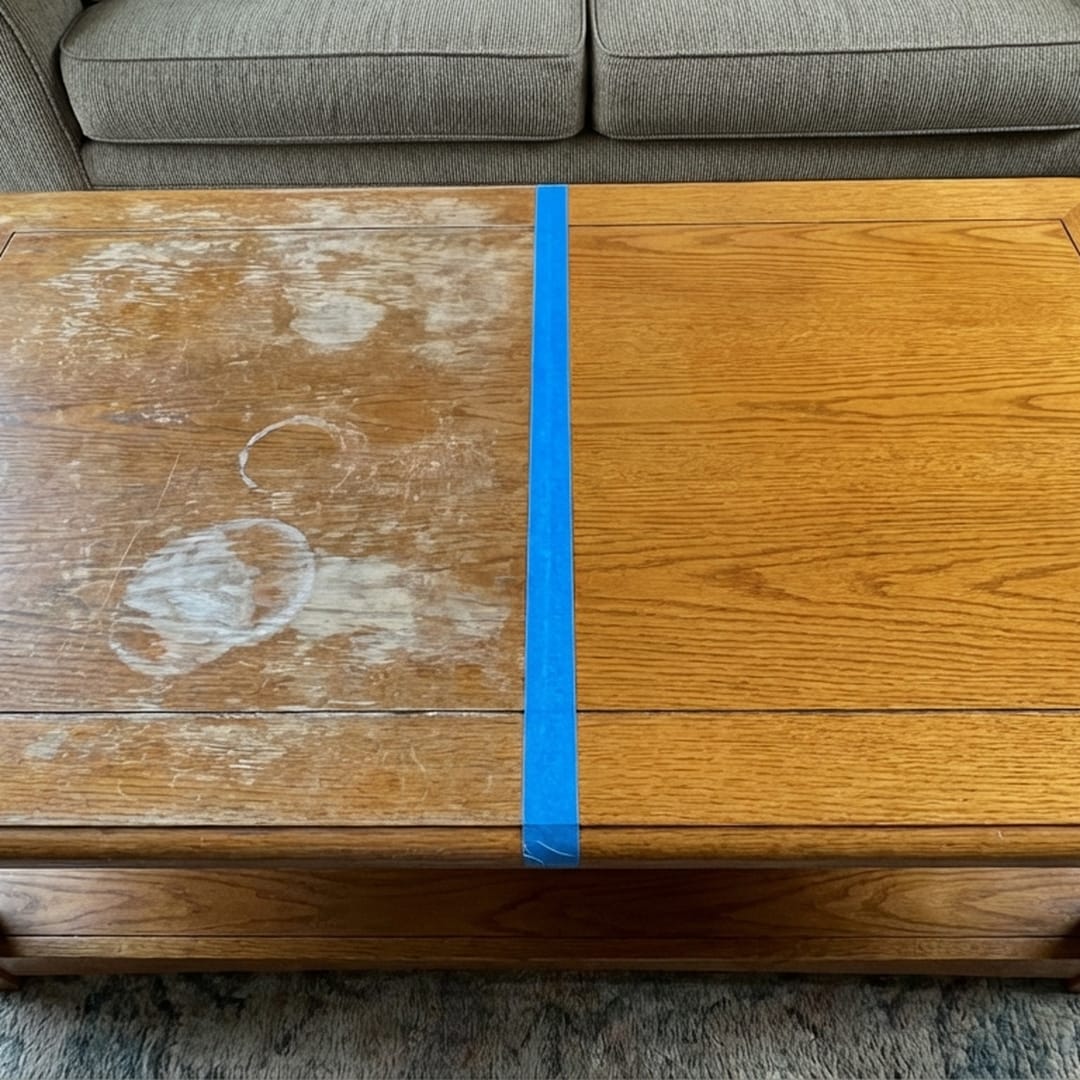
Furniture Restorer With 31 Years Experience: "Every Water Ring, Every Scratch, Every Dull Patch On Your Wood Table Is a Symptom. The Real Problem Is Killing Your Furniture From the Inside And You've Never Heard Of It." A woman came into my shop on Tuesday morning with a dining table her grandmother had given her in 1987. Three days earlier her sister-in-law had set a wine glass on it without a coaster and left a white ring the size of a silver dollar. The table had a water ring. That was the whole problem. That is the problem she thought she had. She had spent those three days trying to fix it. Mayonnaise. Toothpaste. A hot iron on a damp towel. A jar of Old English from the hardware store. By the time she brought the table to me in the back of her station wagon, wrapped in a moving blanket, the ring was three times the size it had started at, and the surface around it was a greasy, streaky, extra-shiny mess. She was crying before she got it out of the car. I spent twenty minutes with that table and then I told her what I am about to tell you. The ring was not the problem. The ring had never been the problem. The ring was the symptom of a problem that had been happening inside her table for about twenty years, and nobody had ever told her about it. ——— The next morning a man came in with a coffee table. No water ring. No scratches. Nothing he could point to. He had owned the table for fifteen years and one morning that week he had looked at it and realized he could not remember when it had last looked good. It was just tired. Grey. The grain had stopped catching the light. He had tried Howard's Feed-N-Wax on it three different times over the years, and each time the table had looked better for about a week, and then it had gone grey again. This time he had given up. He wanted to know how much I'd charge him to refinish it. I told him the same thing I had told the woman with the water ring. The tiredness was not the problem. And then I told him what the problem actually was. ——— I've been restoring wood furniture for thirty-one years. My father did it for forty years before me, in the same shop, with most of the same tools. My grandfather did it for fifty before him. Three generations. Same shop. Same trade. And in all that time, the pieces that come into my shop in the worst condition are not the ones that have been sitting in a barn. They're the ones that have been loved. Used daily. Cared for. Polished every Sunday. That is the worst part of my job. I am sixty-one years old and I have to tell a woman that twenty years of Sunday polishing was the thing that killed her piece. Without knowing it, she was draining the life out of something she loved. She was doing what her mother taught her. She was doing what the can said to do. I am not going to make you have that conversation with me. I am going to tell you now, in writing, the thing I wish I could tell every woman before she walks into my shop for the first time. Once you understand what's actually happening inside your furniture, you are going to walk through your own living room when you finish reading this and you are going to see it on three different pieces you own. I am sure of it. Here's what's actually happening. ——— The finish on your wood furniture isn't really one thing. It's two things working together. A hard protective layer made of resin. And an oil mixed into that resin that keeps it flexible and alive. As long as the oil is in there, the finish bends when something touches it. It takes the hit. A wine glass sets down and the finish flexes under the weight instead of cracking. A plate slides across and the resin gives a little instead of scratching. The minute the oil is gone, the resin goes hard and dead. And dead resin cracks at the first thing that touches it. Oil leaves the finish for three reasons. The first is time. Oil evaporates. It has been evaporating out of the finish on your dining table since the day that table left the factory. A little bit every year. Thirty years and it's gone, just from sitting there. The second is wear. Every plate sliding across the table, every kid doing homework on it, every hot dish, every wipe-down — it all accelerates the evaporation. Heat pulls the oil out faster. Friction brings it to the surface where it dries off. The third is the one nobody tells you, and it's the reason the pieces that come into my shop in the worst condition are the ones that have been polished every Sunday for twenty years. Modern cleaning products strip the oil out. Every spray polish. Every all-purpose wipe. Every "wood-safe" cleaner with a chemical solvent in it. They pull the oil out of the resin a little at a time, every single use, in exchange for a week of fake shine. Pledge is the worst offender. If you have been Pledging your dining table every Sunday for ten years, I want you to picture the last time you did it. You were probably in the kitchen. You had coffee. You had the radio on or the TV in the other room. You sprayed the Pledge across the surface in that specific pattern you've been using for years, and you wiped it with the microfiber cloth in the direction of the grain because somewhere along the way someone told you to do that. You looked at the table when you were done and you felt satisfied. You had taken care of something you loved. Every Sunday morning of that ten years, you were draining the life out of the piece you were trying to preserve. And the reason the damage started showing up last spring, or last month, or last week, is that the finish had finally run out of oil to give. You did not know. Nobody told you. I am telling you now. And here is the sentence I want you to remember when you finish reading this, because it is the whole thing in one line. You cannot fix the symptom without fixing the condition. Once the oil is gone, the resin on top of your table goes brittle. And then it starts cracking at a level too small to see with your eyes. A web of microscopic cracks spreading across the entire surface of every piece of furniture you own, invisible, getting worse every month, waiting. Everything you thought was the damage — the water ring, the scratch, the dull grey tiredness, the heat marks — is the symptom of the cracking you cannot see. I can show you this in my shop if you ever come in. I have a piece of oak board on my workbench that I cut off a dining table that came in here three years ago. The top surface of that board — the side that was the tabletop — you can scratch with your fingernail. The bottom surface — the side that was facing down, that never saw sunlight or wear or spray polish — is still hard enough that I can tap a small nail into it without splitting anything. Same piece of wood. Same finish when it was new in 1978. Thirty years apart in how they ended up. The oil is gone out of the top and still in the bottom. When I explain this theory to customers who don't believe me, I hand them the board and I let them try to scratch the top with their own fingernail. The wine glass didn't cause the ring on the Tuesday woman's table. She kept telling me "my sister-in-law did this." Her sister-in-law didn't do anything. A healthy finish would have beaded the wine right off. The moisture walked down through cracks that were already there before the glass touched the table. Her sister-in-law just happened to be the person standing there when the table finally gave way. The Christmas tree stand didn't carve the scratch into your wood. The brittle finish on that spot cracked open at the first thing that dragged across it. The dull, grey, tired look that made the man on Wednesday think his coffee table was "just getting old"? That's not age. That's not dirt. That's the entire finish cracked in so many tiny places across every inch of the surface that light isn't reflecting off it properly anymore. His coffee table looked tired because the resin on top of it was a cracked eggshell pretending to be a finish. And the Howard's Feed-N-Wax he had been putting on it every couple of years had been making it look alive for a week at a time and then letting it die again, over and over. ——— Now you understand the problem. Here is how you are probably making it worse. There are five ways. I see all five of them every week. There are only five of them on this list, and I want you to keep count as you read. Nobody who has owned wood furniture for more than ten years has managed to avoid more than two. So as you go down this list, I am going to be counting with you. I am going to be right three times. Probably four. I have been making that prediction to customers who walk into this shop for twenty years, and I am telling you now so you will pay attention as you read. ——— Mistake #1: Using Pledge. (And every other spray polish.) Pledge isn't a polish. It's a solvent that strips oil out of your finish in exchange for a week of artificial shine. Every Sunday you've spent spraying it on your dining table, you have been draining the finish faster than it would have drained on its own. Worse than that, the silicone in Pledge soaks into whatever finish is left and makes proper restoration almost impossible afterward. Last spring a man brought in a writing desk that had been in his family since 1890. His grandfather wrote sermons on it. His mother kept her recipe cards in the top drawer of it. He had been Pledging it once a week for fifteen years because his wife had told him in 2009 that this was the right way to take care of wood furniture. I spent two hours trying to strip the silicone out of that desk so I could actually work on it. I gave up. I told him to keep using it as a desk, to put a runner across the top, and to stop thinking of it as an antique because there was no antique left to save. He cried in my shop. I am not making this up. I am sixty-one years old and I do not enjoy telling that story, and I am telling it to you now because I do not want to tell it to you in person next year about your grandmother's hutch. If your furniture has been Pledged for years, I don't think you can keep using it now that you know. ——— Mistake #2: Putting mayonnaise, toothpaste, or a hot iron on a water ring. This is the woman from the start of this ad. She is not unusual. I see a version of her about once a week. Now that you understand what a water ring actually is, you can see why none of these can possibly work. A water ring is moisture that has walked down through microscopic cracks in a dying finish. The moisture is sitting inside the cracks, scattering light and making the spot look white. Mayonnaise doesn't lift moisture out of cracks. It adds more moisture and oil, which seep into the same cracks and create a halo around the original ring. Now you have two stains instead of one. Toothpaste is a mild abrasive. You're sanding the top of a brittle finish with a chalky paste. Sometimes the abrasion scrapes off the whitened layer. Most of the time you wear a permanent dull spot into the finish where the original shine used to be. The iron is the worst of the three. The heat evaporates more oil out of whatever finish you had left, which makes the cracks worse, which makes the ring come back bigger than it was before. People do this because they saw it work on TikTok. I once had a woman in this shop with a hundred-year-old dining table that had the perfect outline of a Black & Decker steam iron baked into it. She had been "very careful." She had followed the instructions on the phone exactly. She had ruined a hundred-year-old table in thirty seconds. None of these are fixes. ——— Mistake #3: Using a furniture marker on a scratch. Furniture markers are sold in every hardware store. They cost five dollars. They come in generic colors like "Light Oak" and "Dark Walnut." They don't fix scratches. They color them in. And once you understand what a scratch actually is — a crack in a brittle finish, not a groove carved into healthy wood — you can see why coloring it in is the wrong thing to do. You are not repairing the crack. You are drawing ink into it. The resin around the crack is still dead. The next time something touches that spot, the crack will spread and the ink will come with it. The result is what one of my customers called "a brown crayon line that I can't unsee." You can't unsee it. I don't think you will reach for one of those markers again now that you know. ——— Mistake #4: Thinking a polish will fix damage. This is the mistake the Wednesday man made for fifteen years with his coffee table, and it is the mistake most people with chronic neglect rather than acute damage make. Walk into the wood-care aisle at any hardware store and almost every product on the shelf is a polish. Old English. Howard's. Murphy's. Pledge. Liquid Gold. Feed-N-Wax. They all promise to "restore" your furniture. They don't. They polish it. Polishing means putting shine on top of a dying finish. The resin underneath is still brittle. The cracks are still there. The oil is still gone. You've just made the dead surface shinier, which means now there's a spotlight on every flaw the cracking has already produced. This is why so many of my customers tell me their tables looked worse after they polished them. They are not imagining it. The polish raised the contrast on damage that was already there. And here is the worst part of the polish mistake, the part I want the Wednesday man to read if he ever reads this letter. When a polish works for a week, you think it is doing something. You put it on again next year. It works for another week. You put it on again the year after that. You are in a cycle where the polish keeps you from noticing that the underlying finish is dying, because every time you polish it, the piece looks alive again for six or seven days. The acute sufferers at least know something is wrong. The chronic neglectors polish their tables into dust and never realize it is happening until one morning the polish stops working at all and they are looking at a piece of furniture that has been dead for years. You cannot polish a corpse back to life. That is literally what every shine-based product on the hardware store shelf is trying to do. Which brings me to the biggest mistake of all. ——— Mistake #5: Trying to repair the damage instead of resurrecting the finish. Everything in the wood-care aisle is built around the wrong goal. They're all trying to fix the symptom. The water ring, the scratch, the dull spot. None of them are trying to fix the condition underneath — the brittle, cracked, oil-starved resin that has been dying on top of your furniture for years. You cannot fix the symptom without fixing the condition. That is the sentence I told you to remember. You are remembering it now, because I told you earlier it was coming. The only thing that actually works is the thing that addresses the condition. You have to feed oil back into the brittle resin so it can become flexible again. And then you have to seal the finish with wax. Oil resurrects. Wax protects. ——— Count them up. If you have done three of these, I was right. If you have done four, I was also right. If you have done all five, you and I need to have a longer conversation than this one. I told you in advance so you would pay attention while you were reading. You were paying attention. That is why you are at the bottom of this page still reading. And you already did the other thing I told you you would do. You walked through your own living room while you were reading. You looked at the coffee table. You looked at the dining table. You looked at the bookshelf your mother-in-law gave you three Christmases ago and you realized the grey on the top of it is not dust. You were looking while you were reading. That is why you are still here. ——— For the last fifteen years I've used the same product in my shop, and I tell every customer who walks in here the same thing about it. It is a small tin. It is called Luxgrove. It is made from cold-pressed hemp seed oil, beeswax, jojoba, and shea butter. No silicone. No petroleum. No solvents that will strip the oil back out of the finish next Sunday. The oil sinks into the cracked, brittle resin and rehydrates it. Brings the finish back to a flexible, living state. The damage you have been seeing — the ring, the scratch, the scuff, the dullness — disappears because the finish underneath is healing. The damage was never the thing. It was always the symptom. Apply a pea-sized dab to a soft cloth. Rub it into the wood in slow circles. Let it sit for two minutes. Buff it off. That is the entire process. It is the same thing I did for the woman on Tuesday with her grandmother's dining table. She paid me four hundred dollars for the restoration. I used less than a pea of the salve that is in this tin. It is also the thing I would have used on the Wednesday man's coffee table — the tired, grey, no-specific-damage coffee table he thought needed refinishing. He would have paid me six hundred dollars for a full refinish. He did not need a refinish. He needed a pea-sized dab of the same salve on a soft cloth, and fifteen minutes of his time, and someone to tell him fifteen years ago that Howard's Feed-N-Wax was not going to save his table. That person was supposed to be me. I am telling him now, in writing. ——— If you have a water ring, a scratch, a heat mark, or a piece that just looks tired and grey — and you have made one or two or all five of the mistakes on this list — this is what I would tell you to try before you give up and call someone like me. It is the closest thing to a do-over your furniture is ever going to get. And it is the only thing that treats the actual problem instead of polishing the corpse. If you ever do bring a piece into my shop, please. For both of us. Don't put mayonnaise on it first. 👇 Tap below to see how it works. https://getluxgrove.com/pages/wood-1-rafid-scratch
Performance Signals
- Status
- Running at last crawl (Jun 1, 2026)
- Time Running
- 42 days
- Active Period
- Apr 18, 2026 → Jun 1, 2026
- Advertiser live ads
- 1
- First Seen
- Jun 1, 2026
Creative & Links
- Meta post ID
- 1242938574695960
- Meta page ID
- 893364293870968
- Format
- Image
- Placements
- Facebook, Instagram, Audience Network, Messenger, Threads
- Country
- 🇬🇧 United Kingdom
- Landing Page
- getluxgrove.com/pages/wood-1-rafid-scratch
- Original Ad
- Open in Meta Ad Library
More from Luxgrove
Luxgrove
getluxgrove.comLuxgrove
Shop Infos
- Created
- Sep 20, 2024 · 2 years
- Category
- Home & Garden › Living Room Furniture › Home Furnishings
- Live ads
- 1
Search every indexed Meta ad by niche, format, country and run time, save creatives to boards and track the brands behind them — free, no card.