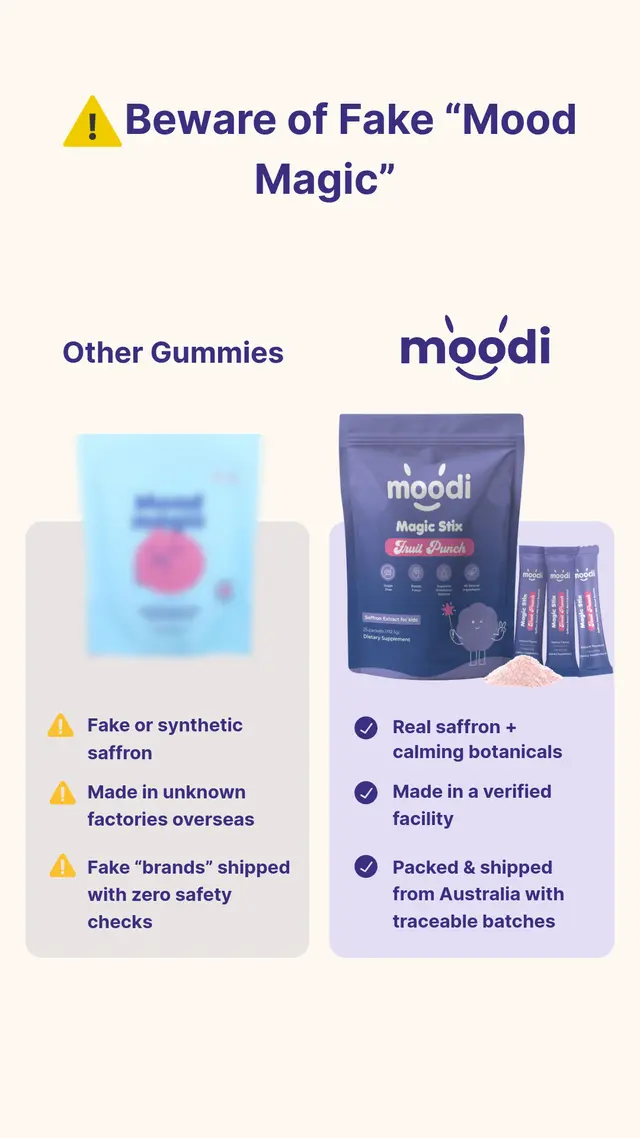
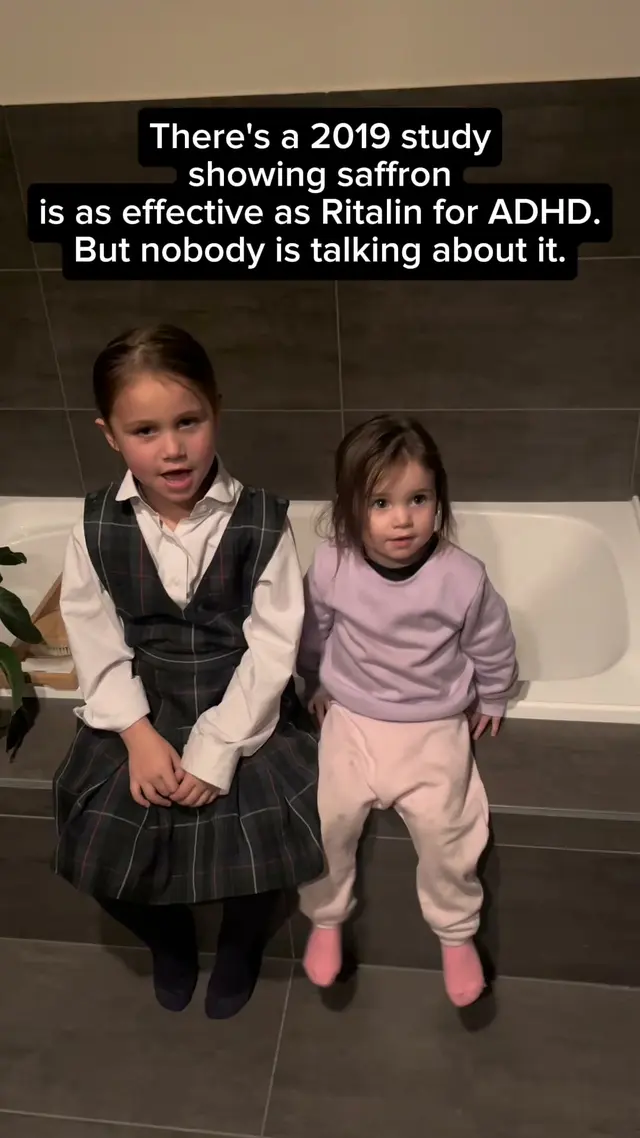
Vitamood ad: Laura Schmidt

Vitamood
2 copies🇨🇦
He walked to the end of the bench with his head down, and I felt every parent on that sideline look at me. Not at him. At me. The coach had just pulled my son off the field because he'd screamed at a teammate for missing a pass. Not a groan. Not a frustrated shout. A full explosion, the kind that stops a game and makes grown men on the sidelines go quiet. I sat there in my folding chair, clutching a lukewarm coffee, watching him slump into the corner of the bench like he was trying to disappear into the metal. And I wanted to disappear right along with him. I'm Laura, and I'm the mother of a boy who has spent most of his childhood being called "too much." Too loud. Too intense. Too dramatic. Too rude. I've heard every version of it whispered behind cupped hands at birthday parties, at pickup, at the grocery store when he melted down over the wrong color popsicle. And now here, at the one place that was supposed to save us. Sports were supposed to be the answer. Everyone told me so. The pediatrician, my sister, the parenting books I stayed up reading at midnight. "Put him in soccer, it'll teach him discipline. It'll give him structure. It'll help him burn it off." I believed it. I clung to it. I signed him up for the spring league with tears of hope in my eyes. Instead, the field became one more stage where he humiliated himself in front of an audience. One more place where I sat frozen, watching my beautiful boy prove to everyone that their worst assumptions about him were right. And here's the part that gutted me. That morning, on the drive to the game, he had been so excited he was practically vibrating in his booster seat. He kept explaining a new play the coach had drawn up on a whiteboard. He was going to pass to Marcus, and Marcus was going to shoot, and they were going to be a team. He said the word "team" like it was sacred. An hour later he was sitting alone. The other parents exchanged those looks. You know the looks. The tight smiles. The eyes that slide past yours in the parking lot. One mom actually pulled her son closer when we walked by, like whatever my kid had was contagious. I want to tell you all the things we tried before that day. Because I need you to know I wasn't a mother who sat around and did nothing. We did extra drills in the backyard every evening after dinner, my husband kicking the ball back to him until the sun went down, trying to build enough confidence that pressure wouldn't crack him. We had The Talk before every single game. Calm voice. Deep breaths. "Remember, buddy, if you feel it coming, walk it off." We made a reward chart on the fridge with gold stars for every game he finished without an outburst. He got exactly two stars in eleven weeks. We even tried backing off completely. No competitive games, just casual kickarounds at the park with our neighbor's kid. He still melted down when he missed a shot on an empty net. Nothing worked. And I finally understood why, sitting in that folding chair watching him hide his face in his jersey. Every single thing we had tried was aimed at controlling the explosion after it had already started. We were teaching him to slam on the brakes of a car that had no brakes. His nervous system was already past the point of no return before his brain even had a chance to hear my calm little reminders. I drove home that afternoon with him silent in the back seat, and I felt something break open in me. I made him grilled cheese. I let him watch too much TV. I tucked him in and he whispered, "Mama, I don't want to be like this," and I lied and said everything was going to be okay because what else do you say? Then I sat at the kitchen table with my laptop and a glass of wine I didn't drink, and I started reading. Not parenting blogs. Not discipline tips. Actual research. About stress response. About the vagus nerve. About how some kids simply don't have the developed neural pathways to bring themselves down once their system flips into fight-or-flight. I read until 2 a.m. and I cried, because for the first time in years I understood something. He wasn't bad. He wasn't spoiled. He wasn't the product of soft parenting or too much screen time or whatever the mom at soccer whispered to her friend. His brain was working overtime just to get through a Tuesday. His nervous system was a car alarm going off at every gust of wind, and no amount of talking to him about the car alarm was going to fix the wiring. I put down the guilt that night. Not all of it. But enough to breathe. And I kept reading, because now I had a direction. If his system couldn't regulate itself in the moment, then the work had to happen before the moment. His brain and body needed the raw materials to build calm on the inside, so that the outside pressure didn't blow the whole thing up. That's how I found VitaMood Munchies. I'll be honest, I almost scrolled past. After everything we'd tried, I was allergic to hope. But I read the ingredients. I read how they were designed to support the body's natural regulation pathways, feeding the nervous system the specific nutrients it needs to actually calm itself down instead of just white-knuckling through. Magnesium, GABA, the kind of things I'd been reading about in those research papers at 2 a.m. And they were chewable. Which mattered, because my kid would rather lose a tooth than swallow a pill. I ordered them that night. Week one, I didn't tell anyone. Not my husband, not my mom, nobody. He had his one Munchie in the morning with breakfast and thought it was a treat. Nothing dramatic happened. But by Thursday, I noticed he didn't scream when his sister changed the TV channel. He just sighed. A regular, human sigh. I stared at him like he was a stranger. Week two, his teacher sent home a note. Not a bad one. A good one. She said he had raised his hand three times instead of blurting out, and had helped a classmate pick up dropped crayons. I read it twice. Then I read it out loud to the dog. Week three was the next soccer game. I sat down in my folding chair with my stomach in a knot the size of my fist. I had brought a book, pretending I could read it, but really I was just watching him. He missed a pass in the first ten minutes. I braced. He shook his head, jogged back, and kept playing. By the fourth week, something happened I will remember until the day I die. He was dribbling down the field with a clear path to the goal. A defender came out of nowhere and stripped the ball from him. In the old days, this was a nuclear trigger. He would have stopped playing entirely. He would have screamed at the kid, at the ref, at the grass. He didn't. He chased the boy down. He fought for the ball. He won it back. And then the other kid tripped on his own foot and went down hard, face in the dirt. My son stopped. He turned around. He reached out his hand and pulled the other boy up. Then he said something I couldn't hear, and the other boy nodded, and they both jogged back into the play. I sat in that folding chair and I sobbed. Silently, behind my sunglasses, so nobody would see. The same folding chair where a few weeks earlier I had watched him disappear into himself. The same sidelines where mothers had pulled their children away from mine. This time, when the game ended, one of them walked over and said, "Your son is such a sweet kid." And she meant it. He ran to me, red-cheeked and grinning, and threw his arms around my waist. He didn't say anything about the moment on the field. He didn't have to. I could feel it in the way he hugged me. He knew he had done something good. He knew he was becoming the boy he'd always wanted to be. He wasn't fixed. He isn't fixed. He's a kid, and kids are messy, and we still have hard days. But his nervous system finally has what it needs to meet the world without shattering. And that has changed everything. So many of you have messaged me asking what actually worked. I wasn't ready to share until I was sure. I'm sure now. Since so many of you have asked what actually worked for us, here is the link to the exact ones we use: 👇 https://tryvitamood.com/pages/natural-ways-to-calm-a-hyper-child

Performance Signals
- Status
- Still running
- Time Running
- 56 days
- Active Period
- Aug 18, 2026 → Today
- Copies live
- 2
- First Seen
- Sep 30, 2026
Creative & Links
- Meta post ID
- 1416666240343418
- Meta page ID
- 1178208532034559
- Format
- Image
- Placements
- Facebook, Instagram, Audience Network, Messenger
- Country
- 🇨🇦 Canada
- Your store
- Original Ad
- Open in Meta Ad Library
Vitamood
tryvitamood.comVitamood
Shop Infos
- Created
- Jul 24, 2026 · 3 months
- Category
- Food › Health › Food & Drink › Vitamins & Supplements › Nutrition
Search every indexed Meta ad by niche, format, country and run time, save creatives to boards and track the brands behind them — free, no card.