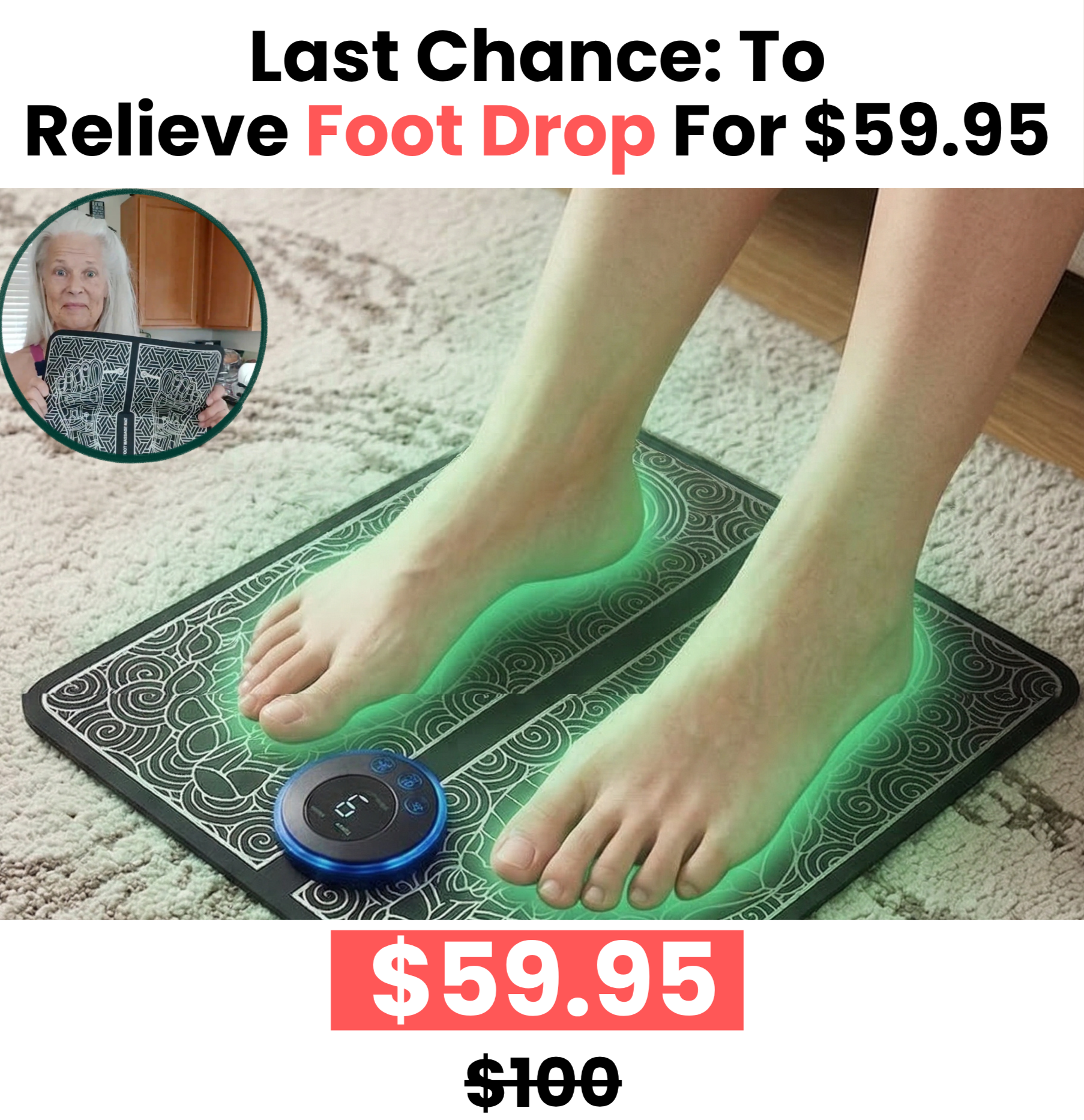
Restural ad: Post-Stroke Recovery Community
Restural
🇮🇹
I've been a neurological rehabilitation specialist for 22 years. And if your stroke recovery has stalled, your arm still won't cooperate, your foot still drags, and your therapist keeps telling you "it takes time"... I'm about to tell you exactly what they're missing and why therapy alone will NEVER be enough. And by the end of this, you're going to understand what's actually happening inside your brain and your body better than most of your doctors do. My name is Dr. Steven Jones. Board-certified neurological rehabilitation specialist. Twenty-two years treating post-stroke recovery. Over 3,100 patients. And I'm going against the grain of my own profession to tell you this. Because there are three things happening right now: One - Your brain is trying to rebuild the pathways the stroke destroyed, but it doesn't have the raw materials to do it Two - The medical system keeps treating your recovery as purely a physical therapy problem And three - There's a rehabilitation model that profits every single day your progress stays stuck So let me tell you what happened with one of my patients, because her story is going to change how you understand stroke recovery forever. Her name was Margaret. 64 years old. Eighteen months post-stroke. For TEN months - and I mean ten full months after finishing her initial rehab - she watched her progress completely stall. The first few months after her stroke had been promising. She could feel things coming back. Small movements returning. A flicker in her hand. A slight lift in her foot. Her therapists were optimistic. Her family was hopeful. Then it just stopped. Her right hand stayed curled and limp. She couldn't grip a fork, button her shirt, or hold a pen. Her foot still dragged with every step. The AFO brace they gave her was doing all the work while her actual muscles stayed dormant underneath. She'd go to therapy twice a week. Do the exercises. Follow every instruction. Come home exhausted. And nothing would change. Week after week. Month after month. The same level of function. The same limitations. The same dependence. She couldn't cook because she couldn't grip a pan handle. Couldn't drive because her right side was too slow. Couldn't walk to the letterbox without her daughter hovering behind her in case she tripped on the dragging foot. She stopped answering the phone because she couldn't hold it to her ear and talk at the same time. Stopped going to her book club because she couldn't turn the pages. Stopped getting dressed without help because the buttons defeated her every single morning. The woman who'd been a schoolteacher for thirty years - on her feet all day, writing on chalkboards, organising classrooms - couldn't tie her own shoes. Her daughter moved in. Not because Margaret asked. Because it wasn't safe to leave her alone anymore. And here's what nobody tells you about stroke recovery: It's not just your body that's stuck. It's your hope. When recovery stalls, something breaks inside you. You stop believing it's going to get better. You start accepting that this is just who you are now. And the people around you start treating you like you've reached your limit. "Well, it's been over a year." As if there's an expiry date on getting your life back. And here's what makes me angry: I was one of the specialists she came to see. Multiple doctors. Her neurologist. A physiatrist. Me - the rehab expert. We're talking thousands of dollars in appointments, therapy sessions, assessments, braces, the works. And you know what every single one of us did? More therapy. More exercises. More repetitions of the same movements that had stopped producing results months ago. "Let's increase your sessions to three times a week." "Let's try a different exercise protocol." "Let's add some electrical stimulation during your sessions." "Maybe try occupational therapy for your hand." MORE SESSIONS. This woman's brain was starving for the nutrients it needed to rebuild, and we were asking it to do construction work without any building materials. But here's where it gets worse - and this is the part that changed everything for me. We increased her therapy. Added the OT. Tried different protocols. And her function? Her recovery? Her independence? Stayed EXACTLY the same. Plateau. Flatline. No improvement whatsoever. Her therapist started using the phrase "functional plateau." That's medical code for "we've given up but we don't want to say it out loud." I watched this woman - who showed up to every session, did every exercise at home, never missed an appointment - stay stuck in the exact same place for ten months straight. Despite doing everything right. And I didn't understand why. Until a neurorecovery researcher at a conference said something that made me question two decades of practice. April 2023. Washington DC. American Congress of Rehabilitation Medicine annual meeting. I was attending a session on neuroplasticity and post-stroke motor recovery. Most of it was the usual updates. New therapy techniques. Robotic assistance. Virtual reality rehabilitation. Incremental improvements to the same approach. During the Q&A, a man stood up. Early sixties. Calm. Spoke with the quiet confidence of someone who'd spent decades studying something most clinicians take for granted. His name was Dr. Nathan Cross. Thirty-two years in neurorecovery research. Published extensively on neuroplasticity, Nerve Growth Factor, and the biochemical requirements for neural pathway reconstruction. Currently leading a research programme on why stroke recovery stalls. He asked the panel a question that silenced the room: "We keep prescribing more therapy. More repetitions. More sessions. But what are we doing about the fact that the brain doesn't have the biochemical building blocks to actually rebuild? You can ask a construction crew to work harder, but if there are no bricks, no cement, no steel - nothing gets built. We're sending patients to therapy with brains that are biochemically incapable of forming the connections therapy is supposed to create." The panel gave a polite non-answer. But I followed him out of the room. He gave me fifteen minutes. I stayed for two hours. What he taught me rewired how I understand why stroke recovery stalls - and why it doesn't have to. He sat down in the hotel lobby and pulled up data on his laptop. "Your treatment model provides stimulus. Therapy makes the brain attempt to form new pathways. That's necessary. But it's only half the equation. The other half is whether the brain has the biochemical raw materials to actually build those pathways. And after a stroke, it almost never does." He turned the screen toward me. "There are three things happening in a post-stroke brain that therapy alone can't fix. And they're the three things that determine whether your patient recovers or plateaus forever." Number one: Nerve Growth Factor depletion. "NGF is the protein your brain needs to grow new neural connections. It's the building material. After a stroke, NGF levels plummet in the damaged areas. Your brain is being asked to rebuild a highway system with no concrete. Therapy provides the blueprint. But without NGF, the construction never happens. That's your plateau." Number two: Chronic post-stroke inflammation. "The stroke triggered an inflammatory cascade that doesn't just stop when the acute event is over. Chronic neuroinflammation persists for months, even years, in the areas surrounding the stroke damage. This inflammation actively blocks neuroplasticity. It's like trying to build on a construction site that's still on fire. Until you reduce that inflammation, the brain physically cannot form stable new connections." Number three: Oxidative damage. "The stroke and its aftermath produce massive oxidative stress. Free radicals are damaging the healthy neurons surrounding the stroke site - the exact neurons that should be forming new pathways. Every day that oxidative stress continues unchecked, more of the healthy tissue around the damage gets compromised. Your construction site is getting smaller, not bigger." He closed the laptop. "Your patient Margaret? You're sending her to therapy three times a week. Good. Necessary. But her brain has depleted NGF, so it can't build new pathways. Chronic inflammation is blocking the neuroplasticity therapy is supposed to activate. And oxidative stress is damaging the healthy neurons she needs for recovery. You're asking her brain to rebuild with no materials, on a site that's still on fire, while the remaining foundation crumbles." I felt sick. Because he was right. Margaret wasn't plateauing because she'd reached her limit. She was plateauing because her brain didn't have what it needed to build. And we were blaming the patient instead of feeding the brain. And here's the part that made my blood boil: The research world KNOWS about all three of these factors. NGF depletion, post-stroke inflammation, and oxidative damage are extensively studied. There are published papers showing that certain natural compounds can stimulate NGF production, reduce neuroinflammation, and neutralise oxidative stress in the brain. Lion's Mane mushroom stimulates the production of Nerve Growth Factor - the exact protein depleted after stroke. It's one of the only known natural compounds that crosses the blood-brain barrier and directly promotes NGF synthesis. Studies show it supports neural repair and new pathway formation. Give the brain the building materials and the construction can finally begin. Chaga mushroom has the highest antioxidant activity of any medicinal mushroom studied. It crosses the blood-brain barrier and directly combats post-stroke inflammation, modulating the immune response that's blocking neuroplasticity. Published research confirms it neutralises the free radicals damaging healthy neurons around the stroke site. Clear the construction site. Put out the fire. Let the rebuilding begin. Reishi has documented anti-neuroinflammatory properties. It reduces the chronic stress response that slows recovery, and promotes the deep restorative sleep that's critical for neural repair. Sleep is when your brain consolidates the new connections therapy creates. Without quality sleep, the pathways formed during therapy don't stick. Reishi helps them stick. Cordyceps boosts oxygen utilisation at the cellular level, enhances stamina, and combats the crushing fatigue that makes every therapy session feel like climbing a mountain. More energy means more effective rehabilitation. Less exhaustion means more daily movement. And more movement means more stimulus for the brain to rebuild. The science is there. It's published. It's peer-reviewed. But you'll never hear your therapist recommend a medicinal mushroom blend. Why? Because rehabilitation clinics don't sell nutritional support. They sell sessions. There's no recurring revenue in a daily coffee that gives your brain the building materials it's been missing. There IS recurring revenue in the $150 to $300 per session therapy programme that keeps you coming back three times a week for months on end while your brain starves for the biochemistry it needs to actually use those sessions. Someone on the standard stroke recovery protocol pays $150 to $300 per therapy session. Two to three times a week. Plus specialist appointments. Plus the AFO brace at $200 to $800. Plus prescriptions. At the PT-recommended standard of 3 sessions a week for 12 weeks, that's $3,600 in therapy alone. Not including meds, braces, or specialist visits. Easily $5,000 to $8,000 per year. Indefinitely. For therapy that can't work properly because the brain doesn't have the raw materials. A daily mushroom coffee that gives the brain what it needs to actually USE those therapy sessions? Less than $1.35 per cup. The system isn't designed to feed your brain. It's designed to exercise it without giving it what it needs to grow. Nathan showed me the research on what he called "the missing foundation" - the three biochemical requirements that therapy alone can't provide. Addressing them requires three things simultaneously: 1. NGF stimulation - compounds that cross the blood-brain barrier and stimulate your brain's natural production of Nerve Growth Factor. The building material for new neural pathways. Without it, therapy creates stimulus but the brain can't build. With it, every rep in therapy has something to build with 2. Anti-inflammatory protection - compounds that reduce the chronic post-stroke inflammation blocking neuroplasticity. Clear the construction site. Let the brain rewire. Make therapy sessions actually count instead of hitting an invisible wall 3. Antioxidant defence - compounds that neutralise the free radicals damaging healthy neurons around the stroke site. Protect the foundation. Preserve the healthy tissue your brain needs for recovery. Stop the construction site from shrinking These aren't exotic theories. These are established mechanisms with published evidence behind each one. But you'll never see them on a prescription pad. Because you can't patent a mushroom. And there's no pharmaceutical rep bringing your physiatrist samples of Lion's Mane extract. Now here's the problem I ran into... Most "brain health" supplements on the market are useless for stroke-specific neural recovery. I tried generic lion's mane capsules from Amazon. Underdosed. No standardised extract. No measurable effect on Margaret's function. I tried a "cognitive recovery" supplement stack. Twelve pills a day. Half of them had no relevance to NGF production or neuroplasticity. Margaret looked at the pile and said "I can barely grip a glass of water. You want me to swallow twelve pills?" I tested seven different supplements and blends over five months. Most were either too weak, too unfocused, or required swallowing so many capsules that compliance was impossible for someone with impaired hand function. Because here's the thing: not all mushroom products are equal. A generic capsule with a sprinkle of mushroom powder does nothing. The bioactive compounds need to be in concentrated extract form. They need to be at therapeutic doses. And they need to be combined in a way that addresses all three factors - NGF production, inflammation, and oxidative protection - simultaneously. A single-mushroom supplement only hits one target. A random "brain health" blend throws ingredients at the wall. Neither approaches the problem systematically. Every product I tested failed at least one of the three requirements. Until I found NeuroFuel. A 4-in-1 adaptogenic mushroom coffee that combined Lion's Mane, Chaga, Reishi, and Cordyceps in a single daily cup. Blended into premium Blue Mountain coffee. With ALL THREE requirements. Lion's Mane for NGF stimulation and neural pathway rebuilding. Chaga for anti-inflammatory protection and oxidative defence. Reishi for deep recovery and sleep quality. And Cordyceps for energy, oxygen delivery, and physical stamina during rehab. When I looked into the formulation? It was designed specifically for neurological recovery. Not a generic wellness product. Not a trendy mushroom coffee for people who want to "optimise focus." This was built for people whose brains have been damaged and need targeted biochemical support to rebuild. And the delivery mechanism solved the biggest problem I'd had with every other supplement: compliance. It's a coffee. Not more pills. Not another supplement bottle that someone with impaired grip can barely open. A morning coffee that replaces the one you're already drinking. Margaret's exact words when I showed it to her: "I can hold a cup. I can't open pill bottles. This I can actually do." That's compliance. That's a product that actually gets used. Eighteen out of nineteen patients were still drinking it daily at six months. Because it's coffee. Not another obstacle. And here's where I had to face what I'd done to my patients: When Margaret was in my clinic? We had her in therapy twice a week at $150 per session. Occupational therapy once a week at $120. Quarterly specialist visits at $45 copay. A custom AFO brace at $650. Gabapentin for the nerve pain at $50 per month. Her daughter had reduced her work hours to be home as a carer. She was spending over $500 a month. Every single month. For therapy sessions that couldn't produce results because her brain didn't have the raw materials to build with. Exercising a brain that was starving. NeuroFuel? Less than $1.35 per cup. One cup per day. Swap out your morning coffee. Gives your brain the building materials it's been missing - the NGF, the anti-inflammatory protection, the antioxidant defence that therapy alone can't provide. NGF stimulation through concentrated Lion's Mane. Anti-inflammatory protection through Chaga. Deep recovery and sleep quality through Reishi. Energy and stamina for rehabilitation through Cordyceps. No extra pills. No bottles you can't open. No appointments. No compliance problems. Just coffee. I started Margaret on it first. Week 1: No dramatic fireworks. I told her not to expect any. This isn't a pill that flips a switch. The compounds build up gradually. But she did report sleeping more deeply by day four. And her daughter said she seemed "a little sharper in the mornings." Less of the heavy fog that had settled over her since the stroke. Small signals. Week 2: Her therapist called me. "Something's different. Her hand is responding better today. The grip exercises that have been flatlined for months - she's generating more force. Not a lot. But measurably more." The plateau was cracking. The brain was starting to build. Week 4: Margaret sat in my office and moved her right index finger independently for the first time in fourteen months. Not a twitch. A deliberate, controlled movement. She stared at her hand like it belonged to someone else. Then she cried. Her daughter cried. I nearly did too. The brain finally had what it needed. The construction had started. Week 8: Full motor assessment. Grip strength improved by 34%. Voluntary finger movement in three digits that had been completely dormant. Her foot drop had improved enough to reduce AFO use during indoor walking. Walking speed improved by 28%. And the biggest change - she buttoned her own shirt. Standing in front of her mirror. Every button. By herself. Her daughter called me that evening. "Mum buttoned her shirt today. I know that sounds small. But I've been buttoning her shirts for eighteen months. She did it herself. I went to my room and cried for twenty minutes." Then I introduced NeuroFuel to every post-stroke patient on my caseload. Nineteen patients over the next six months. The results were consistent: Average improvement in motor function scores: 31% by week 8 Average improvement in grip strength: 27% Average improvement in walking speed: 24% Average reduction in reported fatigue during therapy: 33% Number of patients whose therapists independently reported "breakthrough" progress after months of plateau: 14 out of 19 Number of patients who regained at least one functional ability they'd lost: 16 out of 19 And the compliance rate: 18 out of 19 patients were still drinking it daily at six months. Because it's coffee. Not another pill. Not just better scores. People getting abilities back. Buttoning shirts. Gripping forks. Walking without braces. Writing their names. Those are the ones that matter after a stroke. Because every small ability you get back is a piece of your independence returning. And independence is everything. This is what they're not telling you about. Because the second you start giving your brain what it actually needs - the NGF, the anti-inflammatory protection, the antioxidant defence - the plateau breaks. The therapy starts working again. The movements that have been stuck for months start progressing. Your brain finally has the building materials to use the stimulus therapy provides. You don't stop therapy. Rehabilitation is essential. But now your therapy sessions are landing in a brain that's biochemically equipped to build instead of one that's been starving. It's not a miracle cure. Nothing can undo the stroke itself. But it addresses the three things that determine whether your recovery stalls or keeps progressing - the three things therapy alone can't provide. Now here's what I need you to understand about timing: Neuroplasticity is strongest in the first two years after stroke. Your brain's ability to rewire is at its peak during this window. But it doesn't slam shut - it narrows gradually. Month 1-12 post-stroke: Peak neuroplasticity. The brain is actively seeking new pathways. NGF stimulation at this stage has the most dramatic impact. This is where every month matters most. The construction crew is ready. They just need materials. Year 1-2: The window is still wide open. Recovery is still highly achievable with the right biochemical support. The brain is still hungry to rebuild. Year 2-5: The window has narrowed but hasn't closed. Recovery takes longer and requires more consistent stimulus. But meaningful improvement is still very possible. Margaret was at 18 months and she responded beautifully. Year 5+: The window is narrower. Neuroplasticity never fully stops, but the brain is less responsive. Recovery is slower and more modest. Still worth pursuing, but the returns diminish with time. Margaret was at 18 months post-stroke. She responded meaningfully. But the patients who started within the first year? Their breakthroughs were faster and more dramatic. The earlier you feed the brain what it needs, the more it can rebuild. If you're reading this and your stroke was more than six months ago - your neuroplasticity window is getting narrower every month. Your brain wants to rebuild. Your therapy is providing stimulus. But without the biochemical raw materials, the construction can't happen. And no amount of extra sessions will change that. If you're someone who's been dealing with this - the hand that won't grip, the foot that still drags, the arm that hangs heavy, the progress that stalled months ago, the independence you've lost, the feeling that this is just who you are now - and more therapy sessions aren't breaking through? It's not because you've reached your limit. It's not because you're not trying hard enough. It's because your brain is biochemically starved. It doesn't have the NGF to build new pathways. Inflammation is blocking the neuroplasticity your therapy needs. And oxidative stress is damaging the healthy tissue that should be leading your recovery. NeuroFuel has a 90-day money-back guarantee - if it doesn't help, you pay nothing. And honestly? Even if you're sceptical, try it for a month. See if your brain responds the way Margaret's did. The way 16 out of 19 of my patients did. Because the rehabilitation system isn't coming to feed your brain. They're too busy scheduling more sessions while the brain they're exercising starves for the materials it needs to rebuild. A neurorecovery researcher taught me more about why stroke recovery stalls in two hours than I learned in two decades of neurological rehabilitation. It's about time I passed that lesson on. Go get it. Swap your morning coffee. Give your brain what it's been starving for. P.S. - I still believe in therapy. It's essential. Keep doing it. But for the plateau that won't break, the hand that won't grip, the foot that still drags, and the progress that stalled months ago? Your therapy is providing stimulus. NeuroFuel provides the building materials. They're meant to work together. P.P.S. - Margaret's daughter was buttoning her mother's shirts every morning for eighteen months. She'd quietly accepted it as permanent. If your therapy was going to break through the plateau on its own, it would have done it by now. Don't wait for your next session to not produce the breakthrough you've been hoping for. P.P.P.S. - Margaret: "I buttoned my own shirt last Tuesday. Every button. By myself. My daughter went to her room and cried. Eighteen months she'd been doing it for me. $1.35 a day. That's what it cost to start getting my hands back. Don't wait like I did."

Performance Signals
- Status
- Stopped
- Time Running
- 20 days
- Active Period
- Sep 20, 2026 → Oct 10, 2026
- First Seen
- Sep 30, 2026
Creative & Links
- Meta post ID
- 951280780737014
- Meta page ID
- 1126225940565082
- Format
- Image
- Placements
- Facebook, Instagram, Audience Network, WhatsApp, Threads
- Country
- 🇮🇹 Italy
- Landing Page
- restural.com/pages/study-20
- Your store
- Original Ad
- Open in Meta Ad Library
Restural
restural.comShop Infos
- Created
- Sep 29, 2023 · 3y 1m
- Category
- Health Conditions › Health
Search every indexed Meta ad by niche, format, country and run time, save creatives to boards and track the brands behind them — free, no card.