PetLonga ad: Dr. James Mitchell, DVM
PetLonga
🇺🇸
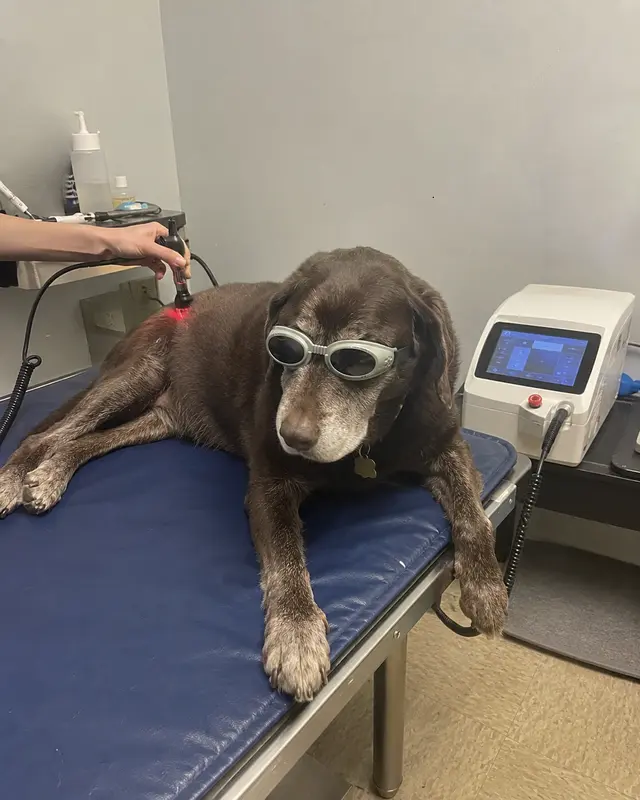
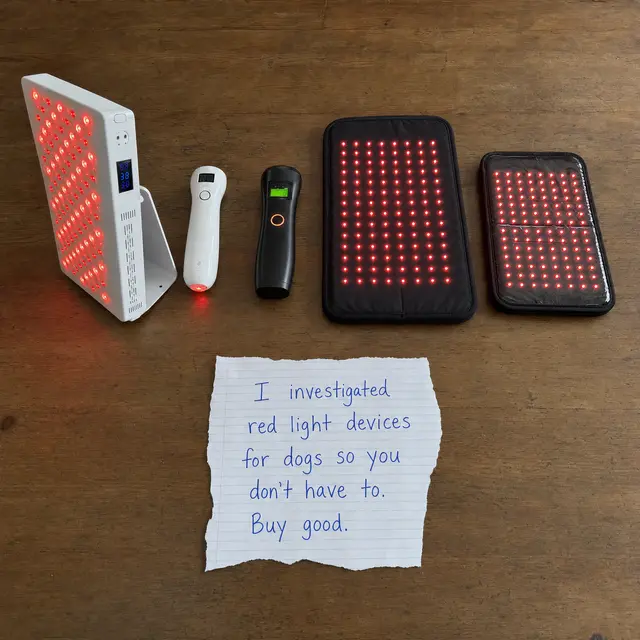
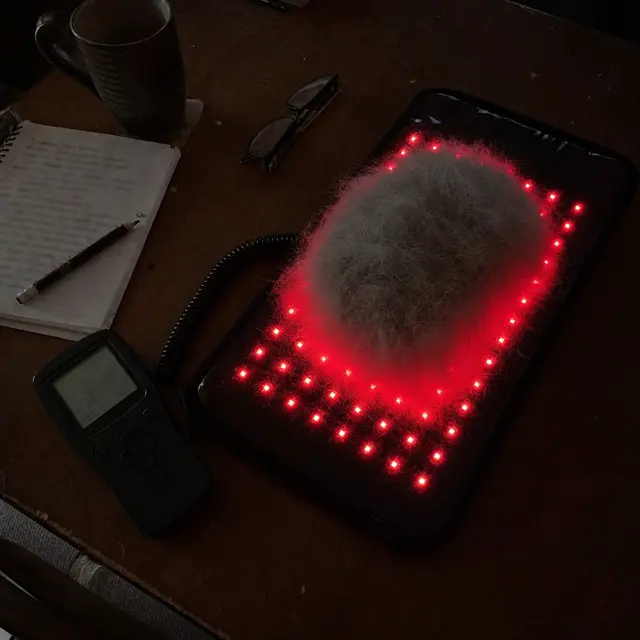
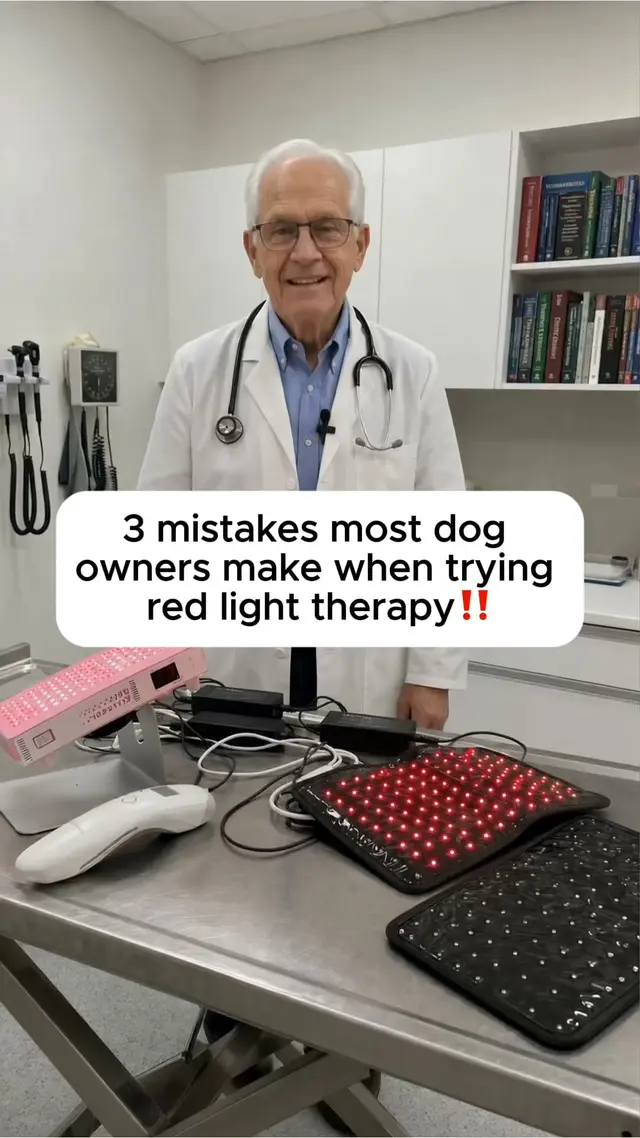
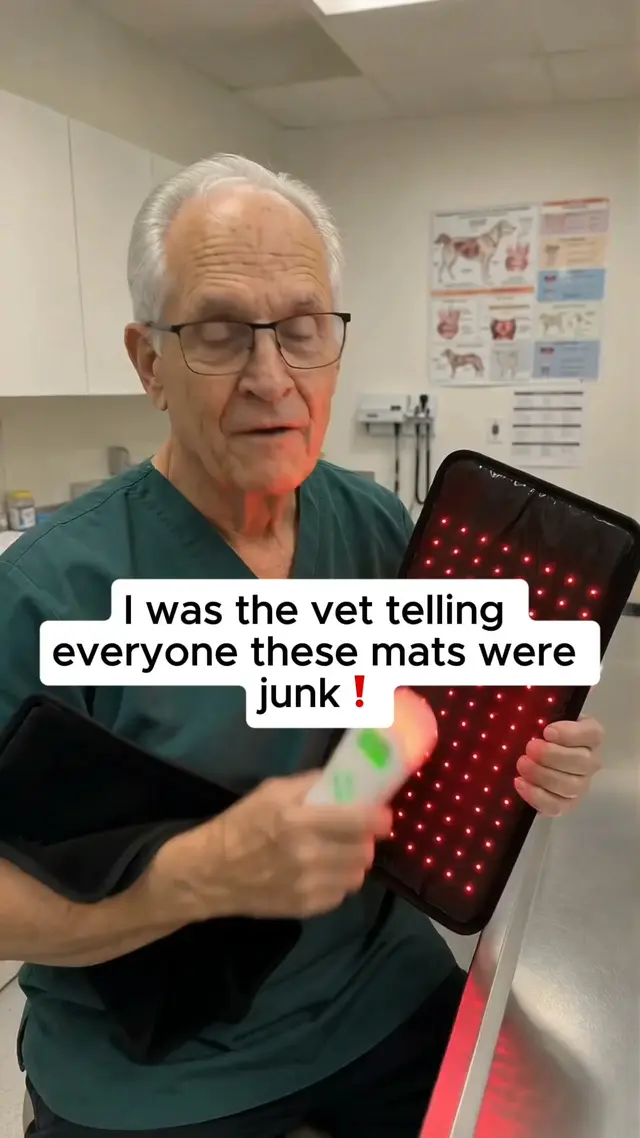
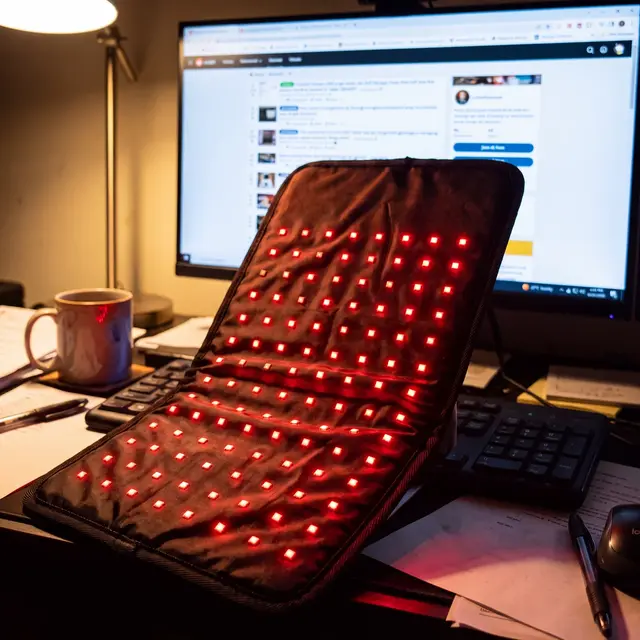
"Do you really think a cheap mat off Amazon can do anything for your dog when the laser I use costs 9,000 dollars?" That's what I told clients for 11 years. So if you've ever put one of those red light mats on your arthritic dog and watched it do absolutely nothing, or if you've talked yourself out of even trying one because it seemed too cheap to be real, I owe you an explanation. Because I'm the reason a lot of people made that exact mistake. And I had it wrong in a way I didn't figure out until I saw it with my own eyes, on a dog I'd already given up on. I'm a small animal vet. Let me tell you how I got it wrong, because the part I got wrong is probably the same thing standing between your dog and the one thing that might actually help. Every few weeks someone would ask me whether one of those mats was worth trying for their arthritic dog, and I'd talk them out of it. The home stuff is toys, I'd say. If you want real photobiomodulation, the laser we use here is the real thing. I wasn't being cynical. I had a 9,000 dollar class 4 laser in my treatment room and I'd watched it do remarkable things for arthritic dogs. Stiff old Labs getting up off the floor in one motion instead of three. A Shepherd that hadn't taken the stairs in a year using them again. I knew what the real machine could do, and I knew what it cost, and it simply did not compute that a 50 dollar mat could be in the same conversation. So I was the one saying the exact thing that voice in your head is probably saying right now. You get what you pay for. I was half right. And the half I had wrong cost a lot of dogs years of relief they could have had. To understand how I got here, you need to know the thing I spent 11 years trying not to think about. Here's the thing I didn't like to think about too hard. For every client who actually did the laser course with us, I sent ten home without it. Because the laser isn't a one-time thing. For chronic arthritis it's 2 or 3 sessions a week, ongoing, indefinitely. At our clinic that ran somewhere around 75 dollars a session. Do the math on a dog that's going to live another 3 years and you're talking real money, every month, with no end date. Most people simply can't, and I don't blame them. I'm not sure I could. And it was never only the money. It was the drive. Twice a week, in and out of the car, for an old dog whose joints already hurt. Half of them shake the whole way in. Some of them have come to dread the building so badly that the appointment that's supposed to help them costs them two days of stress around it. I watched owners decide, quite reasonably, that dragging a frightened arthritic dog across town twice a week was doing more harm than the laser was doing good. So those ten clients went home with the same speech. Anti-inflammatories when she's sore. Keep the weight down. Joint supplements. Short, regular walks instead of the big weekend one. A ramp for the car. And when they asked about the home version, the affordable version, the one they could actually do without the cost and the drive, I told them not to bother. For a long time that felt like honest advice. Then it started to feel like something else. Because I had one tool I genuinely believed in, and almost none of the dogs who needed it ever got it. It was locked behind a price and a logistics problem most of my clients couldn't get past. And the only thing I had for the ten I turned away was a shrug and a ramp. At some point I couldn't sit with that anymore. So I did something I should have done years earlier. I went looking for something, anything, I could actually recommend that an owner could do at home. Not as a knock-off of the laser. Just something real that a normal person could afford and manage. I assumed it would take an afternoon. It took weeks. Because most of what's out there is junk, and not in a way you can see from the listing. Wrong wavelengths. A single frequency where you need two. Output ratings so low the light dies in the first layer of fur. Panels you'd have to hold over a dog who won't sit still. Wands that treat a circle the size of a coin. I kept finding devices that looked the part in the photos and fell apart the moment I checked what was actually in them. I started to think maybe I'd been right all along, that the whole home category really was hopeless. And then, in the middle of all that, a woman brought her Labrador in for something unrelated. A dog I'd watched go downhill for over a year. Arthritis in both hips, slowing, the usual. I'd given her the same speech a year earlier. Laser's the real thing, can't afford it, here's the supplements and the weight talk, the home mats are toys. The dog walked in moving better than he had in a year. Not cured. Not young again. But loose. Comfortable. Getting up without the heave. I asked her what she'd done, bracing for some supplement I'd have to gently tell her was coincidence. She told me she'd bought a red light mat. A home one. The exact category I'd spent 11 years telling people not to waste their money on, and the exact thing I'd just spent weeks failing to find a decent version of. I'll be honest about what I felt, because it wasn't relief. It was a little stab of annoyance, the kind you feel when something you've been confidently telling people for a decade is sitting in front of you wagging its tail. I asked if I could see it. She brought it in the next day. And with a real device in my hands instead of a search bar, I finally pulled the whole thing apart properly. The first thing I had to untangle was the one I'd gotten wrong for over a decade. I'd assumed the home mats failed because they were cheap. That cheap meant fake. And the moment I stopped assuming and started actually checking, that idea came apart in my hands. A device delivers a real dose to a dog's joint only if it gets 3 things right. The wavelengths. Both 660 and 850 nanometers, not just the visible red that looks the part in the listing photo. The 850 is the one that reaches deep enough to matter, and it's the one cheap and expensive devices alike tend to skip. The power. And this is the one almost nobody accounts for, because of fur. A dog's coat is not a minor obstacle for light, it is a wall, and a thick coat soaks up most of what hits it before it ever reaches the skin. A device built for bare human skin was never designed to fight through that, which is exactly why people put a human panel on their dog and get nothing. And the contact. The light has to be pressed against the body, not fired at it from across a gap. A panel aimed at a dog loses most of its light to the air before it arrives. A mat that drapes over the dog and touches the joint loses almost none. Most of the devices out there miss at least one of those three. And not just the cheap ones. Plenty of expensive devices fail one too, and plenty of inexpensive ones get all three right. But, and this is the part I'd had backwards for 11 years, it's the missing specs that make them fail, not the price. A device with the wrong wavelengths fails at 40 dollars and it fails at 400. And a device with all 3 right works whether it cost a little or a lot. The price tag was never the thing doing the work. I'd been blaming the wrong variable my entire career. The mat the woman had brought in passed all 3. It was a Petlonga, made specifically for dogs. Both wavelengths. Real power. A mat that draped over the dog and pressed against his hips instead of firing at him from a distance. The first device I'd held that hit every one. The same one that had her Labrador walking across my exam room better than he had in a year. Then the second thing, the one I'd been smug about. The 9,000 dollar laser in my room and that mat on the woman's Labrador were never the same product, and were never meant to be. My machine is high power in short bursts, twice a week, run by a tech. A home mat is the opposite by design. Lower power, but every day, on the dog's bed, while he sleeps. I am not going to tell you a home mat equals my clinic laser, because it doesn't, and any vet who tells you it does is overselling it. The laser hits harder. The difference is that a clinical laser is a complex, regulated machine, and that is a lot of what you're paying 9,000 dollars for. The LEDs that produce the exact same therapeutic wavelengths cost very little to build into a mat. So a home device can be a fraction of the price and still emit the wavelengths that matter. What it gives up is dose per session, not the science. And for a lifelong condition like arthritis, a smaller dose every single day is not a consolation prize. For most of my clients it is the only way they will ever access this therapy at all. And I'd spent 11 years talking them out of it. That woman's mat answered the immediate question. But it raised a bigger one. Was hers a lucky exception, or were there others that passed, and how would a normal owner ever tell them apart? So I did what I should have done years earlier. I bought the 5 most popular home red light devices people kept asking me about, and I tested every one the same way I'd assess any tool before I put it near a patient. I checked the wavelengths each one actually emitted. And I put a light meter to each, first against the bare device, then with a patch of dog coat laid over the sensor, to see how much light actually survived the fur the way it would on a real dog. What I found shocked me. A couple were genuinely impressive. Both wavelengths, real power, enough getting through the coat to matter. Devices I would now happily tell an owner to try. The others did essentially nothing. One wavelength instead of two. Readings that collapsed the second the fur went over the sensor. One was a panel that lost most of its light to the air before it reached anything. Glowing junk in a nice box. And here's what undid the last of my old logic. The ones that passed were not the most expensive. My 9,000 dollar machine was the priciest thing in the building, and a fraction of that, in the right home mat, hit all 3 of the criteria that decide whether the light reaches the dog. Some of the expensive home devices failed. Plenty of the cheap ones failed. The price simply did not predict it. I own the most expensive device in this story. And it is not the one I'd point a regular owner toward first anymore. So if a vet, or a confident stranger online, has told you not to waste your money on a home device because the real machines cost thousands, I understand why that sounds right. I said it myself for 11 years. They're half right. Most of the ones for sale, cheap and expensive alike, genuinely do nothing. But the price is not the reason, and it is not how you tell the good ones from the useless ones. The 3 things are. Wavelengths, power, contact. And the price tag will not tell you which devices have them. I put all 5 of those devices side by side, ranked best to worst, exactly what passed each criterion and what failed. The most expensive one did not win. See where each one landed, and where yours sits, before you spend another dollar. 👉 https://petlonga.com/pages/comparison
Performance Signals
- Status
- Still running
- Time Running
- 108 days
- Active Period
- Jun 15, 2026 → Today
- First Seen
- Sep 30, 2026
Creative & Links
- Meta post ID
- 2216757195756587
- Meta page ID
- 137420269457244
- Format
- Image
- Placements
- Facebook, Instagram, Messenger, Threads
- Country
- 🇺🇸 United States
- Landing Page
- petlonga.com/pages/comparison
- Original Ad
- Open in Meta Ad Library
More from PetLonga

PetLonga
petlonga.comPetLonga
Shop Infos
- Created
- Nov 28, 2025 · 11 months
- Category
- Pet Food & Supplies › Pets & Animals
Search every indexed Meta ad by niche, format, country and run time, save creatives to boards and track the brands behind them — free, no card.