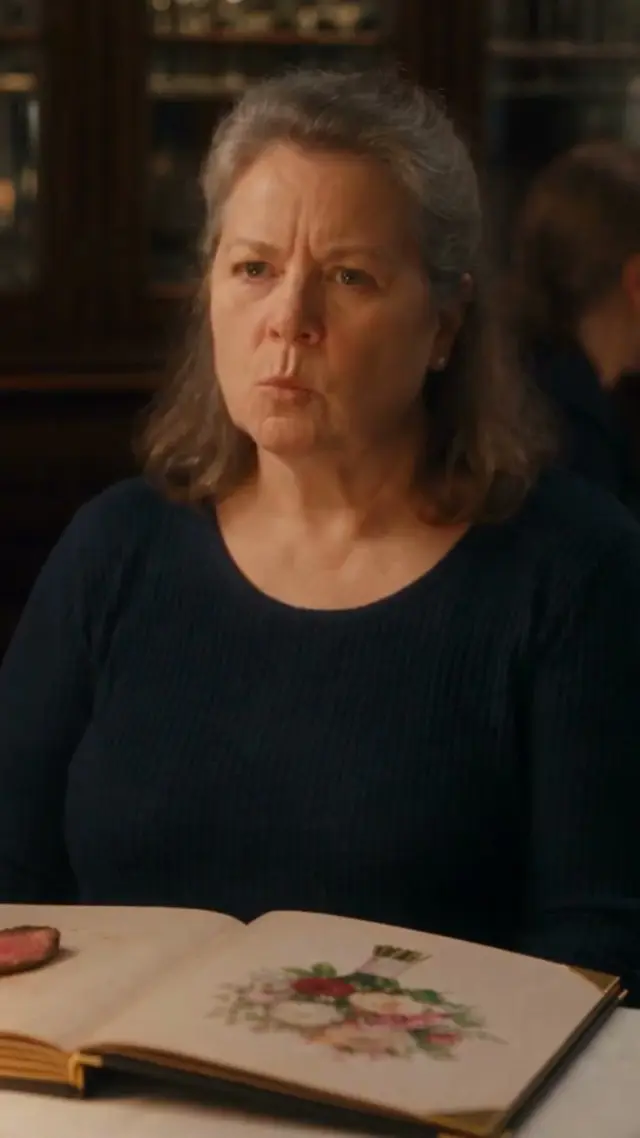
All Glow ad: Gut Reset Project
All Glow
🇺🇸
I left the Amish at 18. At 57, I drove back up my mother's gravel lane to save my marriage. I sat in the car at the mouth of that dirt road outside Bird-in-Hand, Pennsylvania, for twenty-five minutes with the heater blowing on my boots before I could make myself put it in gear. Three hours from Annapolis without stopping. You can't call ahead to an Old Order house. There are no wires running to that farm, no telephone on the wall, and no email. I knew that if I stopped for gas in York, I would lose my nerve, turn the car around, and go back to Maryland. So I just sat there where the gravel meets the highway, watching the bare willows whip in the November wind with my hands trembling on the steering wheel, thirty-nine years late. Let me back up. This won't make sense otherwise. My name was Ruth Stoltzfus when I lived on that dirt. These days, my driver's license says Ruth Miller. I left on a June night in 1986. Down the back stairs with my boots in my hand, my duffel bag zipped tight, my cousin's Chevy idling out on the blacktop with the headlights switched off. My father was standing by the garden gate when I came through the yard. He had heard the latch lift from sixty yards away. He didn't yell. He didn't reach out to grab my arm. Amish fathers don't do that. He looked at me in the dark, looked at my duffel bag, and looked down the lane at the idling car. And he said seven words to me. Then he turned and walked back toward the dark house. The screen door closed with a soft wooden click, and I stood alone in the grass, listening to the crickets, thirty-nine years before I would understand what those seven words meant. I'm not going to hand them to you yet. Words like that cost me half a lifetime. They can cost you five more minutes. Now let me tell you what thirty-nine years of English living did to a girl from Lancaster County. The first thirty years were beautiful. I won't lie about that. I married David when I was twenty-six. David is an architect. We built a stone house on two acres outside Annapolis, raised two daughters who have their own lives now, and built the kind of marriage people looked at and envied. David was the kind of husband who couldn't walk past me in the kitchen without his hand finding my hip. He would come up behind me at the stove while I was making morning coffee, wrap both arms around my ribs, and bury his chin in my neck until I laughed and told him to sit down. We had a life. We had a bed that was warm. And then, when I turned fifty-three, the quiet rot started. It didn't happen in an argument. That is the lie people tell about marriages that fall apart. It doesn't start with shouting or slammed doors. It happened on an ordinary Thursday afternoon in my office. It was two-thirty in the afternoon. I was sitting at my mahogany desk, leaning forward to sign a contract, when a sudden, sharp pinch caught me right across the lower belly. It felt like someone had taken a pair of pliers and twisted the waistband button of my tailored wool trousers directly into my skin. Within twenty minutes, right beneath my navel, my abdomen began to swell. Not soft fat. It was a hard, rounded, pressurized dome pushing outward like an inner tube being pumped full of air. The pressure rose up under my ribs until my lungs couldn't expand properly. I was taking short, shallow breaths at my desk, sweating through the collar of my silk blouse. I had to stand up, walk into the executive restroom, lock the door, and unhook the top button of my slacks just to draw a full breath. I looked down at myself in the harsh fluorescent lighting. My waistline was gone. Below the waistband of my trousers, a hard, drum-tight globe was jutting out four inches, so taut that the fabric was pulling sideways at the seams. I thought I had eaten something bad at lunch. I thought it would pass by five o'clock. It didn't pass. By six o'clock, the pressure was so intense that my hips were throbbing. When I pulled into our driveway in Annapolis, I didn't walk into the kitchen to say hello. I slipped in through the side mudroom door, went straight into the master bathroom, clicked the deadbolt, and stripped my clothes off in the dark. I couldn't bear to turn on the vanity lights. I could feel the shape of myself in the shadows: a woman of fifty-three who looked six months pregnant. I pulled on an oversized men's gray cotton t-shirt that hung to my knees, paired with baggy black sweatpants with the drawstring untied. What David would eventually come to call my "shrouds." David knocked gently on the bathroom door. "Ruth? Osteria reservations are at seven-thirty. Are you almost dressed?" A knot of cold dread seized my throat. The thought of sitting on a hard wooden bench in an Italian restaurant for ninety minutes, with my waistband cutting into my hips while my intestines rumbled with trapped, violent gas, made me want to sink through the tile floor. "David, I have a terrible migraine," I lied through the door, my voice trembling. "Please go without me. Tell Mark and Karen I'm so sorry." There was a long silence on the other side of the wood. "Are you sure?" he asked quietly. "You haven't felt well all week." "I just need to sleep," I whispered. I listened to his footsteps walk slowly down the hardwood hallway. I heard the front door open, the soft click of the latch, and the crunch of his tires backing down the drive. I sat on the edge of the tub in the dark and cried until my chest ached. That was the first night. But it wasn't the last. Soon, it wasn't just Thursdays. It was every single afternoon. At eight in the morning, my stomach would be relatively flat. By two in the afternoon, the fermentation began. By six in the evening, my belly was a hard, swollen keg of gas that pushed against my diaphragm, leaving me nauseous and exhausted. And then came the bedroom. I started waiting in the bathroom every night until I heard David's bedside lamp click off. I would wait in the darkness until his breathing slowed, then creep across the rug, slip under the duvet, and lie as close to the far edge of the mattress as I could get without falling onto the floor. Then came the Tuesday night in October when the silence broke. It was past midnight. The room was black. David stirred. The sheets rustled as he turned onto his side. I felt the mattress dip. He reached his arm across the cold space between us. His palm found the small of my back. His fingers slid down toward my hip, warm and searching, reaching for his wife the way he had for thirty-one years. My stomach was so painfully distended, so full of pressurized air and trapped putrefaction, that the instant his fingers brushed the waistband of my sweatpants, my body reacted before my brain could stop it. A violent, involuntary spasm ran through my spine. I jerked away from his touch like he had pressed a branding iron against my skin. My elbow whipped backward in the dark and struck his water glass on the nightstand. The heavy glass crashed to the floorboards, shattering into pieces, ice water splashing across the rug. The bedroom went dead, terrifyingly silent. David froze. In the blackness, I could hear his shallow, stunned breathing. "Ruth?" he whispered. His voice was thin and raw. "Did I hurt you?" I was lying curled on the edge of the mattress, my knees pulled to my chest, both hands clamped over my throbbing belly, tears soaking into my pillowcase. I couldn't answer him. How could a fifty-six-year-old woman explain to her husband that her stomach was so swollen, so ugly, and so full of rotten gas that she couldn't stand the thought of human skin touching hers? I said nothing. I just shook in the dark. David waited ten seconds. Then, very slowly, he pulled his arm back across the sheets. He didn't say another word. He rolled onto his other side, facing the window, and pulled the duvet over his shoulder. He never reached for me again. For six months, a wall of cold stone grew between us. In the mornings, David used to lean over my shoulder at the stove and kiss my neck. Now, he walked into the kitchen, poured his coffee on the far side of the granite island, and kept his eyes glued to his tablet. If my hand brushed his while reaching for the milk, he would pull his fingers back half an inch. Then came the dinner in November at the club with Mark and Karen. Karen is sixty years old. She sat across the table from us in a fitted, ribbed wine-red knit dress that clung to her waist. She was drinking Pinot Noir, laughing with her head thrown back, light on her feet, touching Mark's forearm as she told a story about their trip to Maine. I was sitting beside David trapped in an oversized black linen tunic that felt like a circus tent, with the top button of my slacks unhooked beneath the fabric. My stomach was boiling with gas. Every fifteen minutes, a violent rumble tore through my lower abdomen, and I had to press my forearm against the table to muffle the sound. I couldn't swallow three bites of salmon without feeling like my ribs would crack from the pressure. And then I looked at David. David was looking at Karen. It wasn't a lustful look. It was worse than that. It was the look a freezing man gives a lit fireplace through a frosted window. He was looking at a woman who was comfortable in her own flesh. A woman who was alive. A woman who didn't shrink away when her husband touched her. The next morning, the snow fell over Annapolis. David went outside to clear the stone driveway with the snowblower. He left his phone sitting on the kitchen island beside his empty mug. I was wiping down the counter when the screen lit up with a text from an interior designer who works with his architectural firm: "Thank you for listening over coffee yesterday, David. It is so rare to find a man who is truly present." I stood over that counter with ice flooding my veins. I didn't yell. I didn't smash the phone. I just listened to the roar of the snowblower outside in the cold. A man cannot live in an empty house forever. David wasn't a traitor. He was a starving man living with a ghost in oversized sweatpants who slept in the guest room. My marriage was bleeding to death, and it wasn't because of another woman. It was because my body had become a prison. That afternoon, I sat in the examination room of a functional medicine clinic in Bethesda. The walls were painted soft gray. An orchid bloomed on the windowsill. The doctor, a woman in her late forties with perfect posture and diamond studs, looked at my hormone panels on her iPad. "Doctor," I said, my voice breaking in the quiet room. "Every day at two o'clock, my stomach blows up like a balloon. It's so hard and painful that I can't let my husband touch me. We haven't slept in the same bed in six months. My marriage is falling apart." The doctor smiled that practiced, clinical smile. "Ruth, your FSH and LH levels show you are in full post-menopause. When estrogen drops, the gut slows down. Visceral fat naturally redistributes to the lower abdomen. It is completely normal for a woman in this season of life. You have to practice body neutrality." She handed me a prescription for an anti-depressant and wrote "high-dose psyllium husk fiber" on a notepad. Eight hundred dollars for the consultation. I went straight to the pharmacy. I took the fiber that night. Within forty-eight hours, my intestines felt like a pipe filled with wet concrete. The distension was worse. The dome beneath my navel was so hard that tapping it with a knuckle sounded like a hollow melon. I sat on the edge of the guest room bed, holding that orange prescription bottle of anti-depressants in my hand, tears dripping onto the carpet. And in the quiet of that empty bedroom, my father's seven words came back to me across thirty-nine years: What fed you will be here still. I looked at my mother's picture on my dresser. Seventy-eight years old. Living on eighty acres in Lancaster County. Working an acre of garden with an iron hoe, wearing a linen apron, with a waist as flat as a cedar plank. She and my father had slept in the same oak bed every night of their lives for fifty-four years until he passed away. My grandmother had lived to ninety-one on that dirt without ever having an inflated belly, without ever taking a pill, and without ever looking six months pregnant in her kitchen. I took that prescription bottle, dropped it into the wastebasket, picked up my car keys, and walked out the door. I drove three hours north without turning on the radio. When my tires hit the gravel lane in Bird-in-Hand, the sound was identical to 1986. I stepped out of the car into the biting wind. The smell hit me immediately: damp limestone, wood smoke, horse manure, and cold wet mud. Behind the washhouse, an old woman was kneeling by the cold frames, cutting winter spinach with a paring knife. Gray bonnet tied under her chin. Black wool shawl pinned across her shoulders. My mother. Seventy-eight years old, standing up as straight as an oak timber. She heard the car door shut. She turned and looked at me across forty years of silence. I walked toward her across the frost-bitten grass in my Italian leather boots and my oversized coat, feeling like an eighteen-year-old girl who had snuck out the window in the dark. She didn't drop her basket. Amish mothers don't do drama. She walked over, stopped two feet from me, and looked at my face. Then her gray eyes dropped directly to my coat. Even under the heavy wool, she saw it. The unnatural, protruding dome stretching the fabric tight. She looked at it for a long, quiet second. Then she said: "You've been eating the English bread, Ruth. Come inside out of the wind." We went into the daadi haus kitchen. The cast-iron woodstove was ticking softly. She put an iron kettle on the lid and poured two earthenware mugs of peppermint tea. She didn't ask where I had been. She didn't ask about Annapolis. I sat at that scrubbed pine table, took one sip of tea, and the dam broke. I laid it all out on the table like a confession. The locked bathroom door. The broken water glass on the floorboards. The six months of ice in our bed. The dinner with Karen. The text message on David's phone. The Bethesda doctor who told me that a dying marriage was just "post-menopause." My mother listened without interrupting once. Plain women are the deepest listeners on earth. They don't fidget, and they don't look away. When I ran out of words, she set her mug down. "You think a man warms his hands over a cold hearth, Ruth?" she said, her Pennsylvania Dutch accent sharp and level. "A woman whose middle is stopped with rot has no sap in her. You are tired because the uninvited guests in your gut are eating your food and your blood before your body ever touches it. And you are cold to your husband because all your spirit is spent carrying twenty pounds of trapped gas behind your apron." She stood up and took a brass kerosene lantern from the wall. "Come down cellar." I followed her down the cool stone steps into the dark beneath the floorboards. The cellar smelled like an old hymn: cold damp earth, vinegar, stored russet apples, and that sharp, medicinal herbal tang I hadn't smelled since I was a girl. Along the stone foundation were shelves of rough hemlock planks. Resting on the wood were dozens of gallon glass jugs filled with liquid as dark as blackstrap molasses. My mother set the lantern on an oak butter churn and pointed at the glass. "Your English doctor tells you your womb went to sleep and that is why your stomach is hard," she said. "The English always blame a woman's nature so they can sell her a bottle of poison that does nothing. "Ruth, you have dogs in your Annapolis house?" "Two," I whispered. "They sleep on your bed?" "Yes." "You buy lettuce in clear plastic boxes at the store? You eat that raw fish the English eat?" "Yes." "And you take the doctor's antibiotics over thirty years?" "Yes, a few times." My mother shook her head slowly. "Antibiotics wipe out the stomach acid, Ruth. And as a woman passes fifty, her natural acid gets thin like wash water. When the acid is thin, the front gate is standing wide open. "Every dog that licks your hand, every piece of unwashed market greens, every raw bite carries microscopic parasite eggs. "You think because your house has carpets and electricity, you are not made of the same dirt as a heifer or a hound? "They pass into your small intestine. They hook into the lining with barbs and suckers. And then they build a biofilm. A thick, slimy blanket of your own mucus that wraps around them like wet wool. Your white blood cells cannot touch them. Your stomach acid cannot burn them. "Every afternoon when you eat your lunch, they feed. By two o'clock, they have fermented your food into gallons of sulfur and methane gas that blow your belly up like an animal bladder. It is not fat! It is trapped putrefaction your bowel cannot push out. "And at night, between two and four in the morning, their cycle turns. When their food runs out, they dump metabolic waste into your bloodstream. Those nerves run straight up the vagus nerve to your brain, demanding sugar so they can lay their eggs. That is your three o'clock panic. That is why you creep to the kitchen for sweets. You think you are weak in the head. You are not weak in the head. You are feeding an army that does not belong to you." I leaned against the cold stone wall, shivering. "What is in the jugs, Mamma?" She pointed along the hemlock shelf: "The three plants my grandmother brought across the ocean. The three plants our people have used for two hundred years. "First: Sweet Wormwood. Wermut. The bitterest leaf in God's soil. The second that bitter drop hits your tongue, your vagus nerve fires. Your liver and gallbladder dump a flood of scalding bile through your small bowel. Bile is nature's lye soap. It scours the walls clean and paralyzes the adult organisms so they lose their grip. "Second: Green Black Walnut Hull. Schwarznuss. You must pull them from the tree while they are hard and green as young apples, before they touch the dirt. That is where raw juglone lives. Juglone is an astringent that strips the slimy biofilm shield right off the gut wall, so the organisms have nowhere left to hide. "And third: Fresh Ground Clove Bud. Nelke. This is where the English fail, Ruth. You can stun adult worms with ten different weeds. But they leave thousands of microscopic eggs glued to the wall of your intestines. "Those eggs are wrapped in a chitin shell that laughs at stomach acid. Fresh clove is the only herb on earth with enough concentrated eugenol oil to dissolve that chitin shell on contact. If you do not dissolve the eggs, you get ten days of peace, the nursery hatches out, and your belly blows up again like a drum." She reached into a wooden cupboard and brought out a four-ounce amber glass dropper bottle. "Take this," she said, pressing it into my hands. "Two full droppers in cold water at sunrise on an empty stomach. Do not touch food for thirty minutes. Do it for ten days. "And then go home to your husband." I drove back to Annapolis with that amber bottle on the passenger seat. And that night, my English vanity started whispering in my ear. "You have a master's degree, Ruth. You live in a stone house. You're going to drink brown water from a cellar like a seventeenth-century peasant?" I opened my laptop, went to Amazon, and searched for "parasite cleanse." Pages of results. White bottles with green leafy logos and four-and-a-half stars. Thirty-four dollars. Two-day Prime shipping. Capsules boasting wormwood, black walnut, and clove. I ordered them. They arrived on Wednesday. I took two capsules every morning with a glass of orange juice for twelve days. And nothing changed. At two-thirty every afternoon, the balloon still inflated. The pressure still drove me into sweatpants. David still slept on his side of the bed facing the wall. Frustrated, I called the payphone down the road from my mother's farm and left a message with an English neighbor. Three days later, an envelope arrived in the mail with my mother's small, tight handwriting on a piece of brown wrapping paper: "You bought the factory dust, Ruth. When commercial factories make capsules, they grind dry herbs in high-speed hammer mills that heat the powder to nearly two hundred degrees. The medicine in green walnut and clove is volatile oil. Heat boils it off in seconds. What they put in those plastic jars is dead, cooked barn floor sweepings. Twist a capsule open over a white saucer. If it smells like dry hay and has no bitter bite, you bought sawdust." I took one of those thirty-four-dollar capsules into the kitchen, twisted the gelatin apart, and dumped the powder onto a white porcelain saucer. It fell out in a dull, grayish-brown clump. I leaned over and sniffed it. It smelled like dry lawn clippings. I touched a wet fingertip to the powder and put it on my tongue. Nothing. No bite. No medicinal sting. Completely inert. My mother was right. I had paid thirty-four dollars for dead, cooked vegetable dust. The next morning at 5:45 AM, I took my mother's amber bottle from behind the bathroom mirror. I filled a four-ounce glass with cold tap water and squeezed two full droppers into the glass. The water turned a murky, dark olive-brown. The scent rose immediately: sharp, resinous, aromatic, smelling like crushed evergreen needles and dark roots. I drank it down in two swallows. The taste hit my tongue like an electric shock. Fiercely, shockingly bitter. A deep, medicinal bite that made the back of my jaw ache and sent a wash of warmth rushing down through my esophagus into my stomach. Within twenty minutes, I felt a distinct, warm tightening under my right ribs: my liver and gallbladder contracting, dumping a rush of fresh bile into my upper digestive tract. For three days, my stomach felt quietly active. No cramps. No running to the toilet. Then, on the morning of day four, the shift came. At eight in the morning, my intestines gave one firm, deep contraction. I walked into the bathroom, and my bowels emptied with a thoroughness I hadn't experienced since I was twenty years old. There was no diarrhea and no nausea. But what left my body made me stand over that porcelain bowl with goosebumps rising on my arms. It was thick, dark matter wrapped in long, grayish-white ropes of mucus that looked like shredded wet burlap. The biofilm. The slimy shield that had been glued to my intestinal walls for years, holding colonies of organisms that had been feeding on my meals while I slept. I flushed the toilet, washed my hands, and stood before the mirror. A sensation of physical lightness washed over me so suddenly that I had to grip the marble counter. By day seven, the change was absolute. I woke up at 6:30 on a Sunday morning. I hadn't woken up at 3:15 AM sweating with my heart pounding. I had slept through the night for seven uninterrupted hours. The frantic, clawing hunger for sugar had completely vanished. I slipped out of bed, walked into the bathroom, and pulled off my oversized t-shirt. I stood sideways in front of the full-length mirror in the morning sunlight. My lower belly was flat. Not slightly smaller. Flat. The hard, pressurized drum that had distorted my body for four years had deflated. The skin was soft and pliant. The suffocating upward pressure against my diaphragm was completely gone. I pulled air down into the bottom of my lungs without a single trace of resistance. That afternoon at three o'clock, I sat at the kitchen counter waiting for the balloon to inflate. Nothing happened. My stomach remained soft, quiet, and flat. At six-thirty that evening, I walked into our walk-in closet. I reached past the baggy black tunics, past the oversized gray sweatpants, all the way to the back hanger. I pulled out a plum silk slip dress with lace trim. David had bought it for me in Charleston on our twenty-fifth anniversary. I hadn't touched it in five years. I stepped into it. The silk slid over my hips and draped softly against my stomach. No bulging. No tight seams. The curve of my waist was back. I put on a pair of pearl earrings. I brushed my hair and let it fall across my shoulders. I didn't turn off the lights. I left both bedside lamps on, casting a warm amber glow across the white duvet. I left the bedroom door wide open. At seven o'clock, I heard the front door close downstairs. I heard David's footsteps coming up the oak staircase, carrying a rolled set of architectural blueprints under his arm. He walked past the open bedroom doorway, took two paces down the hall, and stopped. He took two steps backward and turned his head. The blueprints slipped from under his arm. They hit the hardwood floorboards with a loud, hollow slap. David didn't look down at them. He stood in the doorway, staring at me under the lamplight, his mouth slightly open, looking at me like he was seeing a ghost come back into the room. "Ruth?" he whispered. His voice was thick and trembling. "My God. Look at you." He stepped across the rug toward me. He reached out his hand, his fingers hesitating half an inch in the air, the memory of four years of flinching still hovering between us. This time, I didn't pull back. I stepped into the space between us. I took his hand in both of mine and guided his open palm directly against the bare silk of my waist. His fingers spread across my soft, flat stomach. His breath caught in his throat. I watched tears well up in the corners of his eyes. He pulled me against his chest with both arms, burying his face into the crook of my neck, his heart thumping hard against my ribs. "I missed you," he whispered into my skin, his voice breaking. "I missed you so damn much." We didn't go out to dinner that night. David reached behind him and clicked the bedroom door shut. The lamps stayed on. And for the first time in four years, my husband held his wife until the sun came up through the blinds. Last month, I drove back up that gravel lane in Lancaster County. The willows were greening up. My mother was sitting on the daadi haus porch, paring apples into a wooden bowl. I walked across the grass wearing tailored linen slacks and a fitted cream sweater. She looked at me. She looked at my waistline. She looked at my face. She gave me one slow, quiet nod. And then she said: "Your father told you before you left, Ruth." Standing by the garden gate in the twilight, I looked down at the old fence post where my father had stood on that June night in 1986. He had watched Amos's Chevy idling in the lane. He had watched his eighteen-year-old daughter walk away from everything she knew. And he had spoken seven words: What fed you will be here still. For nearly forty years, I thought he was speaking in anger. I thought he was cursing my little English rebellion, telling me the farm would outlive me. He wasn't cursing me. He was giving me a map. He knew the English world would feed me processed food, drown me in antibiotics, and fill my body with weeds. And he knew that when the doctors had nothing left to offer me, the three plants his grandmother carried from the Old Country - the wild wormwood, the green walnut, and the fresh clove - would still be sitting in the dark cellar, waiting for me to come home. Here is why I wrote this down for you. You don't have an Old Order mother in Lancaster County. You don't have a stone cellar lined with jugs of dark bitter herbs. And after what happened to me with those thirty-four-dollar Amazon capsules, I know that most women who try to fix this end up swallowing dead, heat-treated sawdust that does nothing to dissolve parasite eggs or strip biofilm. Before I left Lancaster County, my brother told me about a small botanical company called All Glow that actually works directly with our local Plain growers to bottle the exact same traditional formula in dark amber dropper bottles. It is called the Wormwood Black Walnut Gut Reset. They use the green-harvested black walnut hulls, the wild wormwood, and the fresh cold-ground clove, along with supporting herbs like oregano and pumpkin seed that keep the digestion moving cleanly. No high-speed milling heat, no fillers, and no capsules. It tastes just like my mother's cellar bottle: sharp, intensely bitter, and unmistakable. You just take two droppers in a glass of cold water first thing in the morning. I'm not trying to convince you of anything. I'm fifty-seven years old. I have my husband back, and I know the quiet misery of sitting on the edge of a bed in the dark feeling like a stranger inside your own skin. If your stomach swells like an inner tube every afternoon, if you wake up at three in the morning with a pounding pulse and a craving for sugar, or if your marriage is quietly slipping away because you cannot bear to let your husband touch your body, stop blaming your age. Stop letting doctors tell you that carrying twenty pounds of fermenting gas is just "post-menopause." I put the direct link to All Glow's bottle below for anyone who needs it. P.S. - The warning my mother gave me at the table. At that pine table in Bird-in-Hand, my mother looked at me over her teacup and said something that stayed with me: "Ruth, a woman does not sweep out a barn once and expect it to stay clean for forty years." When you clear the gut wall of biofilm and old waste, your stomach flattens because the trapped fermentation is gone. But you live in the English world. You walk dogs, you eat salad greens, and you live under stress. I do this ten-day reset twice a year now, once in the spring and once in late autumn, just the way my mother and grandmother did. All Glow gave me a 60-day guarantee when I ordered, so you don't have to worry about throwing money away like I did on Amazon. If it doesn't work for you, you just send it back. P.P.S. - About the first twenty minutes: do not expect honey. Plainly, because I got caught off guard and you don't need to be. When you squeeze those two droppers into cold water, it turns a dark, murky olive-brown. The second it hits your tongue, it is shocking. It is intensely, unapologetically bitter. That bitter taste reflex is the entire point: it fires your vagus nerve, which tells your liver and gallbladder to dump a flood of fresh bile to scour the digestive tract. It is NOT your bloating cured by lunchtime. Biofilm doesn't pack its bags in twenty minutes. The real clearing happens between day three and day seven when your bowels actually empty what has been clinging to the walls. If an herbal cleanse tastes like sweet berries or lemon drops, it was cooked in a factory and the bitter volatile oils are dead. The bitterness is the cure. Drink it in two quick swallows and let it work. P.P.P.S. - The mistake I made on Amazon so you don't repeat it. When my mother first handed me that cellar bottle, my English pride took over. I thought, "I have a master's degree, I can just buy wormwood capsules on Amazon with Prime shipping." I spent thirty-four dollars on white plastic bottles with pretty green leaves on the label. I swallowed them for twelve days and got zero relief. When commercial factories grind herbs for capsules, their high-speed mills run at nearly two hundred degrees. That friction boils off the juglone in walnut and the eugenol in clove in seconds. You are paying thirty-four dollars for cooked, dead sawdust. Twist open a capsule on a white saucer. If it smells like dry hay and has no bitter bite, you bought barn sweepings. The liquid drops in amber glass keep the living oils suspended. Don't waste two weeks proving what I already proved. P.P.P.P.S. - For the woman reading this while her husband sleeps in the other room. If you are undressing in the bathroom with the lights off, if you wear oversized black tunics in the dead of summer, or if you flinch when your husband touches your waist because your lower belly is hard and painful, please hear me. You are not unlovable. You are not just getting old. You are carrying an infection of microscopic organisms that ferment your food into trapped sulfur and methane gas. But do not wait four years like I did. Four years of cold silence almost cost me David. Two droppers in water at 6:30 in the morning. It takes ten seconds. Take it for your own dignity, and take it for the man who is lying on the other side of that mattress wondering where his wife went. P.P.P.P.P.S. - The harvest reality and checking for their sale. Last thing, and this is just practical advice from one customer to another. Green black walnut hulls cannot be harvested from a warehouse shelf. They have to be picked by hand during a narrow window in late summer while the hulls are thick, green, and dripping with raw juglone. Once the walnut falls to the ground and turns black, the juglone oxidizes and the cleansing power is ruined. Because All Glow contracts directly with small family growers in Pennsylvania who harvest by hand, their batches are limited by what is harvested each season. When I ordered my bottles, I think they had a sale going on on their page, but you will have to check the link to see if they still have it active or if they are in stock. My father waited thirty-nine years for me to remember where real medicine comes from. Don't wait thirty-nine years.

Performance Signals
- Status
- Stopped
- Active Period
- Sep 16, 2026 → Oct 5, 2026
- First Seen
- Sep 30, 2026
Creative & Links
- Meta post ID
- 1109956854720741
- Meta page ID
- 805075712692571
- Format
- Image
- Placements
- Facebook, Instagram, Audience Network, WhatsApp, Threads
- Country
- 🇺🇸 United States
- Original Ad
- Open in Meta Ad Library
All Glow
all-glow.comAll Glow
Shop Infos
- Created
- Mar 21, 2025 · 1y 7m
- Category
- Nutrition › Vitamins & Supplements › Health
Search every indexed Meta ad by niche, format, country and run time, save creatives to boards and track the brands behind them — free, no card.