Facebook ad headlines
Headlines for Facebook Ads: 8 Proven Examples
Explore headlines for Facebook ads with examples, use cases, and testing tips for benefit, urgency, social proof, and curiosity hooks that fit your goal.
Updated November 1, 2026
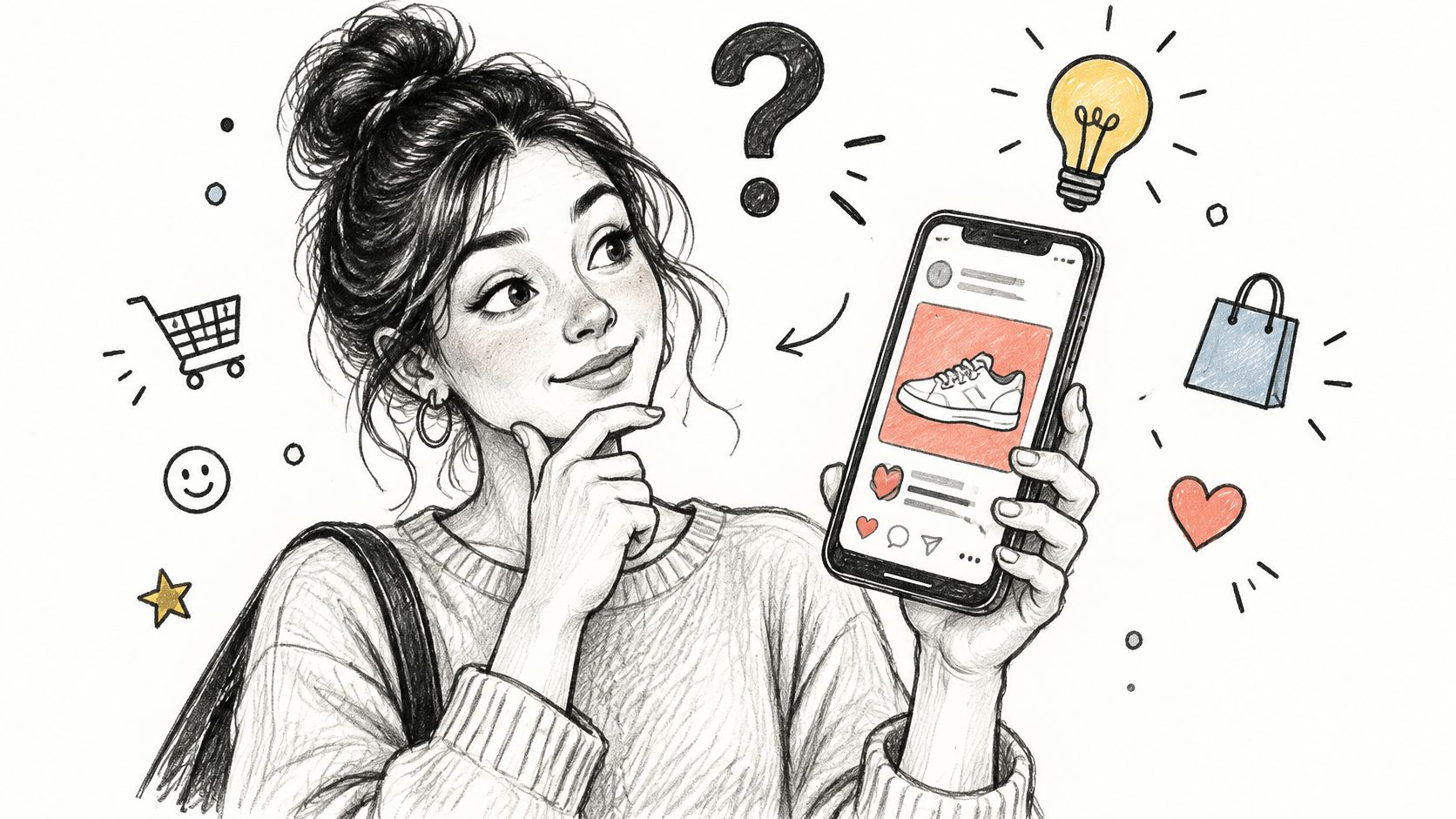
A shopper is on the couch late at night, thumbing through Facebook between messages and video. Your image gets a glance, your primary text gets clipped, and your headline gets one short moment to explain why she should stop. If those first few words don't name a reason to care, she doesn't argue with the ad. She just keeps scrolling.
That's why headlines for Facebook ads work differently on mobile than most advertisers expect. The Meta Business Help Center guidance recommends 40 characters for most placements and about 27 characters for Facebook Feed image and video ads, because longer text may be truncated by placement and device. Put the product, benefit, or offer early, then add clarification only if space allows.
The right pattern depends on audience stage, offer type, and campaign goal. A cold viewer needs a problem she recognizes. A warm viewer comparing stores needs proof or price. A returning buyer may only need a deadline. The eight patterns below match each job to a test you can run, plus a way to check competitor saturation in the Meta Ad Library before you spend. For the wider copy around the headline, PostSyncer's guide to persuasive social copy is a useful companion on tone and structure.
Table of Contents
- 1. Benefit-Led Headlines
- 2. Question Headlines
- 3. Number and Specificity Headlines
- 4. Urgency and Scarcity Headlines
- 5. Social Proof Headlines
- 6. Problem-Solution Headlines
- 7. Price-Anchored and Offer Headlines
- 8. Curiosity Gap Headlines
- Facebook ad headline patterns compared by best use, strength, and main risk
- Turning Headline Patterns Into a Testing Routine
1. Benefit-Led Headlines
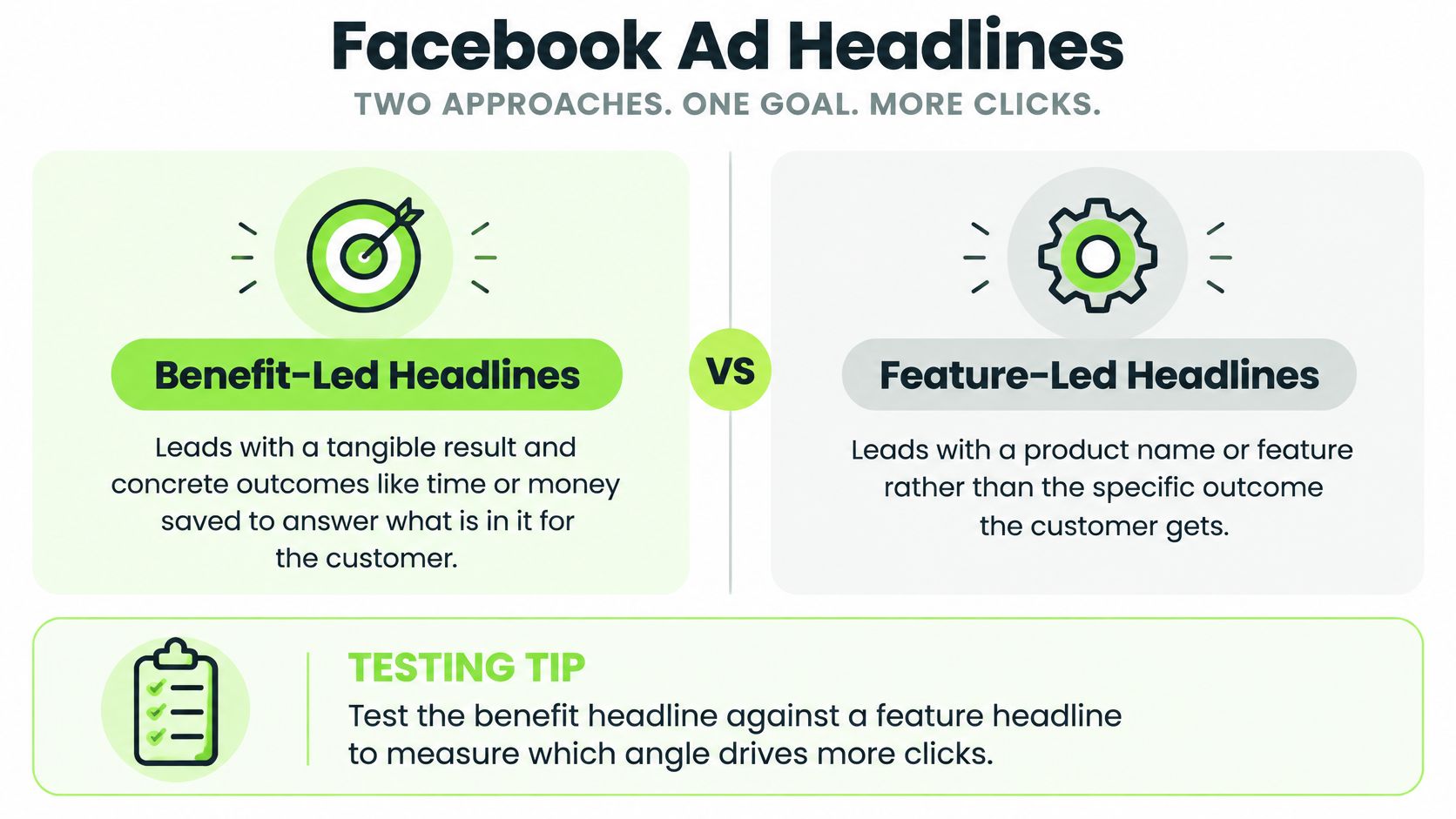
Fall Asleep 20 Minutes Faster Tonight tells a tired viewer exactly what she gets. Get Your Store Stats in Under 60 Seconds does the same for a busy store owner. Benefit-led headlines for Facebook ads state one specific outcome, so they answer "what's in it for me?" before truncation cuts the thought short.
Use this pattern for consideration and conversion campaigns where the audience already knows the category. A Shopify seller promoting a cleaning wipe doesn't need curiosity. Keep Your Kitchen Clean With One Wipe works because the job, speed, and effort saved are clear in one line.
How to test the benefit cleanly
- One outcome only: Cut secondary claims. "Softer, stronger, cheaper" gives the reader three weak reasons instead of one strong one.
- Numbers with proof: Use a time, amount, or count only when your product page, test, or reviews can back it up.
- Benefit versus feature: Run "Fall asleep faster" against "Weighted 15 lb design" on the same creative, audience, and landing page.
Before testing, search the Meta Ad Library for your product category and tag which outcomes competitors repeat. If every rival promises better sleep, test a narrower outcome such as fewer wake-ups or a cooler night. Category-specific swipe files help too, and you can see how narrow angles differ in Facebook ad examples for books, where the benefit often has to carry a product with no dramatic visual demo.
This comparison shows why the outcome usually beats the feature in Feed.
2. Question Headlines
A question works when the reader answers yes. Waking Up With Back Pain Again? doesn't sell a mattress topper yet. It gets the right person to identify herself, then lets the creative and landing page deliver the answer.
This pattern fits cold, problem-aware audiences best. The frustration has to be real and specific enough that the wrong reader scrolls past without feeling tricked. Tired of Guessing Which Products Are Trending? speaks to a store owner doing manual research. Want to See What Your Competitors Are Running? is broader, so it needs a primary text and image that narrow the promise fast.
Where questions break
Don't invent the wording in a meeting room. Pull it from reviews, support tickets, comments, and search queries. Customers rarely say "suboptimal lumbar support." They say their back hurts when they wake up.
Practical rule: If the honest answer for most viewers is no, rewrite it. A manipulative question earns a fast no and kills the click before your offer appears.
Test two or three questions in the same ad set while holding everything else constant. Say a skincare store tests Dry Skin by Noon Again? against Still Reapplying Moisturizer at Lunch? The winner tells you which moment in the customer's day she recognizes, not just which sentence sounds cleverer. Check the Ad Library first for the exact complaint language rivals use, then choose a sharper moment they aren't owning.
3. Number and Specificity Headlines
Numbers make a promise feel bounded. 3 Mistakes Killing Your Shopify Conversion Rate sounds finishable. Up to 40% Off Our Winter Collection sounds measurable. 5 Products Trending in Home Fitness This Month tells a researcher she'll get a short, organized list instead of an open-ended pitch.
Use this pattern for traffic, lead, and sale campaigns where the concrete deliverable is the reason to click. One benchmark summary in AdPlay AI's Facebook ad headline guide places average Facebook Traffic-campaign CTR at 1.71% and Lead campaigns at 2.59%, but treat those as directional controls only. Your own baseline, with creative and landing page held constant, tells you whether a number improved qualified clicks.
Getting the number right
- Lead when price drives action: Put "40% off" first for a price-sensitive, warm audience. Burying it wastes the strongest word.
- Match the landing page exactly: If the headline says five products or 40% off, the page must show five products and that discount without hunting.
- Keep odd counts honest: Marketers often test odd numbers in list headlines, but don't pad a weak list to reach seven.
Say a home fitness store tests 5 Resistance Bands for Small Apartments against Resistance Bands for Small Apartments. The numbered version should win on scan clarity if the landing page delivers a tight comparison. Before launch, search the Ad Library by your niche and note whether competitors lead with counts, percentages, or prices, because repeating the dominant format makes your ad easier to ignore.
4. Urgency and Scarcity Headlines
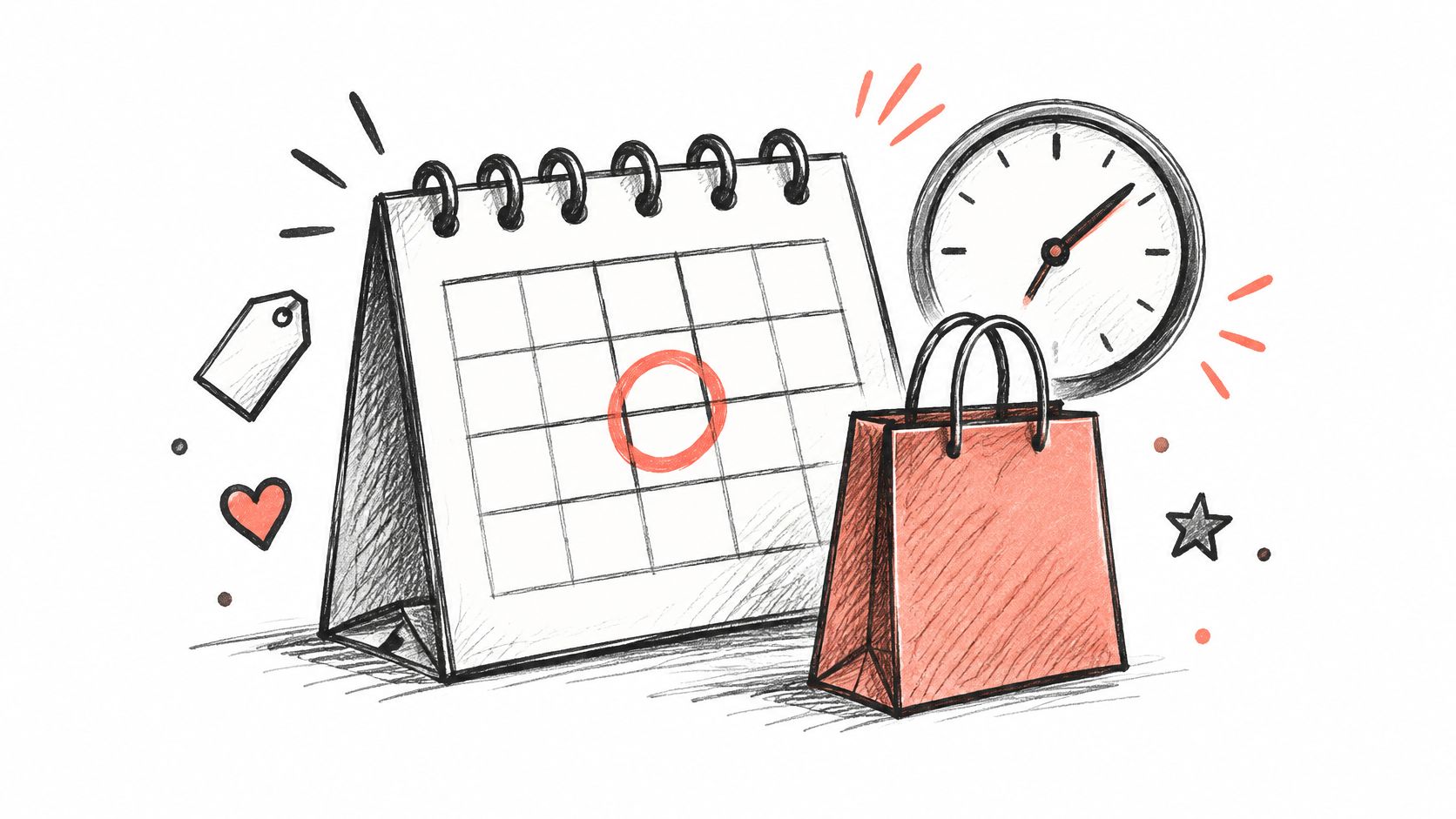
Sale Ends Sunday Midnight is not persuasive writing. It's a scheduling fact, and for a warm audience that already wants the product, the fact is enough. Urgency headlines for Facebook ads work when timing is part of the offer, such as a seasonal sale, flash promotion, or limited product drop.
Final 24 Hours: Buy One, Get One Free suits retargeting and email-list audiences who need a reason to act now instead of later. Limited Batch: Only 50 Units Available suits a real small run where stock can sell through. Neither belongs on an evergreen cold campaign that runs unchanged for months.
Rules that protect trust
Only use a deadline or stock limit that's real. Pause or update the ad the moment the promotion ends, and show the same deadline in the creative so the headline doesn't look like a last-minute pressure tactic.
If your "final hours" ad is still live next week, you've trained buyers to ignore every future deadline you publish.
For competitor timing, search the Ad Library around seasonal peaks and record when rivals start and stop similar promotions. Say three candle brands launch winter scarcity ads in the same week every year. You can launch earlier with a benefit angle, or wait and use urgency only when your batch is genuinely low. Don't join a discount pileup just because everyone else's calendar says so.
5. Social Proof Headlines
Rated 4.9 Stars by Verified Buyers reduces risk before the reader knows your brand. Join 80,000 Customers Who Switched reframes the purchase as a decision other people already made. For a store with real reviews and a verifiable base, social proof is often the most credible pattern for warm audiences comparing alternatives.
It also matches how Facebook advertising was built. In its November 6, 2007 Facebook Ads announcement, Facebook combined business Pages, an advertising system, and insights into user activity and ad performance. Ads were linked to social context and measurable response from the start, so proof was never meant to sit apart from targeting and creative.

Making proof believable
- Verify every figure: Cite only review scores and customer counts you can document today, and update them as they change.
- Show the source: Name verified buyers, a timeframe, or a specific category when a claim could be misread.
- Pair it with a face or quote: Put a real customer sentence in the creative so the headline doesn't read like a badge you designed yourself.
The Top-Selling Blender in Canada is strong only if you can define top-selling, Canada, and the period. Say a supplement store has strong reviews but a small base. I recommend leading with the rating and a specific use case, then checking the Ad Library to see whether larger rivals are already flooding the feed with bigger customer counts you can't credibly match.
6. Problem-Solution Headlines
Tired of Lost Keys? Never Lose Them Again contains the whole sales argument. Problem, recognition, fix. The viewer knows in one line whether the product is for her, which makes this pattern reliable for physical products and services with a clear, visible use case.
It fits cold to warm audiences who feel the frustration often but haven't started comparing solutions. Frizzy Hair in Humidity? Try Our Anti-Frizz Serum names the exact condition. Struggling With Slow Store Speeds? Optimize in One Click names the business pain and the effort required. Both beat a clever brand slogan because neither asks the reader to work out the relevance.
This example format shows how quickly the solution should become visible after the problem is named.
Writing the problem in their words
Mine reviews and comments for the customer's phrasing, then keep problem and solution in one line where possible. Test a softer framing against a stronger one. Tangled Cables Every Morning? may pull a broader audience than Hate Tangled Charger Cables?, but the stronger version can filter better.
Placement matters too. Discussion of automated, multi-placement delivery in Pilothouse's Meta ecommerce benchmarks is a reminder that one headline may sit beside fast video in Reels, a static image in Feed, and little visible text elsewhere. Build a small headline system, not one perfect line. Use a short problem label for fast placements and a fuller problem-solution line for Feed, then audit competitor ads by format and placement in the Ad Library before you assume one version travels everywhere.
7. Price-Anchored and Offer Headlines
Was $89, Now $49 This Week Only gives the reader a reference point and a gain. Free Shipping on Orders Over $40 removes a known checkout objection. Get the Full Starter Kit for Less Than $30 reframes a bundle against a familiar spending threshold.
Use price anchoring for warm and retargeting audiences where value comparison is the decision. It's weaker for cold premium products, where leading with a cut can make quality look negotiable. Say a skincare brand sells a considered routine. A benefit or proof headline should qualify the buyer first, then price can close in retargeting.
Price claims that hold up
- Real compare-at prices only: Use "was" pricing only when you sold at that price.
- Clear terms up front: Put shipping thresholds, fees, and eligibility in plain language to avoid disputes and policy trouble.
- Judge beyond first purchase: Track repeat buying and customer lifetime value, because a deep anchor can win cheap first orders that never return.
Context still matters. In Tinuiti's Q3 2024 Digital Ads Benchmark Report, Facebook CPM declined 12% year over year while impressions increased 20% among its benchmarked advertisers. Cheaper reach doesn't make an unprofitable offer profitable. Before copying a rival's anchor, research what the market repeats using data on the most common discount in Facebook ads, then decide whether matching it helps your margin or just matches their race down.
8. Curiosity Gap Headlines
The One Setting Most Shopify Stores Miss hints at an answer without giving it away. Why Our Best-Selling Mug Sold Out Again opens a small gap between what the reader knows and what she wants to know. Used for education, launches, and case-study style ads, curiosity can earn clicks that a plain offer headline wouldn't.
It's also the easiest pattern to misuse. The Ingredient Hiding in Your Favorite Snack will pull curious readers who have no intention of buying a snack alternative. That's the trade-off. Analysis cited in Chamber Media's Meta Andromeda creative strategy article found CTR increased 9% while the share of clicks converting into orders fell 23%, cost per purchase rose 22%, and return on ad spend declined 26%. A high-click headline can be a conversion liability.
Keep the gap qualified
Deliver the promised answer quickly on the landing page. Keep the gap narrow enough that one click resolves it, and add a qualifier when you need buyers rather than browsers. The Checkout Setting Shopify Stores Miss filters better than The Setting Everyone Misses because it names platform and job.
Judge it downstream: Measure landing-page views, add-to-cart rate, purchase conversion, and bounce, not CTR alone. Fewer clicks with more profitable sessions is a win.
Before testing, check which curiosity angles competitors already run and how long those ads stay live. Pair that with the recurring structures in common Facebook ad hooks so you borrow the mechanism, then write a gap only your landing page can close.
Facebook ad headline patterns compared by best use, strength, and main risk
| Pattern | Best for | Key strength | Main risk |
|---|---|---|---|
| Benefit-Led Headlines | Showing a clear customer outcome | Communicates tangible value quickly | Can sound generic or make unsupported claims |
| Question Headlines | Addressing a familiar audience frustration | Encourages self-identification and engagement | Can feel clichéd or mismatched to the offer |
| Number and Specificity Headlines | List content, education, and discount campaigns | Makes the promise concrete and easy to scan | Arbitrary or inaccurate figures undermine trust |
| Urgency and Scarcity Headlines | Genuine limited-time sales and product drops | Encourages faster decisions | Fake or repeated scarcity damages trust |
| Social Proof Headlines | Products with strong, verifiable reviews | Builds trust and reduces hesitation | Outdated or unverified claims harm credibility |
| Problem-Solution Headlines | Products that solve a clear, specific problem | Shows relevance and the proposed fix | Negative wording can alienate viewers |
| Price-Anchored and Offer Headlines | Promotions where price is a key buying reason | Makes savings and value clear | Can erode brand value or rely on misleading reference prices |
| Curiosity Gap Headlines | Educational content, launches, and case studies | Motivates clicks with an intriguing information gap | Weak payoff can feel like clickbait and attract low-intent clicks |
Turning Headline Patterns Into a Testing Routine
Don't test all eight patterns at once. Choose two or three patterns that fit your audience stage and campaign goal, write three variations of each, and run them against the same creative, audience, placement, budget, and landing page. The headline should be the only real variable, and your primary metric should be declared before launch.
For a cold product launch, that shortlist might be problem-solution, question, and benefit-led. For a warm sale, it's more likely social proof, price-anchored, and urgency. For educational traffic, test number and curiosity headlines, but judge them on landing-page view rate, add-to-cart rate, and purchase conversion, not clicks alone. A headline that attracts the wrong reader cheaply is still expensive.
Research before you write
Search the Meta Ad Library before you finalize variants. Record each competitor headline's exact wording, character count, angle, offer type, format, placement, landing page, and run dates. You're not looking for a line to copy. You're looking for saturation, longevity, and gaps, such as every rival leading with a discount while none owns the specific problem customers mention in reviews.
Our ads library searches Meta creatives by brand, niche, format, placement, and country, and each ad opens to show its copy, landing page, run dates, and the brand's other ads. Filtering by format, country, and run time, saving creatives to boards, and viewing full ad history are free after you sign up for a free account. That makes it practical to save promising examples to folders, share them with a team, and compare how one brand changes headlines across products instead of collecting disconnected screenshots.
Then inspect rendering on a real phone. Check whether the value proposition survives truncation in Feed, whether a vertical video makes the headline redundant, and whether the primary text repeats the same promise in different words. Write a short version for fast placements and a more explicit version for Feed when one line can't do both jobs well. The visual side matters here too, and Facebook advertising tips from Bulk Image Generation can help you align image choices with the promise your headline makes.
Keep a simple record of every test. Note the pattern, audience stage, offer, headline, character count, creative, placement, CTR, landing-page view rate, add-to-cart rate, purchase result, and what you'll change next. After a few rounds, you won't have a folder of borrowed winners. You'll have your own evidence about which promise your buyers recognize, trust, and act on, and that's the only headline library that reliably improves headlines for Facebook ads over time.
Search live Meta ads by brand, niche, format, placement, and country, open each ad to inspect its copy, landing page, and run dates, then save the strongest headline examples to boards for your next test. Visit AdLibrarySpy to build your competitor headline shortlist before you launch.
More guides
Try AdLibrarySpy free
Search millions of stores and real Meta ads. No card, no trial — sign up with just your email.