NT.CO ad: Scarlett Boyd

NT.CO
🇨🇦
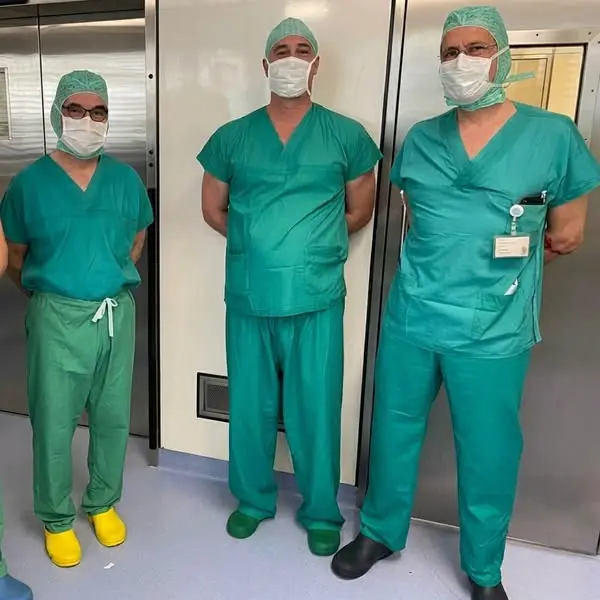
I've been a surgical nurse for 25 years, and untreated bladder leakage doesn't stay the same — it gets worse, quietly, while you keep telling yourself it's fine. Not in the staff room. Not at team meetings. Not even with your closest colleagues. You just get on with it. The frantic dashes to the loo between cases. The extra padding you tuck into your knickers before a six-hour operation because you know — you absolutely know — that somewhere around hour three, you're going to feel that warmth spreading and there's nothing you can do about it. The dark scrub trousers you started requesting specifically so it wouldn't show. The way you stopped laughing at jokes in theatre because a proper laugh — the kind that comes from your belly — meant a leak. Every single time. I've watched patients recover from operations I've assisted on. Watched them walk out of hospital with their lives changed for the better. Meanwhile I'm standing there in a wet pad, praying nobody notices the smell, counting down the minutes until I can get to the changing room. About four years ago, it crossed a line. I sneezed during a procedure. Not a big sneeze. Just a normal, human sneeze. And I felt it. That rush. Right there in theatre. Standing over an open patient. I couldn't leave. I couldn't move. I stood there for another forty-five minutes, finishing the case, feeling the wetness against my skin, praying nobody could see it running down my leg under the surgical gown. When I got to the changing room afterwards, I sat on the bench and cried. I was 52. I'd had two children, both delivered naturally. My pelvic floor had been through a war. But this — standing in an operating theatre in a puddle of my own urine — this was something else entirely. That night I told my husband. First time I'd ever said it out loud. "I'm leaking, Jim. During surgery. I can't control it any more." He didn't say anything for a long while. Then: "What does your GP say?" My GP. Right. I'd already been down that road. She'd started me on pelvic floor exercises — which I did religiously for eight months. Three sets a day. Morning, lunchtime, and before bed. Didn't miss a single day. Still leaked. Then she suggested Oxybutynin. The anticholinergic. "It'll calm the bladder spasms," she said. What she didn't mention was the dry mouth so severe I couldn't swallow food without water. The constipation that had me in tears. The brain fog that made me feel like I was working through treacle — dangerous for someone who hands instruments to surgeons for a living. I took it for four months. The leaking slowed slightly. But I felt like I was losing my mind. Literally. I'd forget instrument names I'd known for two decades. I'd blank on protocols mid-procedure. My charge nurse pulled me aside. "Donna, are you all right? You seem off." I stopped the medication that night. Then my GP suggested the next option: surgery. A mid-urethral sling procedure. She said it casually. Like she was suggesting I try a different brand of yoghurt. "It's a day case. You'd be back to work in two to three weeks." But I'm a surgical nurse. I know what happens in operating theatres. I know the complication rates they don't tell you about at the consultation. Mesh erosion. Chronic pain. Infections that come back again and again. I've seen women come in for revision surgeries years later, worse off than before. My mother had the sling procedure done in 2011. By 2014, the mesh had eroded into her bladder wall. She had three further operations to fix it. Three. She still leaks. She still hurts. So when my GP handed me the surgical referral, I smiled and said I'd think about it. But I knew I wasn't doing it. I just kept buying pads. Heavy-duty ones. The kind that could absorb a small flood. I'd go through four or five a shift. I kept a plastic bag in my locker for the used ones. Every day I'd walk into the hospital — a place where I help people heal — while hiding my own body's failure under layers of padding and dark fabric and shame. Then about five months ago, something happened. I was prepping a patient — Margaret, lovely woman, early sixties — for a routine gallbladder removal. Chatting away to keep her calm before her anaesthetic. She mentioned she'd been nervous about the operation because of her bladder. "I used to leak terribly," she said. "Couldn't cough, couldn't sneeze, couldn't even bend over to pick something up without an accident. Wore pads for six years." My hands paused over the IV line. "Used to?" She smiled. "Found something that actually works. A pumpkin seed oil. But not the ordinary kind — I tried those. Didn't do a thing. This one was different." I must have looked sceptical, because she laughed. "I know, I know. I sounded just like you right now when my friend told me. But love, I'm not wearing a pad today. First time in six years I've come to a medical appointment without one." I finished prepping her. The operation went fine. But I couldn't stop thinking about what she'd said. That night, my scrubs in the wash basket — damp again — I sat down at my computer and started researching. Turns out, the science on pumpkin seed oil and bladder function is real. Research-backed studies published in urology journals. But what I found went deeper than I expected — the root cause of bladder leakage isn't muscular. It's hormonal. As estrogen drops — during perimenopause, menopause, postpartum, or chronic stress — the tissue lining the bladder and urethra thins out. It loses elasticity. It loses the ability to create a proper seal. The urethra is lined with estrogen-sensitive tissue. When estrogen declines, that tissue atrophies. It's like a rubber seal that's dried out and cracked. No amount of muscle strengthening can fix a seal that's deteriorated at the tissue level. That explained everything. Eight months of pelvic floor exercises did nothing — because I was strengthening muscles surrounding tissue that had deteriorated. The exercises couldn't repair the tissue itself. And the Oxybutynin? Anticholinergics block acetylcholine, which reduces bladder contractions — but they also impair tissue repair and dry out all moisture, including the natural lubrication the urethral lining needs to heal. The tissue keeps deteriorating. When you stop the medication, the leaking comes back worse than before. The body needs specific nutrients to rebuild that deteriorating tissue from the inside. Beta-sitosterol restores thickness to the urethral and bladder lining — repairing the seal at the cellular level. Omega fatty acids reduce inflammation in the bladder wall and pelvic tissue. Zinc and magnesium support bladder smooth muscle tone, so the bladder holds properly between trips. Real research. Peer-reviewed journals. Not blog posts. But then I noticed something that made my stomach drop. People weren't just saying "pumpkin seed oil supplements." They were being very specific about which ones worked and which didn't. One woman said she'd tried three different brands online. Nothing. Another said she'd bought the cheap one from the supermarket supplement aisle. Took it for two months. No improvement whatsoever. Someone else said most pumpkin seed oil supplements are basically useless — something to do with how they're made. I started digging deeper. Turns out, most pumpkin seed oil supplements use high-heat extraction methods that strip out the very compounds that affect bladder function. The beta-sitosterol. The specific phytosterol profile. Gone. What you're left with is essentially cooking oil in a capsule. And the dosing? The clinical studies used specific concentrations of these active compounds. Most commercial supplements contain a fraction of what was studied. But they don't have to disclose that. The label just says "pumpkin seed oil." No phytosterol content listed. No standardization. So you're taking what you think is pumpkin seed oil for your bladder, but you're really getting stripped-down oil with almost none of the compounds that actually work. No wonder the supplements people try from the chemist never seem to do anything. I ordered one of the popular brands anyway. Took it for six weeks. Didn't miss a day. My leaking? Exactly the same. Four to five pads per shift. I tried another brand. The one with the telly adverts. The lovely packaging. Eight weeks. Still leaking. Still wearing dark scrubs. Still hiding. I was ready to give up. Accept that this was just my life now. That I'd spend the rest of my career — however long I could keep going — wearing incontinence pads under my surgical gown. Then I remembered what Margaret had said. She'd been very specific about the brand. Said most of them didn't work — but this one did. Nutrition Therapy. I looked them up, expecting another let-down. But they were different. Cold-pressed pumpkin seed oil. Not the heat-extracted, chemically processed stuff. Cold-pressed below 40 degrees Celsius, which preserves the full phytosterol profile — the beta-sitosterol and fatty acid compounds that the clinical studies actually used. And here's what really set it apart: liquid drop form. Not capsules. Standard capsules only have an absorption rate of around 39 per cent — most of what's inside passes straight through the digestive system without being used. Liquid drops achieve roughly 93 per cent absorption. The active compounds enter the bloodstream directly and reach the bladder and urethral tissue at therapeutic concentrations. Research-backed formula. Proper dosing. The concentration that matches what was studied — not a watered-down fraction. No fillers. No unnecessary additives. No cheap binders or synthetic ingredients crammed in to pad out the label. Natural ingredients. No prescription needed. My next shift was in five days. If this didn't work, I was going to ring about that surgical referral. I was going to follow my mother's path. I didn't see another option. I ordered it. When the bottle arrived, I mixed my first dropperful into a glass of water that morning. Didn't expect anything. I'd already been let down twice. But something felt different within the first few days. Not dramatic. Not a miracle. Just... a shift. Like the urgency that usually hit mid-morning — that sudden, desperate need to find a loo NOW — was quieter. Still there. But quieter. By the end of the first week, I noticed I wasn't clenching any more. You'll know what I mean if you deal with this. That constant low-grade tension in your pelvic floor, bracing for a leak. It wasn't gone. But it was softer. One week in: I used three pads instead of five during a ten-hour shift. Two weeks in: two pads. And one of them was barely damp. I sneezed at home. A proper sneeze. And nothing happened. I stood there in the kitchen, frozen. Then checked. Dry. My husband looked up from his newspaper. "You all right?" "I just sneezed." "...Okay?" "Jim. I sneezed and nothing happened." He didn't understand. How could he? But I stood there with tears running down my face because I'd sneezed and I was dry. Three weeks: one thin liner per shift. Just in case. Four weeks: I laughed in theatre. A proper laugh. The surgeon told a joke — a daft one — and I laughed without clenching, without bracing, without that split-second calculation of how much was going to come out. And nothing came out. Nothing. Six weeks in, I walked into work without a pad for the first time in four years. Just ordinary underwear. The kind I used to wear before all this started. I made it through a seven-hour operation. A full shift. Not a single drop. When I got to the changing room, I checked. Dry. I sat on that bench — the same bench where I'd cried four years earlier — and I cried again. But these were different tears. At my next appointment, I told my GP what I'd been taking. She looked at the bottle. Read the label. Pulled up some of the research on her computer. "Well," she said, closing the laptop. "We can take the surgical referral off the table. Whatever this is doing for you, keep doing it." No surgery. No sling. No mesh. I rang Jim from the car park. "She said no surgery." Silence. Then: "Thank God, Donna. Thank God." That was five months ago. This morning I sneezed three times in a row — hay fever — and didn't leak a single drop. Last month I went to my niece's wedding. I danced. I danced for two hours. In a dress. Not scrubs. Not dark trousers. A lavender dress. No pad. No liner. No backup plan. I danced and I laughed and I didn't think about my bladder once. And my hair. I have to mention this because I wasn't expecting it. About two months in, my hairdresser asked what I was doing differently. She said the thin patch at my crown — the one I'd been trying to hide with a strategic parting for three years — was filling in. New growth. Little baby hairs standing straight up. I honestly hadn't noticed. But she was right. And now, five months on, my hair's thicker than it's been since my forties. I'm sharing this because I know there are women — and men — reading this right now who are living the life I was living. Wearing pads every day. Making excuses for why you can't go on long car journeys. Turning down invitations because you're terrified of leaking in public. Refusing to laugh. Refusing to sneeze. Refusing to live. If you've tried other pumpkin seed oil supplements and they didn't work — now you know why. Most of them are heat-extracted, stripped of the active compounds, and locked in capsule form that your body can barely absorb. You were never getting the real thing. Nutrition Therapy is different. Cold-pressed below 40°C. Full phytosterol profile preserved. Liquid drop form with 93% absorption. Research-backed, clinical-strength dosing. Natural ingredients, no prescription needed. After 25 years as a surgical nurse, I thought I'd end up on the operating table myself. Turns out, my patient knew something I didn't. Here's where I got mine: 👉 https://nutritiontherapy.co/products/pumpkin-seed-oil-drops — Dr Rebecca Bennett P.S. — A few things I wish I'd known before ordering: Nutrition Therapy comes with a 60-day money-back guarantee. If it doesn't work for you, you get your money back. I wish I'd known that before wasting months on those other brands that didn't do anything. Plus every order ships free — and right now they're including a free mystery gift worth $32.99. Just one dropperful mixed into any beverage, once a day. That's it. I want to mention — Nutrition Therapy is a smaller company. They've been getting a lot of attention lately — probably because nurses and patients keep telling each other about it — and they sometimes can't keep up with demand. I want to apologize in advance because when you click the link, you might see they're sold out. I've had colleagues wait weeks for it to come back in stock. But I'd still suggest having a look. If you're living in pads. If you've tried pelvic floor exercises and they didn't work. If your GP is suggesting surgery and you're terrified of going under the knife. If you've tried other pumpkin seed oil supplements and got nothing. I went from five pads a shift to zero in six weeks. I'm not following my mother's path. If there's even a chance this could work for you, it's worth a try. 👉 Check if Nutrition Therapy is in stock here: https://nutritiontherapy.co/products/pumpkin-seed-oil-drops
Performance Signals
- Status
- Still running
- Time Running
- 34 days
- Active Period
- Aug 28, 2026 → Today
- First Seen
- Sep 30, 2026
Creative & Links
- Meta post ID
- 1563201725541013
- Meta page ID
- 1243567648836652
- Format
- Image
- Placements
- Facebook, Instagram, Audience Network, Messenger, Threads
- Country
- 🇨🇦 Canada
- Original Ad
- Open in Meta Ad Library
More from NT.CO




Nutrition Therapy
nutritiontherapy.coNT.CO
Shop Infos
- Created
- Feb 13, 2026 · 8 months
- Category
- Nutrition › Health
Search every indexed Meta ad by niche, format, country and run time, save creatives to boards and track the brands behind them — free, no card.