NT.CO ad: Carol Warren

NT.CO
🇳🇱
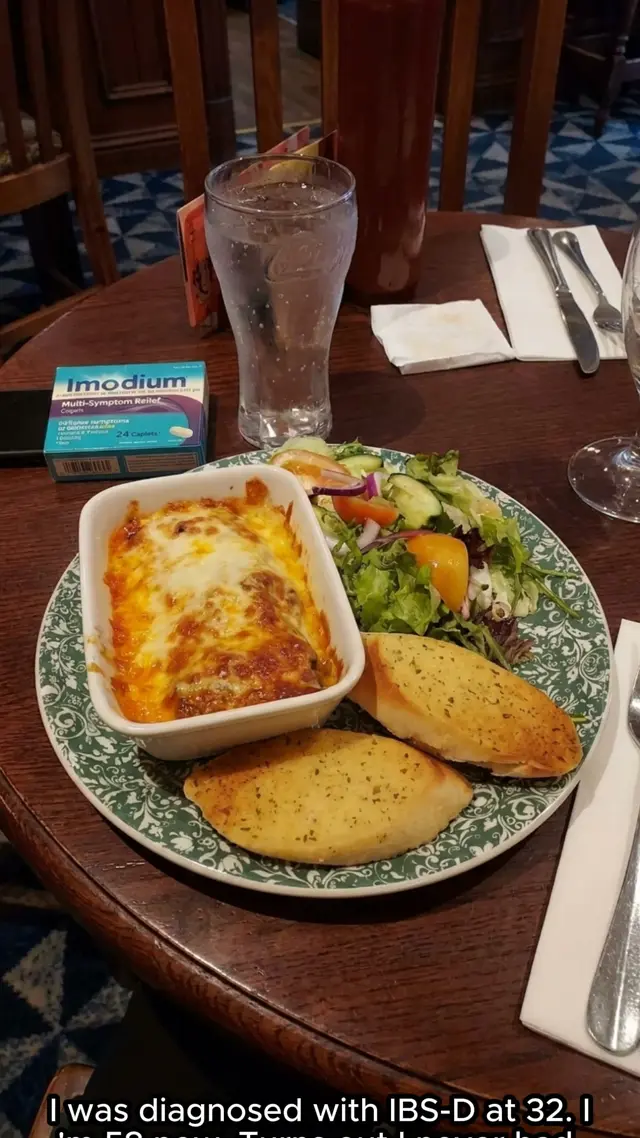
My sister had been taking Imodium for exactly three years when a neurogastroenterologist told her something that made us both cry. We'd accepted the IBS-D diagnosis after years of her looking pregnant from bloating and rushing to the toilet eight times a day, watching it get worse every single summer — but nothing prepared us for what we'd learn. I'm Karen, 54, from Manchester. That afternoon in Dr. Sarah Mitchell's office, my sister grabbed my hand, her face white as a sheet. "Karen... I don't have IBS. I never had IBS." SIBO. Small Intestinal Bacterial Overgrowth. Bacteria colonising her small intestine where they didn't belong. Fermenting her food. Producing hydrogen gas. Causing every single symptom she'd suffered for three years. We just held each other and sobbed. Three years of suffering. Three years of doctors saying "it's just IBS-D." Three years of Imodium and FODMAP handouts. And the answer had been a bacterial overgrowth all along. But here's what made it worse. Every treatment they'd given her had been fighting the wrong enemy the entire time. Let me back up. My sister's nightmare started after food poisoning at 51. Sudden diarrhea that never went away. Bloating so severe she'd change into pyjamas by midday. Her stomach looked six months pregnant by lunchtime. And the strangest part — it always got dramatically worse in summer. Every heat wave, the diarrhea went into overdrive. Nobody could tell her why. "IBS-D," her doctor said. "Very common after a gut infection. Try Imodium and the low-FODMAP diet." Imodium helped on good days. Low-FODMAP shrank her life one food at a time. Neither did anything to fix what was actually wrong. The gastroenterologist's verdict: "IBS-D. Manage your stress. Try cutting out more foods." Cutting out more foods made it WORSE. Her safe foods list went from thirty to twelve. The diarrhea became more unpredictable. She started wearing pads because she couldn't trust her own body. She stopped going on holidays. Stopped day trips. Stopped being anywhere she couldn't get to a bathroom in under sixty seconds. And summer, when everyone else was out enjoying the heat, was when she hid indoors the most. "I feel like such a disappointment to my husband," she said one night, crying. "He has to deal with my erratic episodes. It's ruined our date nights. He likes trying different foods and we have to eat at boring restaurants because of me." That's when I went into research mode. Up until 4 AM every night reading studies, forums, medical journals. Three months in, I found it: A neurogastroenterologist explaining that a large subset of people diagnosed with IBS-D actually have SIBO. Dr. Sarah Mitchell confirmed it with a hydrogen breath test — something no GP or gastroenterologist had ever ordered in three years: "Your sister has hydrogen-dominant SIBO. Bacteria have migrated up into her small intestine. They're fermenting her food prematurely, producing gas that pulls water into the intestines. That's the diarrhea. That's the bloating. That's the urgency. That's everything." "But why does it always get so much worse in summer?" I asked. "Every hot day is a catastrophe for her." Dr. Mitchell nodded like she'd heard it a hundred times. "Because of what heat does to her gut. That overgrowth floods her intestines with water all year round. Normally the gut claws some of that water back before it leaves the body, and it uses blood flow to do it. But when she's hot, her body pulls that blood away from her gut and sends it to her skin to cool her down. So her gut loses its ability to reabsorb anything. And all the water those bacteria are flooding in has nowhere to go but straight through her. That's why it spikes in the heat. The bacteria didn't change. Summer just stripped away the one thing keeping that flood from rushing out. And honestly, it's some of the clearest proof this was never plain IBS. IBS is a label. It has no reason to get worse with the weather. A bacterial overgrowth flooding a gut that can't reabsorb water in the heat does." She explained SIBO hides behind a damaged gut lining — the bacteria damage the intestinal wall, preventing absorption of tablets and capsules. Every supplement, every probiotic, every pill she'd swallowed for three years couldn't even be absorbed. Her body literally couldn't use them. It was the same damaged lining that couldn't hold onto water once the heat pulled the blood away. Dr. Mitchell said Rifaximin — the standard antibiotic — might work temporarily. My sister started immediately. Two weeks in: The diarrhea eased slightly. We had hope. But three weeks later, everything came flooding back. Worse than before. We went back to Dr. Mitchell. "Rifaximin kills bacteria indiscriminately," she said. "Good and bad. It might knock the overgrowth back temporarily, but the relapse rate is massive. The beneficial bacteria your gut needs to recover get wiped out too. Without them, the overgrowth comes right back." She continued: "Plus it disrupts your entire gut microbiome. If you keep cycling through rounds of antibiotics, you risk long-term damage to your bacterial ecosystem." I was devastated. We'd paid hundreds for an incomplete treatment that wiped out everything. "There's a better way," she said. "A compound called carvacrol — found in concentrated oil of oregano. It targets the harmful bacteria causing the overgrowth without destroying the beneficial flora. And in liquid drop form, it bypasses the malabsorption problem entirely." Carvacrol: Targets the harmful bacteria in the small intestine selectively Liquid drop form: Bypasses the damaged gut lining that blocks tablets and capsules High-potency concentration: At the levels the research actually uses She recommended finding an oil of oregano with high-potency carvacrol, clean carrier oil, and third-party testing. Most products fail because they're low-potency filler in cheap carrier oils — below the threshold that does anything. My sister started taking drops immediately. Day 3: Urgency reduced significantly Day 7: Bloating finally going down Day 10: First morning she didn't rush to the toilet Day 14: Could eat garlic bread for the first time in three years Day 21: First completely normal bowel movement — solid, formed, no urgency Day 25: Complete transformation Flat stomach. No diarrhea. No urgency. No gas. My sister back. And this time it stayed. No relapse. Because the beneficial bacteria weren't destroyed alongside the harmful ones. What really shocked us was how fast everything resolved once the right thing was targeted. Three years of Imodium and FODMAP restrictions hadn't moved the needle. Three weeks of targeting the actual overgrowth and her gut was working again. After my sister's transformation, women in her IBS-D support group started asking questions. Linda, who'd tried Rifaximin: "The diarrhea came back in three weeks. The overgrowth bounced right back because the antibiotic wiped out everything. Oil of oregano drops targeted the bad bacteria and left the good ones. Now I'm actually better." Margaret: "Tried Rifaximin, got temporary relief. Switched to the drops. Diarrhea completely gone. Put the Imodium in the back of the drawer." Susan: "Couldn't afford rounds of antibiotics. The drops cost a fraction and worked better." All of them had been told "IBS-D." All of them had SIBO. Here's the truth doctors won't tell you: Your diarrhea isn't IBS-D. The bloating isn't a "sensitive gut." It's bacteria fermenting your food in the wrong place, producing hydrogen gas, flooding your intestines with water. And if it gets worse every summer, that's the heat stripping away your gut's ability to reabsorb that water — the clearest sign yet it was never plain IBS. Standard tests miss SIBO entirely. Colonoscopies, endoscopies, blood work — none of them test for bacterial overgrowth in the small intestine. You need a hydrogen breath test. Most doctors never order one. Meanwhile, the overgrowth grows. Damages your gut lining. Causes malabsorption. Worsens your symptoms year after year while doctors call it "IBS-D." And here's what nobody tells you about the standard treatments: Imodium: Slows motility temporarily. Doesn't eliminate bacteria. Tolerance builds. Two tablets become four. Getting less reliable every month. The overgrowth keeps growing underneath. Low-FODMAP: Restricts foods that feed the bacteria. Doesn't eliminate them. They adapt. Your safe foods list shrinks. You're starving the fire instead of putting it out. Rifaximin: Kills bacteria indiscriminately. Good and bad. Temporary improvement. Massive relapse rate. Overgrowth bounces back within weeks. Think about it: Imodium: Escalating doses for life FODMAP: Shrinking safe foods list forever Gastroenterologist visits: Hundreds each Rifaximin: Hundreds per round, relapse guaranteed Versus: Oil of oregano drops: A fraction of any of that. And they're running a buy two, get one free right now — which matters more than you'd think, because the last thing you want is to run out in the middle of summer. See why nobody tells you about carvacrol? My sister's been free of symptoms for eight months. Flat stomach all day. No diarrhea. No urgency. No relapse. She went on a proper summer holiday last month, somewhere hot. No Imodium. No safe food lists. No bathroom mapping. Her gastroenterologist was shocked: "What happened? Your IBS-D seems to have resolved." My sister told him about the SIBO diagnosis and the oil of oregano drops. The doctor just wrote "alternative treatment" in her notes. Last week my sister told me: "That Rifaximin knocked things back for two weeks but I crashed right back. The drops actually fixed me. You saved my life." If you have "IBS-D" with diarrhea, bloating, and urgency, here's what three years taught me: It might not be IBS-D. It might be SIBO. Imodium slows things down. But doesn't eliminate the overgrowth. Tolerance builds. Life keeps shrinking. Low-FODMAP restricts your diet. But the bacteria adapt. Your safe foods list keeps getting shorter. Rifaximin kills everything temporarily. But the overgrowth bounces right back. High-potency carvacrol in liquid drop form = Targets harmful bacteria. Preserves beneficial flora. Bypasses malabsorption. Addresses the root cause. No escalating Imodium doses. No shrinking safe foods list. No relapse. 60-day money-back guarantee. If symptoms don't improve, full refund. But they will improve. Because you're finally targeting what's actually wrong. Every day you wait is another day of: Diarrhea that controls your life Bloating that destroys your confidence Bacteria multiplying in your small intestine And another hot day that sends it all into overdrive. You don't have to suffer anymore. My sister is proof. Linda is proof. Margaret is proof. Susan is proof. A few weeks from now, you could be proof too. Karen P.S. — That round of Rifaximin my sister took? It wiped out her good bacteria alongside the bad. The overgrowth came right back within three weeks — worse than before. Oil of oregano drops target the harmful bacteria selectively. That's why she's actually better now, not just temporarily relieved. 👉 https://nutritiontherapy.co/products/oil-of-oregano
Performance Signals
- Status
- Still running
- Time Running
- 97 days
- Active Period
- Jun 27, 2026 → Today
- First Seen
- Sep 30, 2026
Creative & Links
- Meta post ID
- 1370217811700252
- Meta page ID
- 1152764237918766
- Format
- Image
- Placements
- Facebook, Instagram, Audience Network, Messenger, Threads
- Country
- 🇳🇱 Netherlands
- Landing Page
- nutritiontherapy.co/products/oil-of-oregano
- Original Ad
- Open in Meta Ad Library
More from NT.CO

Nutrition Therapy
nutritiontherapy.coNT.CO
Shop Infos
- Created
- Feb 13, 2026 · 8 months
- Category
- Nutrition › Health
Search every indexed Meta ad by niche, format, country and run time, save creatives to boards and track the brands behind them — free, no card.