Block Blaster ad: Jared Duffey
Block Blaster
🇺🇸
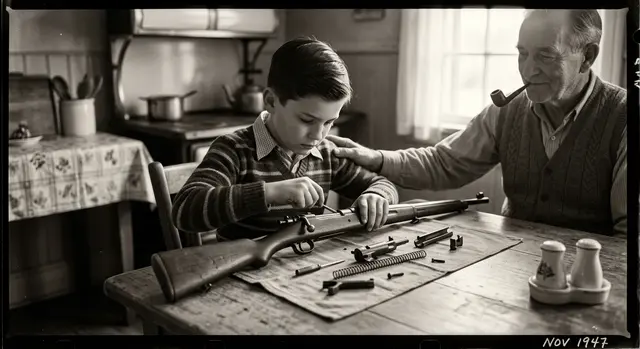
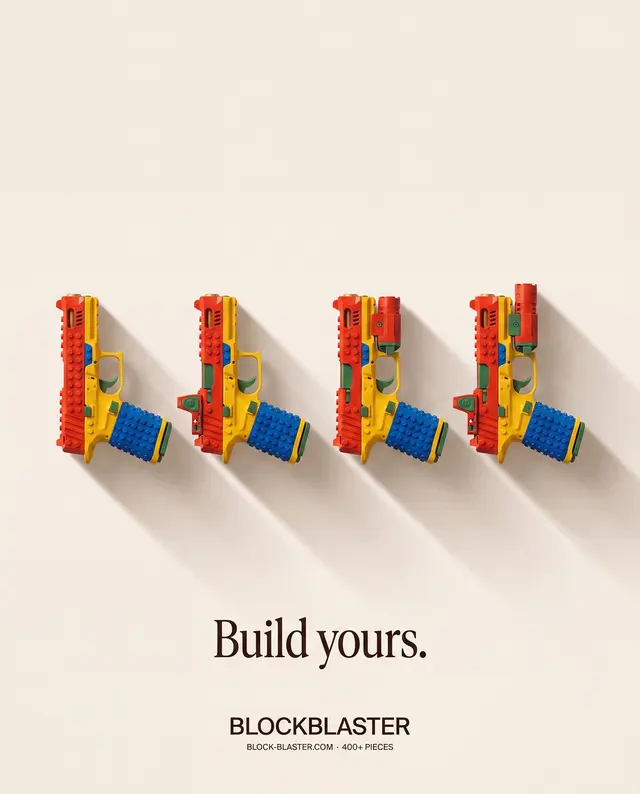
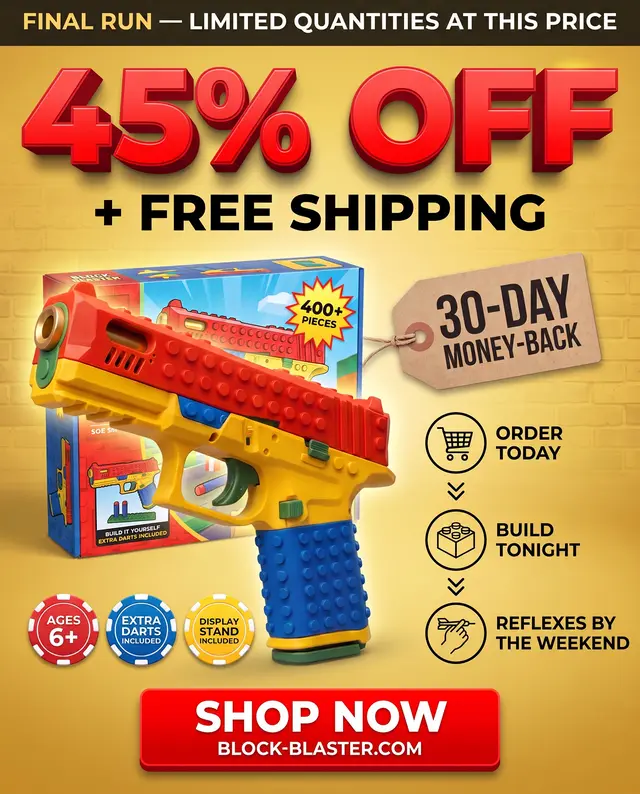
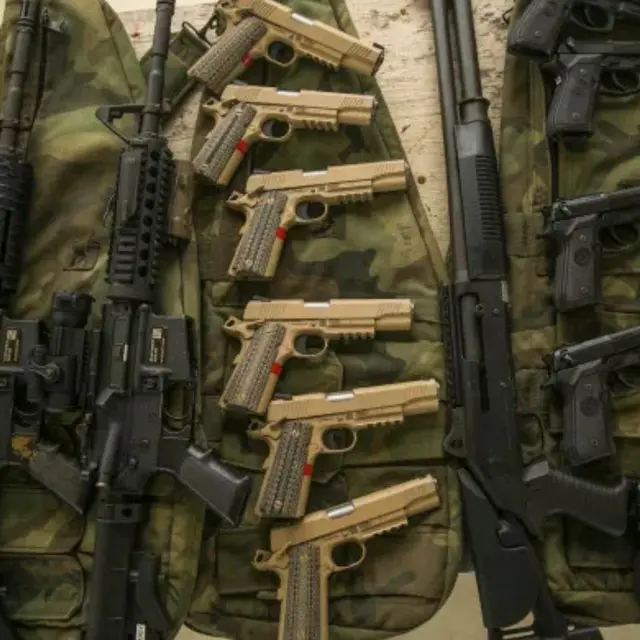
Eddie Eagle doesn't work. The four rules don't work. The school assembly your kid sat through last spring didn't work. I know how that sounds. I would have scrolled past me too six months ago. But I have to tell you what I found. Because I spent four months and almost four hundred dollars getting scammed trying to teach my eight-year-old son something that the federal government, the NRA, the school district, and three different parenting websites had all told me was already covered. And I don't want you to make the same mistakes I made. I'll get to the scams in a minute. First I have to tell you what I found out. Because if I don't, the rest won't make sense. It started at 3am. I couldn't sleep. My son had been at his cousin's house the previous Saturday. My brother-in-law owns three handguns. My brother-in-law is, by every measure anyone in our family has ever applied, a responsible owner. He has a safe. He has the four rules posted on the inside of the safe door. He had told his own son not to touch the guns probably a thousand times. That Saturday, while the boys were playing in the basement, his son showed my son one of the handguns. Nobody got hurt. The gun was unloaded. My brother-in-law walked in on them within sixty seconds. He took the gun back. He yelled at his son. He apologized to me, on the phone, that night. But for six weeks I could not sleep through a night. At 3am the following Tuesday I fell down a YouTube rabbit hole. The way you do at 3am. A video popped up. A pediatric trauma surgeon in Arizona giving a talk to a small medical conference. The thumbnail had the words "What Doesn't Work." I almost scrolled past. I am so glad I didn't. Because what that surgeon said in the next eighteen minutes broke something open in me that I did not know was even closed. She said most American parents are teaching gun safety to their children with a method that has been studied, peer-reviewed, and shown not to work for over twenty years. Not metaphorically. Literally. She said there was a body of behavioral research that had been mature since the early 2000s — published in major journals, replicated dozens of times, taught in every applied-behavior-analysis lab in the country — that showed verbal training did not install the safety reflex children need in actual encounters. She said law enforcement had known this for decades and had built its entire firearm-training curriculum around the corrected protocol. She said the protocol had never been made available to consumers in any meaningful form. She said civilian parents had been left with Eddie Eagle and a coloring book. She said this: "If you want to know why we keep losing children to firearm accidents at the same rate we lost them thirty years ago, look at what the curriculum was, and look at what the research said the curriculum should have been. Those are two different documents. One of them has been on the wall of every classroom in this country for a generation. The other one has been on the wall of every police academy. The parents of America have been handed the wrong one." That sentence hit me in the chest. Because here's the thing. For my entire adult life as a parent I have felt like something was off. Like the gun-safety advice everyone passes around — the four rules, Eddie Eagle, the safe in the closet, the "talk to your kid early and often" — none of it quite explained the news stories I kept reading. The kids who died had been told. The kids who died had been quizzed. The kids who died had nodded along to the videos. They still died. The advice felt like it was pointing at the wrong thing. Like it was the answer parents were allowed to find. And here was this surgeon saying the real answer had been published, in peer-reviewed journals, for over two decades, and had been quietly kept out of every consumer-facing gun-safety product in the United States. I had to know more. So I went down the rabbit hole. For four months. What I found absolutely wrecked my understanding of everything I thought I knew about how to protect my child. The corrected protocol is called behavioral skills training. BST in the literature. The first major paper on it for firearm-safety in children was Miltenberger and Himle, published in the Journal of Applied Behavior Analysis in 2004. The researchers took a group of children who had been through the Eddie Eagle program. Children who could recite the four rules in their sleep. Children whose parents would have sworn, on a stack of safety pamphlets, that their kids were trained. The researchers put those children in a controlled environment with a real-looking handgun and a hidden camera. Most of them picked it up. A bunch of them pointed it. Some of them pulled the trigger. The researchers retested with the verbal curriculum repeated. Same outcome. They retested with the curriculum delivered more intensely. Same outcome. Then they tested a third condition. Instead of telling the kids the rule, they had the kids physically rehearse the response. Pick up the model. Check the safety. Check the chamber. Run the slide. Reload. Clear malfunctions. Hundreds of repetitions. Under adult supervision. With feedback. The numbers moved. Significantly. And the move was durable. When the researchers retested those same children weeks later, the procedural response held. The reason was not complicated. The paper explained it in three sentences. Children store spoken rules in the verbal memory system. They store physical reflexes in the procedural-motor memory system. The two systems do not communicate under arousal. In a real encounter, the brain pulls from procedural memory, which is built only through physical repetition with a model that approximates the real object. A child who has only ever been told the rule has the verbal drawer full and the procedural drawer empty. In the encounter, the procedural drawer is the one the brain opens. That paper was published twenty-two years ago. It has been cited in over a hundred follow-up studies, every one of which has confirmed the original finding. The American Academy of Pediatrics knows about this research. Pediatric trauma surgeons know about it. Law-enforcement trainers built every modern training protocol around it. Civilian parents have never been told. I want to slow down here because this is the part that broke me. There is no consumer product in the United States that delivers behavioral skills training for firearm safety to a household. None. Cops have SIRT pistols. Inert blue guns. Force-on-force simulators. Cold-range dry-fire protocols. Every law-enforcement officer trains on functional objects that operate like the firearm they will carry. They train this way because the research community settled the question in 2004 and the training community built its protocols accordingly. Their kids get a coloring book. Three generations of American children have been trained on the wrong system. The death rate has not moved. The rate of unintentional firearm fatalities for children ages five to fourteen in 1995 was almost identical, per capita, to the rate in 2025. Car seats cut their rate by sixty-three percent in ten years. The intervention that worked was physical. The intervention that has not worked is verbal. This is what the research community knows. This is what is not on the wall at your pediatrician's office. This is the gap. Once I understood what I was actually looking for, I went looking for a real product. This is where I have to warn you. Because this is where I got scammed. Over and over and over. I want to save you from making the same mistakes I made. The first one I bought was on Amazon. It was the top result for "gun safety training for kids." It was a plastic prop gun designed to look like a Glock, marketed as a "training tool" for safety practice. It had hundreds of reviews. Four and a half stars. I paid thirty-five dollars for it. When it arrived I was so hopeful I opened it the second the package hit my porch. Within thirty minutes I knew something was wrong. The slide didn't move. The trigger didn't pull. There was no magazine. The "safety" was painted on. It was a solid plastic shape of a handgun. It was a paperweight. You cannot run the manual of arms on a paperweight. The whole point of the BST protocol is that the child practices the actual cycle of operation — load, chamber, safety, fire, eject, clear malfunctions. A solid plastic shape does not give you any of that. I returned it. I bought another one. A children's "safety training rifle" from a brand that markets to hunter-education programs. Fifty-five dollars. It had a working trigger and a working bolt. I was excited. It arrived. I opened it. The bolt worked. The trigger pulled. But the entire rifle was scaled to a fourteen-year-old, not an eight-year-old. My son could barely hold it. He could not run the manual of arms on it because his hands could not reach the controls. The procedural-memory window the research identifies is four through twelve. The product was scaled for the window after it closes. Returned that one too. I bought a third one. An airsoft pistol. The reasoning was that airsoft pistols operate like real firearms, eject magazines, have working safeties, and could deliver the physical practice the research describes. Seventy dollars. It arrived. I held it. It was beautiful. It was also, by every objective measure, too dangerous for a child under twelve to operate without specialized eye protection, in a non-residential setting, with specific backstops. The pellets fired at velocities that could cause permanent eye injury. The manufacturer's manual specified ages fourteen and up. I had bought, for my eight-year-old, an adult-level training tool that he could not safely use in my house. I bought a fourth one. A "kids' firearm safety simulator" app. It was a tablet game. The child shot animated targets while being quizzed on the four rules. This was the verbal curriculum with a screen attached. I had bought the thing I was trying to escape from. I bought a fifth one. A laser-cartridge training kit designed for adults practicing dry-fire at home. It required an actual functioning firearm to insert the cartridge into. The point of the kit was that adults could dry-fire their actual carry gun without ammunition. There was no way to use it with a child unless the child was operating my actual firearm. I bought a sixth one. I'm not joking. By the time I was done I had spent close to four hundred dollars on products that claimed to be gun-safety training tools for kids and that, every single one, was either a paperweight, an age-mismatched tool, an adult product disguised as a kid product, a screen-based version of the verbal curriculum I was trying to leave behind, or something that required me to hand my actual carry gun to my eight-year-old. Every single one was missing the thing the research said was essential. A kid-scale, kid-safe, functional model that ran the actual cycle of operation under parent supervision. I almost gave up. I was sitting on my kitchen floor surrounded by six failed training tools, crying, because I felt like the suppression had won. Like even when I knew the truth, even when I went looking for it, the people who benefited from the verbal-curriculum industry had already gotten there first and made sure I couldn't actually access the corrected protocol. Then I found one. A small group of trainers, gun owners, and parents who had built exactly the thing the research described. They had spent years working with applied behavior analysts and pediatric specialists to engineer a kid-scale handgun that operated like a real semi-automatic, with a working slide, working magazine release, working safety, working manual of arms — and fired soft rubber projectiles from spring-loaded casings, so the child experienced the full cycle of fire, eject, reload, and clear, without any real-firearm risk. And the casings ejected the way real casings eject. And the slide locked back the way a real slide locks back. And the jams were real jams that had to be cleared the way real jams are cleared. And real-firearm attachments mounted on the rail the way they mount on a carry gun. It was the household-level equivalent of the SIRT pistol that law enforcement has used internally for thirty years. It was the thing that did not exist when I started looking. I cross-referenced what it does against the BST literature I had been studying for four months. It checked out. Every element of the protocol — model-approximation, repeated rehearsal, parent-supervised feedback, age-appropriate scaling for the procedural-memory installation window — was present. That is the one we use. I wrote up the whole story so somebody else doesn't end up sitting on their kitchen floor at 11pm surrounded by failed products, crying, the way I did. All six failures. What each one was missing. How to spot the wrong version. The one that turned out to be the real thing. It is called BlockBlaster. It is shipping right now. The current price is the introductory rate. If you have a child between the ages of four and twelve, you are inside the window the research identifies. If you have a child older than twelve, the window has narrowed but has not fully closed. If you have a grandchild, a niece, a nephew, a child in your care, the same window applies. If you have a child and you do not own a firearm, this product is for you in a way I did not understand at first. The Boston Secor shooting in the Bronx last Monday afternoon — fifteen-year-old in critical condition at Jacobi Medical Center — involved a child who was not from a gun-owning household. The firearm came from somewhere else. Half their childhood is at other people's houses. Your safe storage does not travel. The reflex your child carries is the only safety that does. We use ours about three nights a week. My son loves it because it operates like a real thing and he gets to shoot it. I love it because every time he loads a casing, every time he racks the slide, every time he clears a jam, every time he sets it down with the muzzle pointed at the wall, the motion is depositing into the procedural drawer that the Miltenberger paper said is the only drawer that fires in a real encounter. The motion deposits because the parent is in the room. Feedback. Correction. The same way the research said it had to be done. He has been running the protocol for about four months now. About six weeks in, he started self-correcting muzzle direction without being asked. Eight weeks in, he was clearing simulated jams faster than I was. Ten weeks in, I asked him, casually, at dinner, what he would do if he saw a real gun at someone's house. He didn't recite anything. He said, "I'd put my hands down, back up, and find an adult." That is not the four rules in order. That is a boy showing me, with his words, what his body would do. That is the difference. The article with the link to the product is below. Read it. Don't read it. That's up to you. I just don't want you to spend four months and four hundred dollars figuring out which products are real BST tools and which ones are the verbal curriculum in a different costume. 👇 https://block-blaster.com/products/blockblaster-diy-ops-handle-set™ P.S. — I don't make anything from any of this. The whole point of writing it down was so somebody else doesn't end up sitting on her kitchen floor at 11pm surrounded by failed products. The window for installing this reflex closes at twelve. The research is twenty-two years old. The civilian intervention has finally been built. The link is below. https://block-blaster.com/products/blockblaster-diy-ops-handle-set™ P.P.S. — If you read all of this and are still on the fence, the question to ask yourself is the question I asked myself: when my child is in a room with another child who is holding a real handgun, what does my child's body already know how to do? If the answer is "recite a slogan," he is operating on the system the research has shown for twenty-two years does not transfer. If you want the answer to be "step back, hands down, walk away," that answer has to be built into his procedural memory before he is in the room. The platform runs the full manual of arms. The motion installs over weeks of supervised use. The reflex lasts. 👇 https://block-blaster.com/products/blockblaster-diy-ops-handle-set™
Performance Signals
- Status
- Still running
- Time Running
- 152 days
- Active Period
- May 14, 2026 → Today
- First Seen
- Sep 30, 2026
Creative & Links
- Meta post ID
- 1245269277681359
- Meta page ID
- 982032111658623
- Format
- Image
- Placements
- Facebook, Instagram, Audience Network, Messenger, Threads
- Country
- 🇺🇸 United States
- Your store
- Original Ad
- Open in Meta Ad Library
BlockBlaster
block-blaster.comBlock Blaster
Shop Infos
- Created
- Oct 10, 2025 · 1 year
- Category
- Toys & Hobbies
Search every indexed Meta ad by niche, format, country and run time, save creatives to boards and track the brands behind them — free, no card.