Block Blaster ad: John Monroe
Block Blaster
🇺🇸
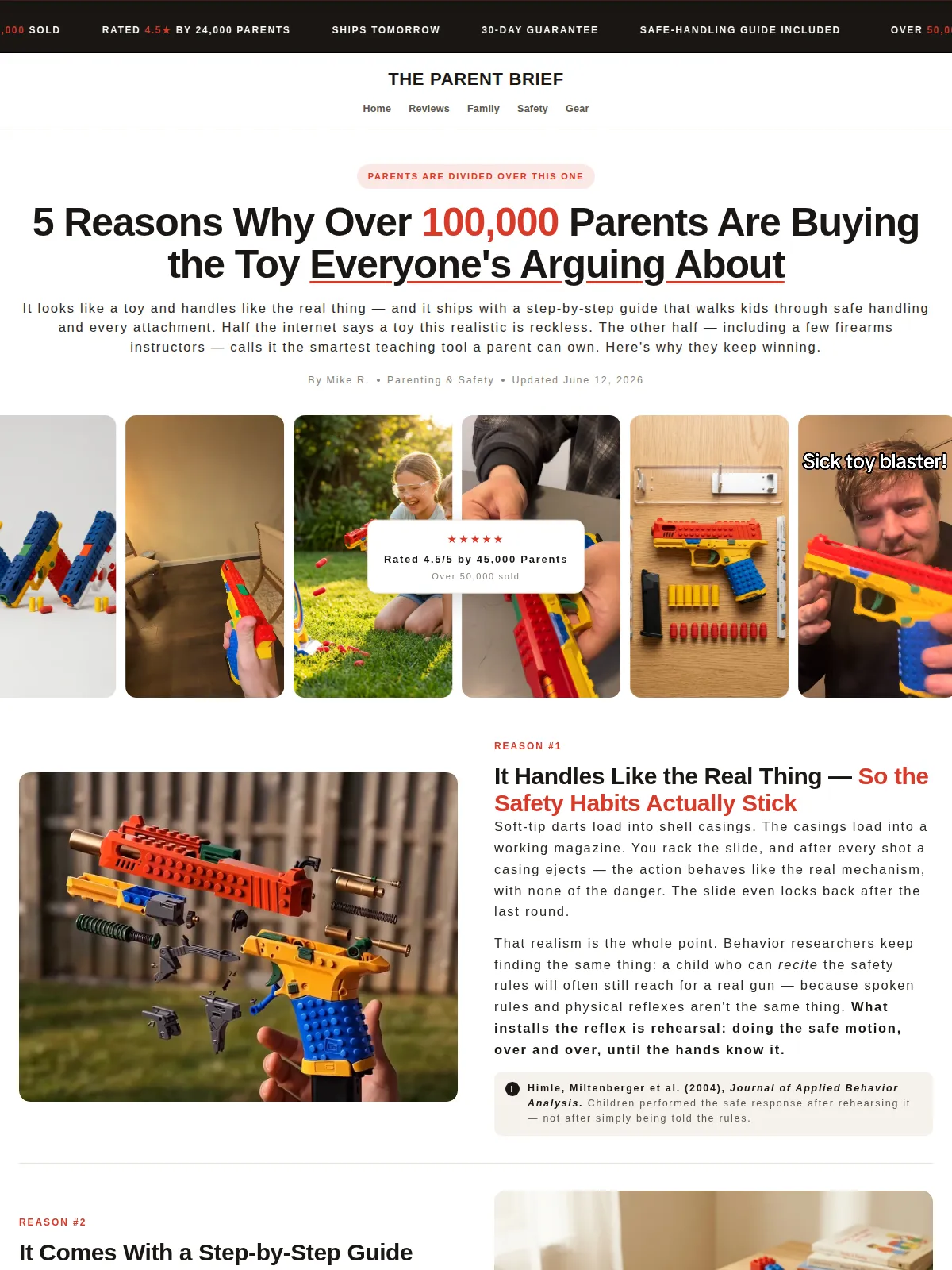
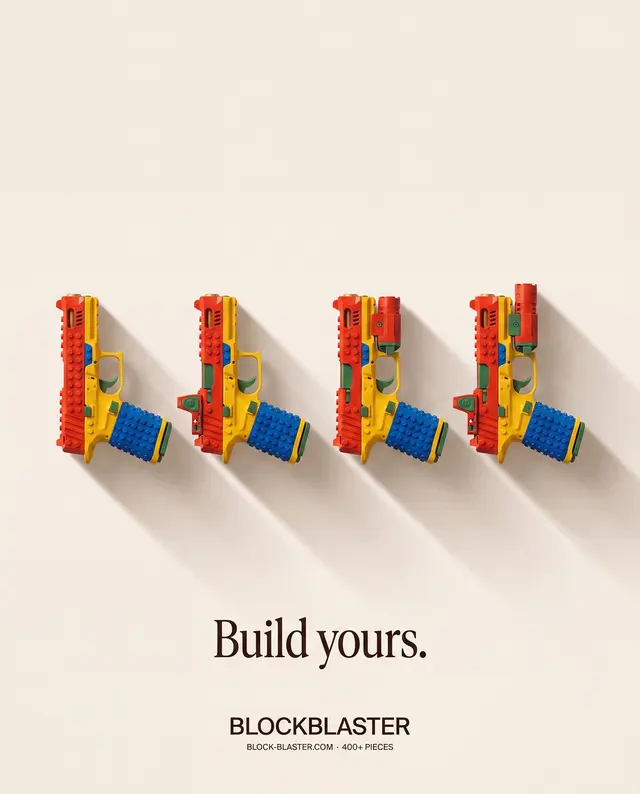
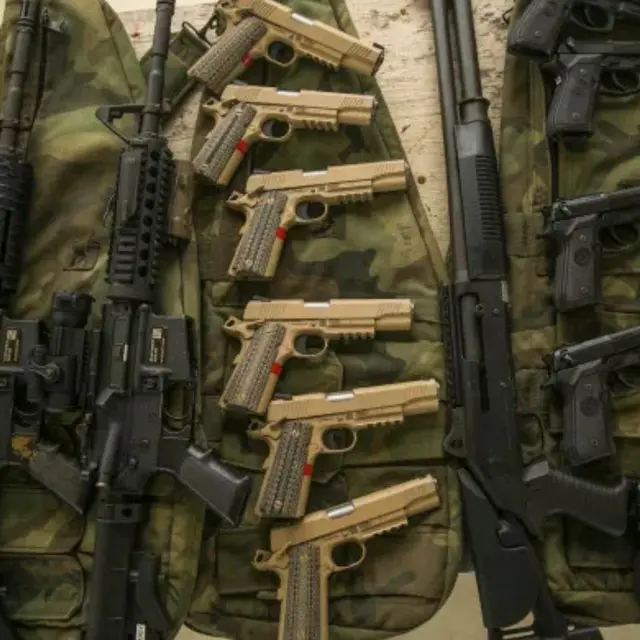
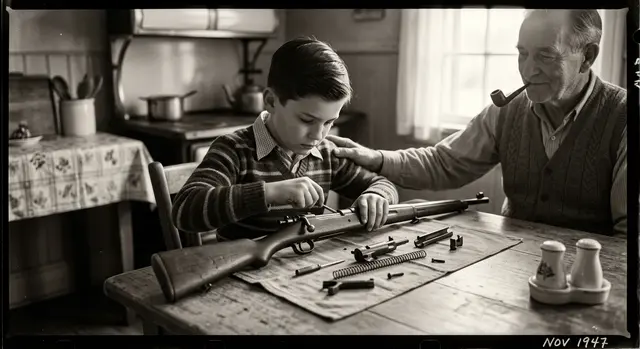
My son's name was Mason. He died eight months ago. He was twelve. I do not own a gun. I have never owned a gun. I am writing this from the same kitchen table where I sat with him three nights before the accident and quizzed him on the four rules. Stop. Don't touch. Run away. Tell a grown-up. He nailed them. He laughed at me a little for making him do it again. He said "Mom, I'm twelve, I know." He did know. He could recite them in his sleep. He had been through the school assembly. He had been through the safety video at his dad's house in Kentucky. He had nodded through every single time I had brought it up over the previous six years. I am writing this because last Sunday afternoon I sat down on the floor of his bedroom and I went through his phone for the first time since the funeral. I have had the phone for eight months. I have charged it once a month so the battery would not die completely. I had not opened it. I told my therapist three months ago that I could not open it. She told me there was no timeline for that and not to push myself. Last Sunday morning I made coffee and I sat in his room and I unlocked it. I had the passcode written on a sticky note in my dresser drawer. I had asked him for it three years ago when I gave him the phone. I told him there would be no privacy from his mother and he had agreed and given it to me and I had written it down and I had never used it. I want to write down what I found because I want this to exist somewhere that is not just my head. The first thing I went into was the photos. Most of what was there was what I expected. Selfies with his brother. Videos of him doing kickflips on his skateboard in the apartment complex parking lot. Screenshots of his game scores in Fortnite. A picture of our cat sleeping on a pile of laundry. A picture of me from the side that he had taken without me noticing, probably because I had been laughing at something on the TV. I am not in many photos. Mason had taken that one. I am keeping it. Then I went into the search history on his browser. I scrolled back to the three months before he died. I want to write down what I found there in the order it appeared. The week of September fourth. "How does the safety on a Glock work." "Why do guns jam." "What does it sound like when a gun is loaded." The week of September eleventh. "How to tell if a gun is real." "What is the difference between a real gun and an airsoft." The week of September eighteenth. "How heavy is a Glock 19." "Can a 12 year old fire a handgun." The week of September twenty-fifth. "Where do parents hide their guns the most." "What does a loaded chamber look like." The week of October second. "How to know if a gun is loaded without looking inside." "Can you tell if a gun is loaded by the weight." He died on October eleventh. I sat on his bedroom floor with that phone in my left hand for a very long time. I did not move. The light through his window changed. I did not get up to use the bathroom. I did not eat. My younger son knocked on the door at one point and I told him I needed twenty more minutes and he went back to his room. After the search history I went into his YouTube history. He had been watching long-form videos about firearms. Two channels in particular, both of which I will not name because that is not the point of this. Polished, educational-feeling videos with millions of views. Disassembly. Loading. Safety inspections. The most-watched video on his account in the last sixty days of his life was a fourteen-minute explainer about how to clear a misfire on a semi-automatic handgun. Then I went into his messages. He had been in a Discord server with what looked like four or five other boys around his age. They had been trading screenshots of guns from video games and comparing them to real ones. The conversation tone was the conversation tone of twelve-year-old boys. Mostly joking. Mostly stupid. Two of the boys seemed to know more than the others and were doing the explaining. One of those two boys was the boy whose father's gun Mason picked up on October eleventh. That boy is alive. He was the friend. He has been in therapy since October. His parents have moved out of state. I do not blame him for anything. He was twelve. I want to be careful with the next part because I do not want this to be read as me blaming any one thing. Mason's death was a chain of failures and I was a link in the chain. What I understood, sitting on his bedroom floor on Sunday afternoon, was that the version of the conversation I had been having with my son about firearms was not the same version he was having with himself. I had been teaching him in the kitchen at seven o'clock in the evening. I had been quizzing him on four rules he could recite by age eight. I had been telling him to stop, not touch, run away, tell a grown-up. I had been believing, the way every parent in my situation believes, that because I did not own a gun and because I had given him the standard instruction, my son was protected. He had been teaching himself in his bedroom at eleven o'clock at night. He had been working on a question I had no idea he was asking. The question was not "what do I do if I see a gun." The question was "how does it actually work." The four rules I had been giving him answered the wrong question. They did not answer his question at all. His question had a different answer, and he had been getting that answer from YouTube and Discord and a friend who knew more than he did, for at least three months before he died. When I stopped crying on Sunday night I started reading. I did the thing I should have done eight months ago and probably eight years ago and I read about how children actually learn safety with objects they are curious about. I found a study from 2004. Two researchers named Miltenberger and Himle. Published in a journal called the Journal of Applied Behavior Analysis. They took kids who had been through the NRA's Eddie Eagle program. Kids who could recite the four rules. They put them in a room with a real-looking handgun and a hidden camera. Most of the kids picked it up. Some of them pointed it. Some of them pulled the trigger. The researchers ran the experiment again with more verbal training. Same outcome. The researchers ran the experiment a third time with something they called behavioral skills training, which is the technical name for "have the child practice the actual physical motion instead of just saying the words." The numbers moved. The paper explained why. A child stores spoken rules in one part of his brain. He stores physical reflexes in a different part. The two parts do not automatically communicate. In a real encounter, the brain pulls from procedural memory, which is built only through physical repetition. If a child has only been told the rule and has never physically rehearsed the response, the procedural drawer is empty. I sat with that for a long time. I have been a hospital coding specialist for fourteen years. I know how to read research. I read it three times. I read the discussion section twice. What I understood by the third read was that the version of gun safety I had been giving Mason was not safety. It was vocabulary. He had the words. He did not have the motion. The motion lives in a different part of the brain and you cannot put it there by talking. The next thing I understood was harder. The reason Mason had been searching at eleven o'clock at night in his bedroom was that the curiosity about how guns actually work was alive in him and it was not getting fed by me. I had refused to feed it because I did not own a gun and because I had decided, twelve years earlier, that the safest path was to keep the topic abstract. Abstract had not been safe. Abstract had pushed the curiosity into YouTube and Discord and a twelve-year-old friend who had access to a real one. The forbidden version of the conversation was the conversation he had been having with strangers. I have not been able to sleep more than three hours in a row since Sunday. On Monday afternoon I called a woman I had met in my grief group whose son had also died from an accidental discharge. Her son was eleven. He had not been the shooter. Her situation was different from mine in detail but identical in shape. She picked up on the first ring. I told her what I had found in the phone. She was quiet for a while. Then she told me she had found something similar in her son's tablet four months after the funeral. Different searches. Same pattern. Late-night curiosity in private. A topic the parent had treated as taboo. A friend with access. A moment. She told me she had spent the last six months trying to figure out what she would do differently if she had a younger child. She told me she had a five-year-old daughter and she had been thinking about it for half a year. She told me she had ordered something a few months ago that she had not used yet because her daughter was still too young. She said the thing was called BlockBlaster. She said it was a working-size brick-built handgun the child builds himself, with the safety curriculum embedded inside the build instructions as a physical action, not a recited rule. She said it was the only thing she had been able to find that did the thing the Miltenberger paper described. She said she had ordered it because she had decided two things. The first was that her daughter's curiosity, when it arrived, was going to be fed in the kitchen with her mother present, not on YouTube alone in her bedroom. The second was that her daughter's body was going to learn the motion, not just hear the rule. She said she had bought it not because she expected her daughter to ever encounter a real firearm in their house but because she could not control whose house her daughter would be in when she was twelve. I ordered one Monday night. It arrived on Wednesday. I have not opened it yet. My younger son is nine. I am going to sit with him at this same kitchen table on Saturday and we are going to open it together. I am going to tell him about Mason. I am going to tell him that his brother was curious and that the curiosity was not the problem. I am going to tell him that the problem was that nobody helped him with the curiosity in the open, with someone he trusted, with his hands actually doing the motion. I am going to do it differently. The reason I am writing all of this down is that I keep meeting other parents who do not own guns and who assume, the way I assumed, that not owning a gun is the safety plan. It is not the safety plan. Roughly one in three U.S. households with children has a firearm in it. Half of those households do not lock all of their firearms. Your child is going to be in those houses. My son was in one of those houses. I had been telling myself for years that I had nothing to worry about because we did not own one. I had been ignoring the actual question, which was what his hands would do when he found one. His hands had been practicing the wrong thing for three months. I did not know. If you are reading this and you do not own a gun, I am writing this for you. I am writing it for the parent I was eight months ago. The parent who thought verbal warnings and a clean apartment were enough. They are not enough. They were not enough for me. They will not be enough for you. The thing I am about to do with my younger son this Saturday is the thing I wish I had done with Mason five years ago. The thing is to bring the object, in a controlled and safe form, into our actual kitchen, and to sit with him while he handles it for hours, and to let his body learn what to do with the thing while I am there with him. Not while he is alone in his bedroom at eleven o'clock at night with a phone. BlockBlaster is the product I am using. It is a brick-built handgun the child assembles himself over several sittings. It is designed for ages four through twelve. The safety curriculum is delivered as physical action inside the build. The child rehearses the motion hundreds of times. The reflex deposits into the body, not just into the mouth. I am not selling anything. I do not work for them. They do not know I am writing this. I am one mother in suburban Ohio who has spent eight months staring at the phone of a son who taught himself the wrong things in the dark. If you are a parent and your child has a phone and the topic of firearms is taboo in your house, please consider whether the taboo is the safety or whether it is the source of the danger. In my house it was the source of the danger. I will not know that for sure. I will never know that for sure. I will spend the rest of my life not knowing that for sure. But I have his phone. I have read his searches. I know what he was looking for, and I know I was not where he was looking. I am going to be where my other son looks. For Mason. His hands have to know.

Performance Signals
- Status
- Stopped
- Time Running
- 81 days
- Active Period
- Jul 21, 2026 → Oct 14, 2026
- First Seen
- Sep 30, 2026
Creative & Links
- Meta post ID
- 1551522439775089
- Meta page ID
- 803922389478691
- Format
- Image
- Placements
- Facebook, Instagram, Audience Network, Messenger, WhatsApp, Threads
- Country
- 🇺🇸 United States
- Landing Page
- block-blaster.com/pages/5reasonswhythisisthebestgunsafetyteachingtool?_ab=0&key=1781741018473
- Your store
- Original Ad
- Open in Meta Ad Library
BlockBlaster
block-blaster.comBlock Blaster
Shop Infos
- Created
- Oct 10, 2025 · 1 year
- Category
- Toys & Hobbies
Search every indexed Meta ad by niche, format, country and run time, save creatives to boards and track the brands behind them — free, no card.