Stepprs ad: Felix Miller

Stepprs
2 active ads🇺🇸
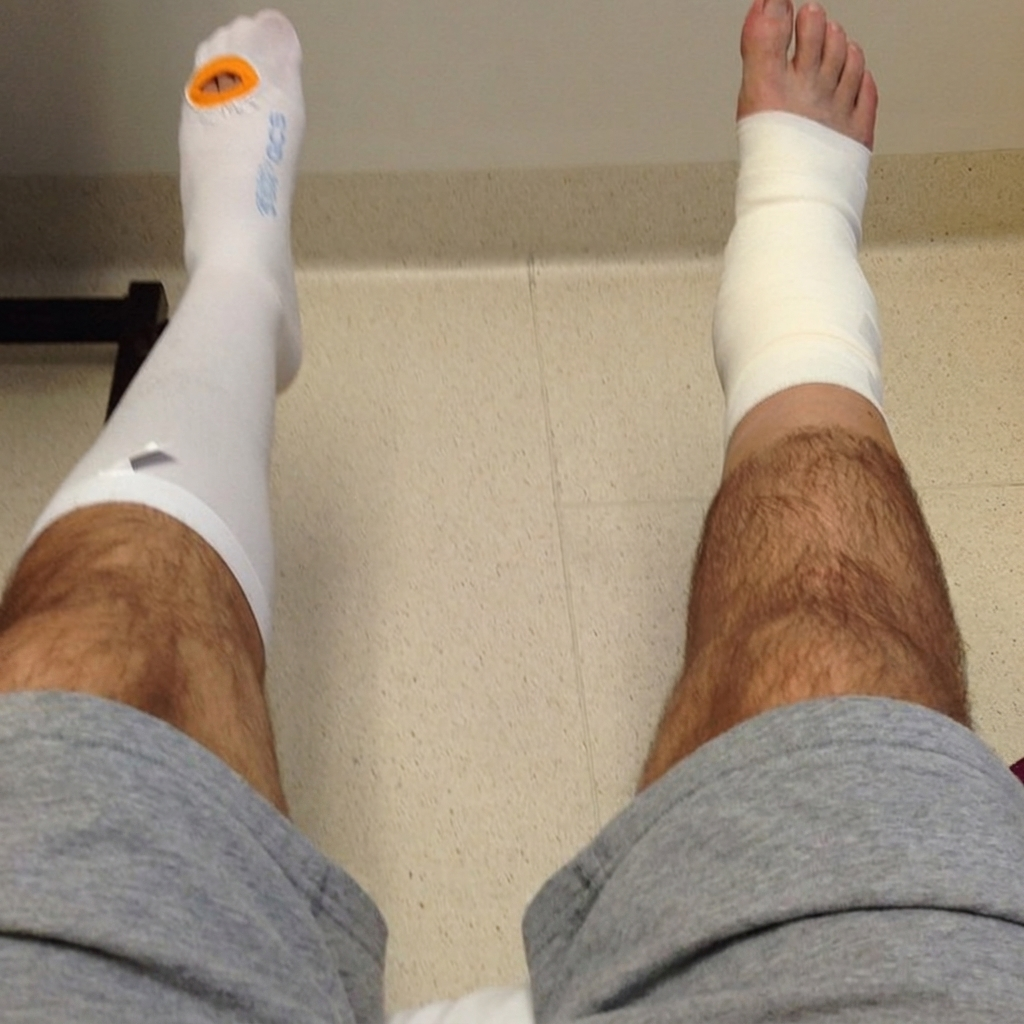
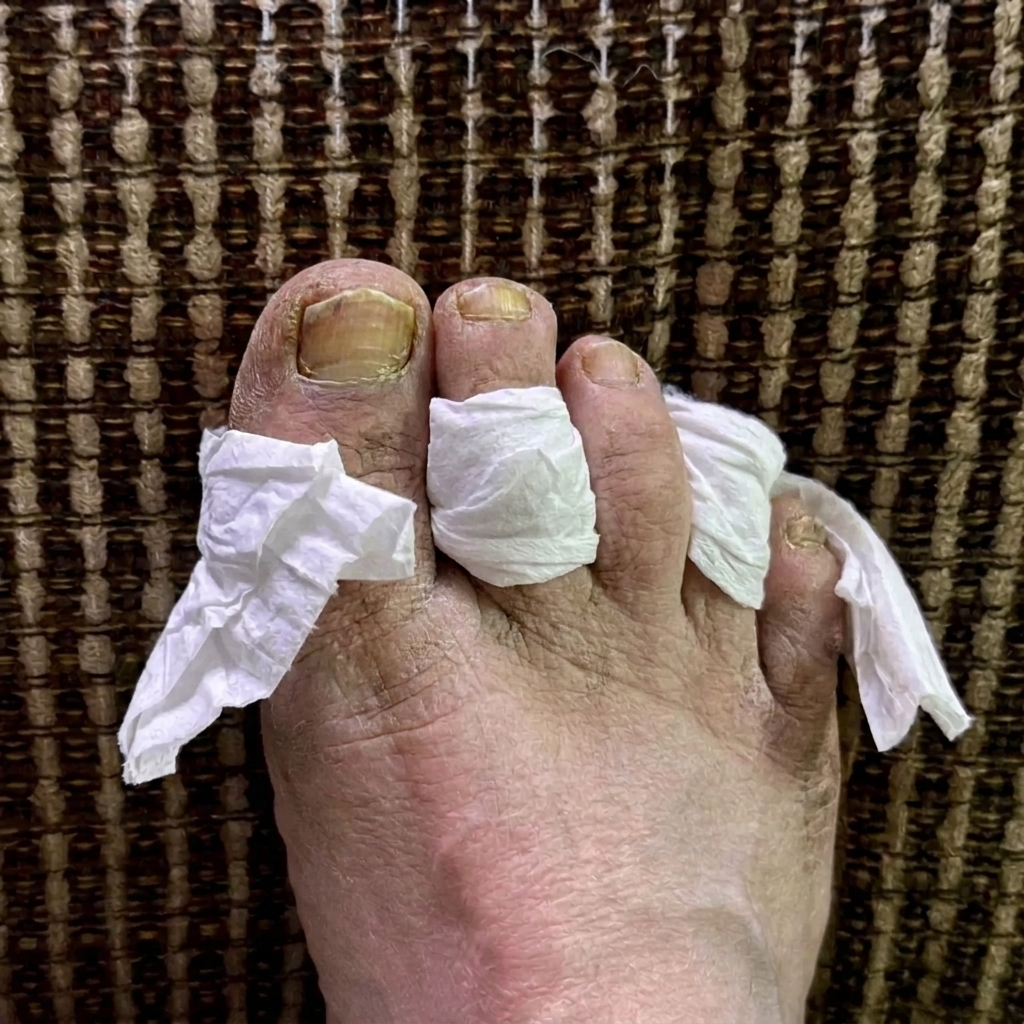
I was told my feet would never fully recover at 31. I'm 44 now. Turns out my feet were never actually broken. They were being destroyed from the inside out. For thirteen years, I "managed" a problem nobody ever actually explained to me. Thirteen years of ibuprofen. 400mg. 600mg. Whatever it took. Swallowed every morning in the parking lot before I laced up my boots, because if I waited until I was already on the floor it was too late. Thirteen years of gel insoles from the pharmacy that felt decent for the first hour and were flat cardboard by lunch. Thirteen years of compression socks that helped for maybe two hours of a twelve-hour shift and did absolutely nothing when the burning woke me up at 2 AM. Thirteen years of soaking my feet in a bucket of hot water every night at the kitchen table, too wiped out to even watch TV. Just sitting there. Waiting for the ache to back off enough to sleep. Thirteen years of podiatrists who looked at my feet, ran their tests, nodded slowly, and handed me a printed sheet about stretching and rest that had nothing to do with what was actually happening inside my body. I did everything they asked. I bought custom orthotics. Three hundred and twenty dollars out of pocket. Wore them every single shift for five months. By month six they'd compressed down to nothing and I was back to standing on what felt like cardboard. I switched boots every eight months. Red Wing, Wolverine, Timberland Pro, every brand the guys on the forums swore by. Some helped for a week. None lasted. When the pain started radiating up into my calves and knees, they sent me to a sports medicine doctor. He ran a gait assessment. Watched me walk. Watched me stand. Took notes. Afterward he sat across from me and said the wear patterns were real, they were consistent, and they matched everything I'd been describing for years. Your arches are collapsing under load, he told me. Which sounded serious but still explained nothing about what to actually do about it. "We don't always find a clear reason for this," he said. "Sometimes the body just breaks down under prolonged stress. Very common in people who spend a lot of time on their feet." He mentioned prescription anti-inflammatories. Said it was the standard of care. I told him I'd think about it. I'd done my research. I knew what long-term anti-inflammatories did. The stomach lining damage that built up quietly over months. The way your body stopped responding and doses had to climb. The way stopping them meant the pain came back worse than before. I wasn't ready for that. Not yet. Not if there was anything else. So I kept trying. I bought a foot massager. Used it every night for two months. Felt good while I was sitting there. The moment I stood up the next morning, everything came back. I tried a shockwave therapy device. Used it in my bedroom every night for three months. Spent over two hundred dollars on it. It sits in the closet now. Ice packs before every shift. Every morning. The cold would quiet the burning for maybe twenty minutes. Then I'd put my boots on and within the hour the deep ache would be back, heavier than before. Nothing stopped the progression. That's the part that broke me. More than the pain itself. The burning, the throbbing, the deep bone-tired ache that fired up my calves by hour seven of a twelve-hour shift — those were bad enough. But I could have lived with a stable level of bad. What I couldn't live with was watching it spread. It started in my left heel. A dull soreness after long shifts that my first doctor waved off as normal for guys in my line of work. By year three it had moved into the ball of my foot. By year six, my entire foot — sole to ankle — was involved by the end of every shift. By year ten, it was climbing into my knees and lower back. And I couldn't stand for more than twenty minutes off the clock without shifting my weight constantly. Grocery store. Kids' games. Family stuff. I was always looking for somewhere to sit down, always calculating how long I'd been standing, always one bad hour away from limping. I stopped going to things that required prolonged standing. Even a backyard cookout felt like a calculation. How long will I be on my feet? Can I find a chair? Is it worth the two days of recovery? I stopped coaching my son's baseball team. Too much standing on the diamond. I stopped going on the weekend hikes my wife kept asking about. I started sitting down at every family event, watching everyone else move around, making excuses. My world was quietly shrinking and I was letting it happen because I was too stubborn to admit my feet were winning. I never told anyone at work. Because that's not what you do. You don't complain. You don't ask for accommodations. You just get through it. So I did. Every single day. Parking lot ibuprofen. Flat insoles. Aching drive home. Hot water bucket. Repeat. Then I ran into a guy I used to work with from my old facility. We'd drifted apart over the years. He'd had the same foot and leg problems, diagnosed around the same time as me, which was how we'd originally connected. We ran into each other at a hardware store on a Saturday morning, and he was moving differently than I remembered. Easy. No hesitation. No that thing where you shift your weight every few seconds because standing still hurts. I asked him how he was doing. He looked at me for a second and said, "Honestly? Better than I've been in years. I was going to reach out to you." We stood there in the aisle and he got straight to it. "I know you've been struggling," he said. "I know because I was exactly where you are. Watching it get worse every year. Running out of things to try." "What happened?" I asked. "I found out what was actually causing the damage. Not the foot pain. The reason the foot pain kept getting worse even when I was doing everything right." He paused. "Has anyone ever explained to you what actually happens to your feet during a twelve-hour shift on concrete?" I looked at him. "Your feet depend on something called shock absorption to survive repeated impact," he said. "Think of it like the suspension on a truck. When the suspension is working, the force from every bump gets distributed and absorbed. Everything stays protected. The whole system runs the way it's supposed to." "But here's what nobody tells you. The natural shock absorption in your feet — the fat pads in your heels, the spring in your arch — they compress and flatten under sustained load. After four, five, six hours on concrete, those structures are already exhausted. Every step after that is landing directly on bone and tendon with almost no buffer. It's like driving a truck with no suspension on a gravel road. For hours. Every single day." "Okay," I said. "But why does it keep getting worse even when I'm wearing good boots?" "Because the boots are only addressing the surface. They cushion the outside. But the real problem is what's happening on the inside — specifically in the arch and heel where the force is most concentrated. Most insoles and boots spread the load a little. But they don't actually replicate the shock absorption your foot is supposed to have. So the damage keeps accumulating. Shift after shift. Year after year." He looked at me. "That's when the burning starts. Then the aching. Then the spreading up into your calves and knees. Your body is absorbing impact it was never designed to take, with no recovery time between shifts." I stared at him. "You're telling me the foot pain isn't the actual problem?" "The foot pain is just the name they give it when your body can't absorb load anymore. But the reason it keeps getting worse is that nothing you've tried actually replaces the shock absorption your feet are losing. The orthotics compress. The gel insoles flatten. The boots wear down. And every shift, the damage stacks a little higher." "But I've been buying the best boots for years," I said. He nodded like he'd been waiting for me to say that. "I know. I did the same thing. And here's what took me forever to understand. When you buy a good boot, your foot does land softer. That's real. The arch support helps with alignment. That's real. But if the insole's cushioning has compressed under your weight by hour four, your foot is absorbing the same raw impact as if you were wearing nothing. The support is there at the start of the shift. But it's gone by the time you actually need it most." That hit me harder than anything any doctor had ever said. "That's why the boots didn't work. It was never a cushioning problem. It was a sustained shock absorption problem. And your feet were the first casualty because they take more repeated impact than almost anything else in your body." "So all those years," I said. "All those boots. All that money." "You weren't failing the treatment. The treatment was failing you. It never once touched the actual reason your feet kept breaking down. Not a single insole or boot you tried ever addressed whether the shock absorption was still working by hour eight. They all just said 'support' on the label while your feet were absorbing raw concrete impact for twelve hours straight." I stood there for a long time. "So what actually fixes it?" I asked. "What actually holds up through a full shift?" "There's a specific type of insole that's been engineered around EVA foam with integrated massage points. The foam doesn't compress flat the way gel does. The massage points distribute pressure across the entire foot instead of letting it concentrate in the heel and ball. And the deep heel cup holds your foot in proper alignment so the arch isn't collapsing under load." "What is it?" "It's called Stepprs. And what makes it different from everything else we've tried is that it doesn't just cushion — it actively supports the arch and holds the heel the way your foot is supposed to be held. The massage points aren't a gimmick. They're what keeps blood moving through the foot during prolonged standing, which is exactly what prevents the deep aching that sets in by hour six." "But what about the compression problem?" I said. "The way everything goes flat by the middle of the shift?" "That's the other half of why this works. The EVA foam in Stepprs doesn't go flat the way gel or memory foam does. You're not just getting cushioning at the start of the shift. You're getting the same support at hour twelve that you had at hour one." He looked at me. "When you're standing on concrete for twelve hours, the force going through your feet is enormous. Stepprs is specifically built to absorb that impact repeatedly, shift after shift, without breaking down. That's why guys who've tried everything else keep coming back to this." I left that conversation and couldn't stop thinking about it. That night I went looking for everything I could find on the subject. Why foot pain keeps progressing in guys who do physical work even when they're doing all the right things. Why the standard insoles and work boots so often fall short after a few hours. What I found kept pointing back to the same thing. When the shock absorption in your insole has compressed flat, it doesn't matter how good the boot is. Your foot is landing on hard foam with no spring left. And your feet, which take more repeated impact than almost anything else in your body, just keep breaking down. I found guys online who sounded exactly like me. Years of expensive boots. Watching the pain spread up into their knees and back. Then they found something that actually addressed the root of it. And the progression stopped. I texted him that night: "Okay. I believe you. Where do I get them?" One brand kept coming up consistently in everything I looked at. Stepprs. Specialized EVA foam that maintains its structure shift after shift. Made to last over twelve months without going flat. 90-day money-back guarantee. After thirteen years of things that didn't work, one more try wasn't going to break me. I started the morning after the pair arrived. I expected nothing. I had trained myself to expect nothing. By the second shift, I noticed the aching was slightly different. Not gone. But quieter. Less aggressive by hour eight than usual. I'd fooled myself before. I didn't let myself think about it. I kept wearing them. One week: I drove home after a twelve-hour shift and realized I hadn't thought about my feet once during the drive. The burning that had been greeting me in the parking lot at the end of every shift — it wasn't there. I sat in the truck for a moment before I got out, just taking that in. I hadn't driven home without foot pain in over four years. Two weeks: My wife said something over dinner. "You're moving differently." She wasn't trying to be kind. She looked almost confused. "You're not doing that thing with your face when you walk." The aching was less. Not gone. But undeniably less. Three weeks: I picked up a Saturday shift. Just one. Something I hadn't done voluntarily in two years because my body couldn't handle it. I made it through all twelve hours. Tired, yeah. But not broken. I sat in my truck in the parking lot and just sat there for a minute. It was such a small thing. Such an ordinary thing. Picking up a shift because someone needed coverage. Four weeks: I went to my son's baseball game. Stood on the sideline for two hours. Walked up and down the fence line following the play. Didn't sit down once. Didn't think about my feet once. After the game he ran over. "Dad, did you see that catch?" I picked him up. Swung him around. Put him down. And walked back to the truck without wincing. My wife was watching. She didn't say anything. She just looked at me for a long moment and looked away. I think she was trying not to make a big deal out of it. But we both knew what it meant. That was eight months ago. Most mornings now I have to remind myself that foot pain used to be the first thing I felt when I got out of bed. And it isn't spreading anymore. I check every week. I note where I feel discomfort and where I don't. For eight months, that line hasn't moved forward. For eight months, the progression that had been marching steadily up my calves and into my knees for thirteen years has simply stopped. I've been back to picking up extra shifts. Not every week. But when the floor needs me, I can say yes. I went back to coaching. Standing on the diamond for two hours on a Tuesday evening, watching my kid field grounders, without once thinking about my feet. Last month we did a weekend hike. My wife, my son, four miles on an actual trail. I didn't plan around my feet. I didn't calculate how much I had left in the tank. I just went. Here's what I need you to understand. If you've tried work boots and orthotics and they didn't work, it wasn't a failure of natural solutions. It wasn't that your body is different. Or that you're unlucky. Or that you just have to accept the progression. It was that you were buying insoles that stopped working by hour four while your shift ran to hour twelve. The support was there at the start. But it was gone by the time you actually needed it most. You weren't failing the treatment. The treatment was failing you. It never once addressed whether the shock absorption was still working when your feet needed it most. Stepprs fixes that. Not by masking anything. By actually maintaining the cushioning, arch support, and heel alignment through a full shift. When that support stays consistent, feet that were the first to break down are the first to recover. EVA foam that doesn't go flat. Integrated massage points that keep circulation moving. Deep heel cup for proper alignment. Trimmable to fit any shoe — including work boots and steel-toes. Right now they're running a promotion with significant savings. But Stepprs sells out regularly. When they're gone, they're gone until the next batch is ready. 90 days to try them. If nothing changes, full refund. No questions asked. But if it works? If by the second shift the aching is a little quieter by hour eight? If by week one you drive home and realize you didn't think about your feet once? If three weeks in you pick up a Saturday shift because the floor needs you and you actually can? If a month from now you're standing on a baseball sideline for two hours watching your kid play, living without calculating how much your feet have left? If eight months from now the progression that's been moving up your legs for years has simply stopped? You'll wish you started thirteen years ago. I know I do. Try them. Worst case, you're out nothing. Best case, you get your life back. 👉 https://stepprs.com/products/massage You don't have to keep watching your shifts get shorter while the pain keeps getting longer.
Performance Signals
- Status
- Running at last crawl (Jun 2, 2026)
- Time Running
- 24 days
- Active Period
- May 8, 2026 → Jun 2, 2026
- Advertiser live ads
- 2
- First Seen
- Jun 2, 2026
Creative & Links
- Meta post ID
- 996985619448288
- Meta page ID
- 1159279217258119
- Format
- Image
- Placements
- Facebook, Instagram, Audience Network, Messenger, Threads
- Country
- 🇺🇸 United States
- Landing Page
- stepprs.com/products/massage
- Original Ad
- Open in Meta Ad Library
More from Stepprs
Stepprs
stepprs.comDiscover Stepprs – the ultimate solution for enhanced comfort and performance. Our innovative insoles are designed to provide optimal support and cushioning, ensuring a perfect fit for every step. Try Stepprs today and step into a world of unmatched comfort and performance! Shop now!
Shop Infos
- Created
- Feb 2, 2024 · 2y 7m
- Category
- Finance
- Live ads
- 2
Search every indexed Meta ad by niche, format, country and run time, save creatives to boards and track the brands behind them — free, no card.