Circulene ad: Heart Longevity Journal

Circulene
🇺🇸
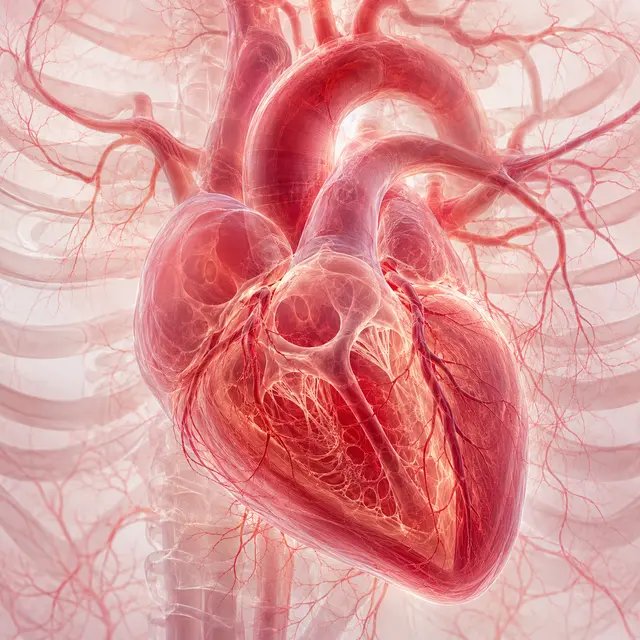
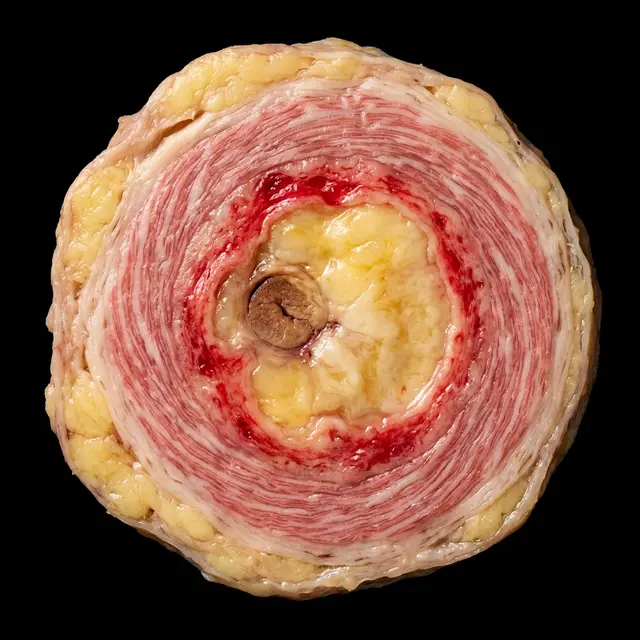
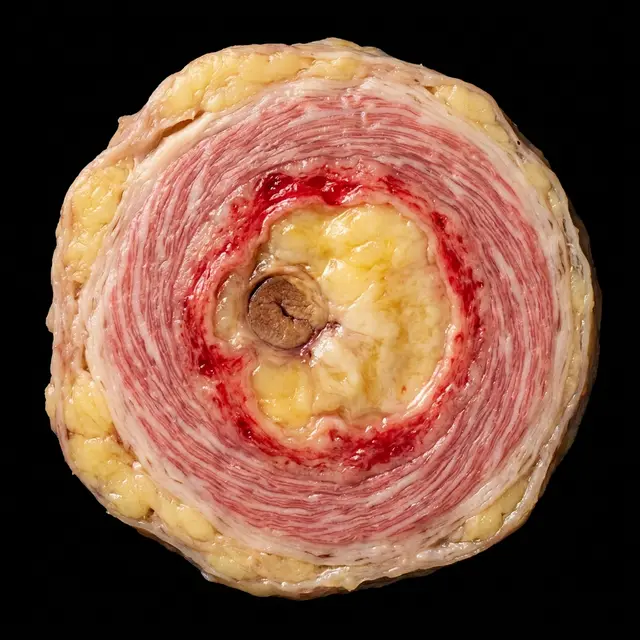
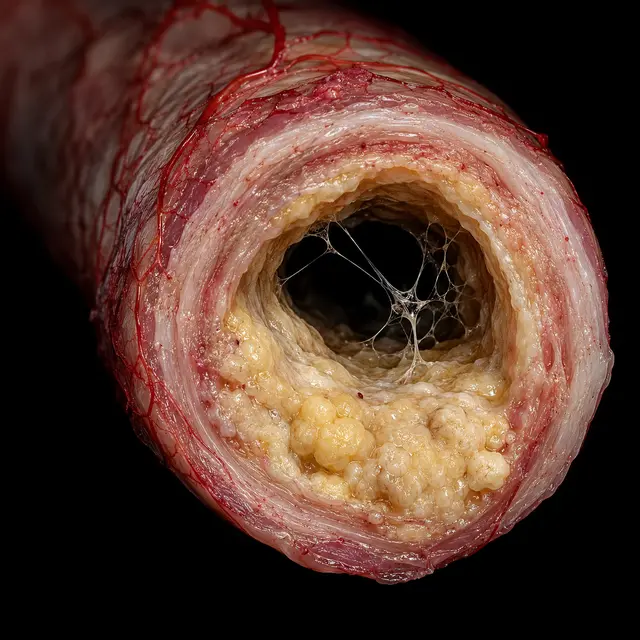
In 1987, the FDA approved the first statin drug. Within one decade, Alzheimer's diagnoses in America had doubled. That's not aging. That's not genetics. That's not bad luck. Something happened in 1987. And the drug companies have been hoping nobody would ever sit down and connect the dots. Here's the part nobody at the cardiology office wants to bring up. For decades before 1987, the "normal" range for total cholesterol sat somewhere in the 240 to 280 zone. Doctors didn't panic. Nobody got handed a daily pill for life. It was a number you kept an eye on. Nothing you took a pill for. Then statin got approved. And the threshold started moving. Down to 240. Down to 220. Down to 200. An LDL of 160 now sets off the alarms. A drug got invented. Then the disease category got expanded to fit the drug. And in the same decade that prescription went from rare to routine, Alzheimer's rates in this country almost doubled. That's not a coincidence. Right now, in every city in America, the same scene is repeating itself. A 56-year-old man walks into his doctor's office for a routine physical. His LDL comes back at 178. Before he's taken his jacket off, the prescription is already printed. No ultrasound. No carotid scan. No coronary calcium test. Not a single question about whether the inside of his arteries actually has plaque on it, or whether he's one of the men whose arteries are clean as glass at 178. Just one number. One prescription. One assumption. And the people this is happening to are starting to notice. There's a forum where people who got put on statins go to talk about their doctors. One of them wrote last month, "My doctor spent four minutes looking at my labs and printed the Lipitor before I'd even taken my jacket off. He didn't ask me one question about my arteries." Another one underneath, "Same. Five minutes. Lipitor. Done. They're like robots." A retired engineer said it the cleanest. "They aren't doctors anymore. They're trained to match a number to a pill. The arteries are not even part of the conversation." She's right. They're not. And the people in these forums have been watching something else happen in their own families. Something they figured out years before the research caught up. One woman wrote, and the post has been shared thousands of times, "My mother was sharp as a tack until they put her on Lipitor. Now she can't remember my name. She calls me by my sister's name. She forgets where the kitchen is in the house she's lived in for forty years." Another underneath her, "The doctors kept telling her the brain fog was just aging. She kept saying no. It wasn't aging. It started three months after she filled that prescription." There are hundreds of these. Husbands who stopped reaching for their wives. Fathers who used to coach baseball and now can't follow the plot of a TV show. Engineers who built houses with their hands and now stand in the garage with the keys in their palm and can't remember why they walked out there. Here is what neuroscientists have understood for decades, and what cardiologists almost never mention. The brain is made of fat. Sixty percent of it, by dry weight. And twenty-five percent of all the cholesterol in the human body lives inside the skull. That cholesterol isn't sitting there by accident. The nerves inside the brain are coated in it. That coating is what lets the signals travel. Memory, word recall, recognizing a face, finding the kitchen. All of it runs on cholesterol-coated nerves. And here's the part most people don't know. The brain doesn't pull cholesterol from the bloodstream the way the rest of the body does. There's a barrier blocking the way in. So the brain quietly makes its own, using a tiny enzyme called HMG-CoA reductase. That enzyme has been running quietly inside every human brain since the day a person is born, coating the nerves, keeping the signals firing, holding memory together. Statins lower cholesterol by shutting that exact enzyme off in the liver. That's how they work. That's the whole design. But some statins, the ones doctors call "fat-loving," are small enough and sneaky enough to slip past the brain's security gate. Atorvastatin (Lipitor) is one. Simvastatin (Zocor) is another. Lovastatin too. And once they cross, they don't just pass through. Researchers have found these drugs can end up inside the brain itself, long after they've left the bloodstream. Once they're inside the brain, they can slow the brain's own cholesterol production, the same way they do in the liver. And here's the part most people get wrong about plaque. The real question was never how high your cholesterol is. It's what's happening on the inside of the artery. Because here's what's actually happening inside our artery walls. If the inside of the wall is smooth and healthy, the cholesterol in our blood doesn't stick to it. There's no place for it to stick. It floats past, gets processed, moves on. No plaque forms. No matter what the LDL number is. Plaque doesn't start with cholesterol. It starts when the inside of the artery wall gets damaged, whether that's from inflammation, blood sugar, or years of high blood pressure scraping at the lining. Once the lining is damaged, the body treats it like any other wound and seals it with a sticky protein called fibrin. Think of fibrin as a spider web stretched across the inside of an artery. LDL particles. Calcium. Dead cells. Anything floating past gets tangled in the mesh and pinned against the wall. Once those particles are trapped there, they oxidize. They harden. Layer on top of layer. That's how plaque forms. But fibrin is meant to be temporary. There's a system inside the body, an enzyme called plasmin, that dissolves fibrin once the repair is done. In our twenties and thirties, this happens automatically. Fibrin goes up, plasmin clears it out, the artery walls stay clean. But that starts to change in our forties, the same way everything else does. The body still clears fibrin. It just doesn't make as much plasmin as it used to, so it falls a little further behind every year. And the longer the fibrin sits there, the more it catches. Now think about what a statin actually does. It lowers the amount of LDL floating past the web. That's real. But it doesn't touch the plaque itself. The plaque is still sitting on the artery wall. Still catching whatever comes by. It's why nearly half the people who have a heart attack have normal LDL when it happens. Some are on statins at the time. The lab sheet tells one story. The artery wall tells another. Which leaves the one question nobody in that exam room ever asks. If the plaque is already on the wall, can you actually break it down? There's a good amount of research on that now, and it keeps landing in the same place. It was a Japanese food called natto, fermented soybeans that people in Japan have eaten for over a thousand years. The enzyme doing the work is called nattokinase. A fibrinolytic enzyme, which means it breaks fibrin down. The same job plasmin does, only from the outside. It goes after the cross-linked fibrin holding the plaque to the wall. And once that mesh is gone, the plaque has nothing to anchor to. In a clinical trial of 1,062 participants taking 10,800 FU of nattokinase daily for twelve months, carotid ultrasounds were run before and after. Plaque surface area dropped 36%. Arterial wall thickness dropped 21.7%. LDL dropped 18%. Triglycerides dropped 15.7%. HDL went up 15.8%. And that's not the only data point. A separate study tracked 29,000 people over sixteen years. The ones who ate the most natto had a 25% lower rate of cardiovascular death. So why has almost nobody heard of this? Because nattokinase is an enzyme from a fermented food. It can't be patented. And if nobody can patent it, nobody's paying a sales rep to walk into your doctor's office and tell him about it. So it never makes it into the conversation. Your doctor isn't hiding anything. It just never made its way into his training. Because the system makes money managing the disease, not solving it. And none of this means ignoring your doctor. Nobody's saying that. But more and more people are doing something else first. They're asking for a carotid ultrasound before they agree to anything. They want to see what's actually on the wall. And if there's plaque there, they want to know why the only thing their doctor talked about was cholesterol. So if you've read this far and you're thinking about trying nattokinase, there's one thing you need to know before you buy it. Most of them are underdosed. The study that showed results used roughly 10,000 FU a day. Most of what you'll find online is dosed at 2,000 FU. Some as low as 1,500. Some don't even list the FU count. That's why people try it, feel nothing after a month, and assume it doesn't work. They were never taking enough to match the research. The brand that keeps coming up in those forums is Circulene. 10,000 FU per serving, third-party tested in the US, and sourced from premium Japanese natto. And honestly, the more I read through those stories, the more I realized the lesson wasn't just about finding something different. It was bigger than that. Nobody is going to care about the inside of your arteries more than you do. Not because doctors don't care. But because they're trained to look at the number first. That's the conversation more men are starting to have. For anyone looking for where to get Circulene, it's sold directly through their website here: https://circulene.com/products/nattokinase P.S. Out of all the comments under those threads, one stuck with me. A guy wrote that he'd had a small blockage in one of his carotid arteries, started taking nattokinase every day, and two years later the same scan came back clean. Then he added a line at the bottom: "My mother had surgery on both sides before she passed. I just wish I'd found this in time to tell her." P.P.S. One honest thing before you go. If you do try it, give it real time, and check the FU on the label before you buy anything. Most bottles are a fraction of what the study used, which is why people try nattokinase for a few weeks, feel nothing, and write it off. It was never the enzyme. It was the amount.
Performance Signals
- Status
- Still running
- Time Running
- 127 days
- Active Period
- May 24, 2026 → Today
- First Seen
- Sep 30, 2026
Creative & Links
- Meta post ID
- 1843994619601905
- Meta page ID
- 936188149586323
- Format
- Image
- Placements
- Facebook, Instagram, Audience Network, Messenger, Threads
- Country
- 🇺🇸 United States
- Landing Page
- circulene.com/products/nattokinase
- Original Ad
- Open in Meta Ad Library
More from Circulene



Circulene Nattokinase 10,000 FU
circulene.comCirculene
Shop Infos
- Created
- Feb 6, 2026 · 8 months
- Category
- Nutrition › Vitamins & Supplements › Health
Search every indexed Meta ad by niche, format, country and run time, save creatives to boards and track the brands behind them — free, no card.