UGC ad examples
8 UGC Ad Examples: Creative Elements Behind Each Format
Explore 8 UGC ad examples and the creative elements behind each format, with tactics to find, study, and test them in Meta's ad library.
Updated November 9, 2026
You're reviewing yesterday's Meta results, and the polished brand video is losing to a customer clip filmed beside a bathroom mirror. The lighting is uneven, the delivery isn't rehearsed, and the customer spends more time showing the product than describing your brand. Yet that plain clip gives shoppers something the commercial doesn't: a believable reason to keep watching.
That's the practical appeal of UGC ad examples. A customer or creator can lower skepticism by describing a recognizable problem, demonstrating the product, and acknowledging the detail a buyer would question. In shopper surveys summarized by Bazaarvoice, 40% of consumers were more likely to buy a product when UGC appeared in an advertisement. That's purchase intent, not a promised campaign lift.
Buying principle: Don't copy the casual appearance alone. Copy the way the creator makes a product claim believable.
Effective using creator content in advertising starts with matching the format to the purchase question. Testimonials explain personal experience. Unboxings reduce uncertainty about what arrives. Demonstrations show usability, transformations show outcomes, and POV stories make problems recognizable. Response videos handle objections, customer photos provide peer context, and lifestyle clips show where a product fits.
Treat each format as a creative hypothesis you can investigate, brief, and test, not as a shortcut to profitable acquisition.
Table of Contents
- 1. Authentic Testimonial Talking-Head Video
- 2. Unboxing and First-Impressions Video
- 3. Product Demonstration or How-To Tutorial
- 4. Before-and-After Transformation
- 5. Problem-Solution Storytelling (POV Format)
- 6. Reaction or Response Video
- 7. Customer Photo or Review Screenshot Ad
- 8. Day-in-the-Life or Get-Ready-With-Me Lifestyle Clip
- UGC ad formats compared by best use, cost, and main risk
- Turning These UGC Ad Examples Into Your Next Test Plan
1. Authentic Testimonial Talking-Head Video
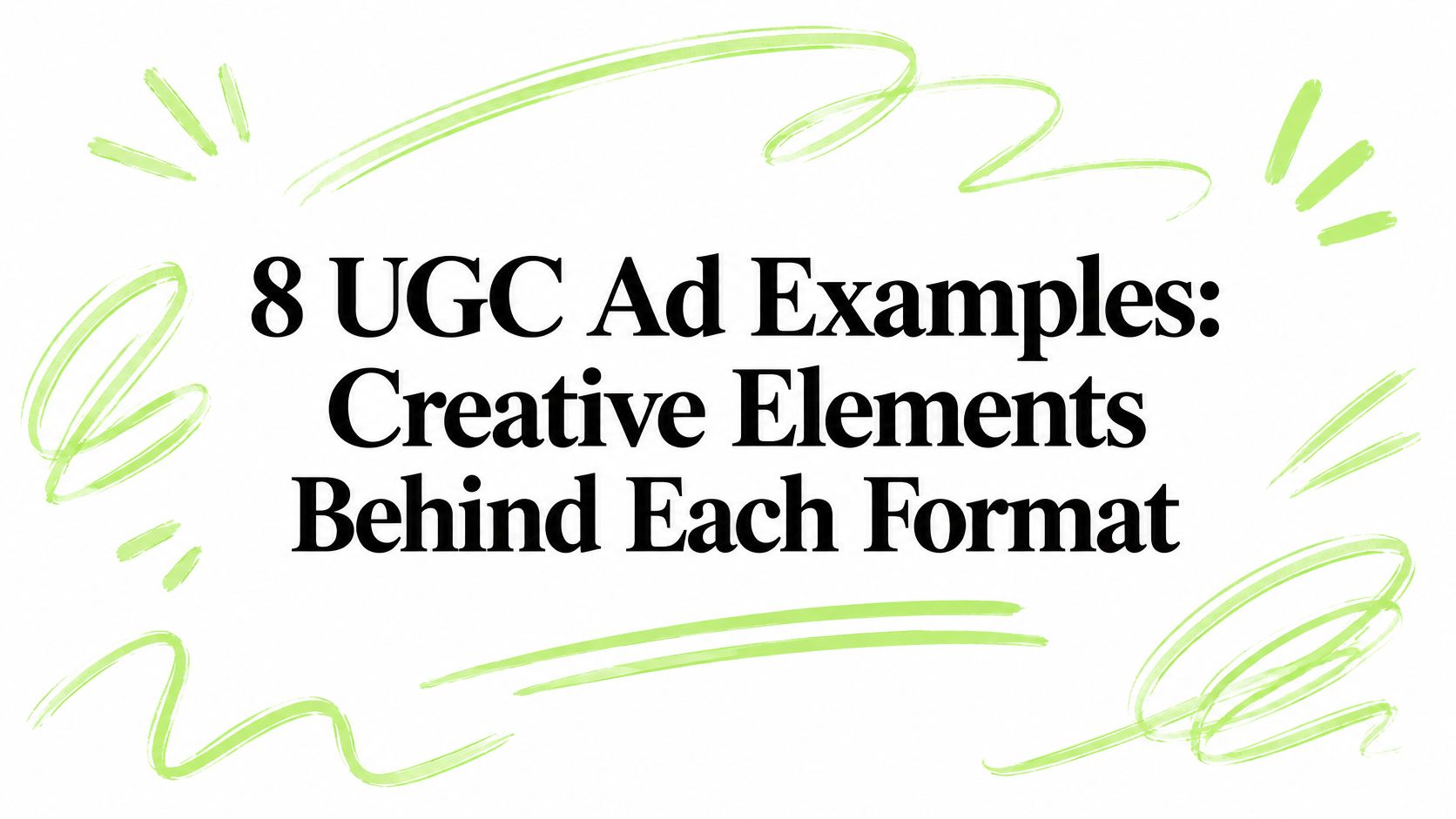
A useful testimonial starts with the customer's difficulty, not their enthusiasm for the brand. For a skincare product, brief the creator to explain what made their existing routine inconvenient, then show how they apply the replacement. A bottle held beside a face isn't proof of experience.
The phone-shot framing helps establish a personal tone, but specificity does the persuasive work. Ask for an observation about texture, application, fit, or another detail the speaker experienced. Leave room for their vocabulary instead of prescribing every sentence.
Copy the observation, not the praise
Distinguish organic customer material from commissioned creator content when planning UGC. A paid creator can describe a genuine experience, but shouldn't impersonate an unsolicited customer. A natural delivery doesn't excuse an invented purchase story.
For a moisturizer ad, the copyable sequence is straightforward:
- Hook: Identify the application problem immediately, such as difficulty layering products beneath makeup.
- Proof: Show the application and resulting finish without concealing relevant steps.
- Close: Direct shoppers to the product details that answer the same concern.
In the Meta records, compare testimonial videos from competing skincare brands within the same country and placement. Record each opening claim, when the product appears, and whether the creator demonstrates anything beyond holding the package.
Then keep the body footage unchanged while testing different opening angles. If you change the speaker, promise, offer, and edit simultaneously, you won't know which change deserves another test. The trade-off is simple: talking-head ads are straightforward to produce, but weak claims remain weak even when delivered convincingly.
2. Unboxing and First-Impressions Video
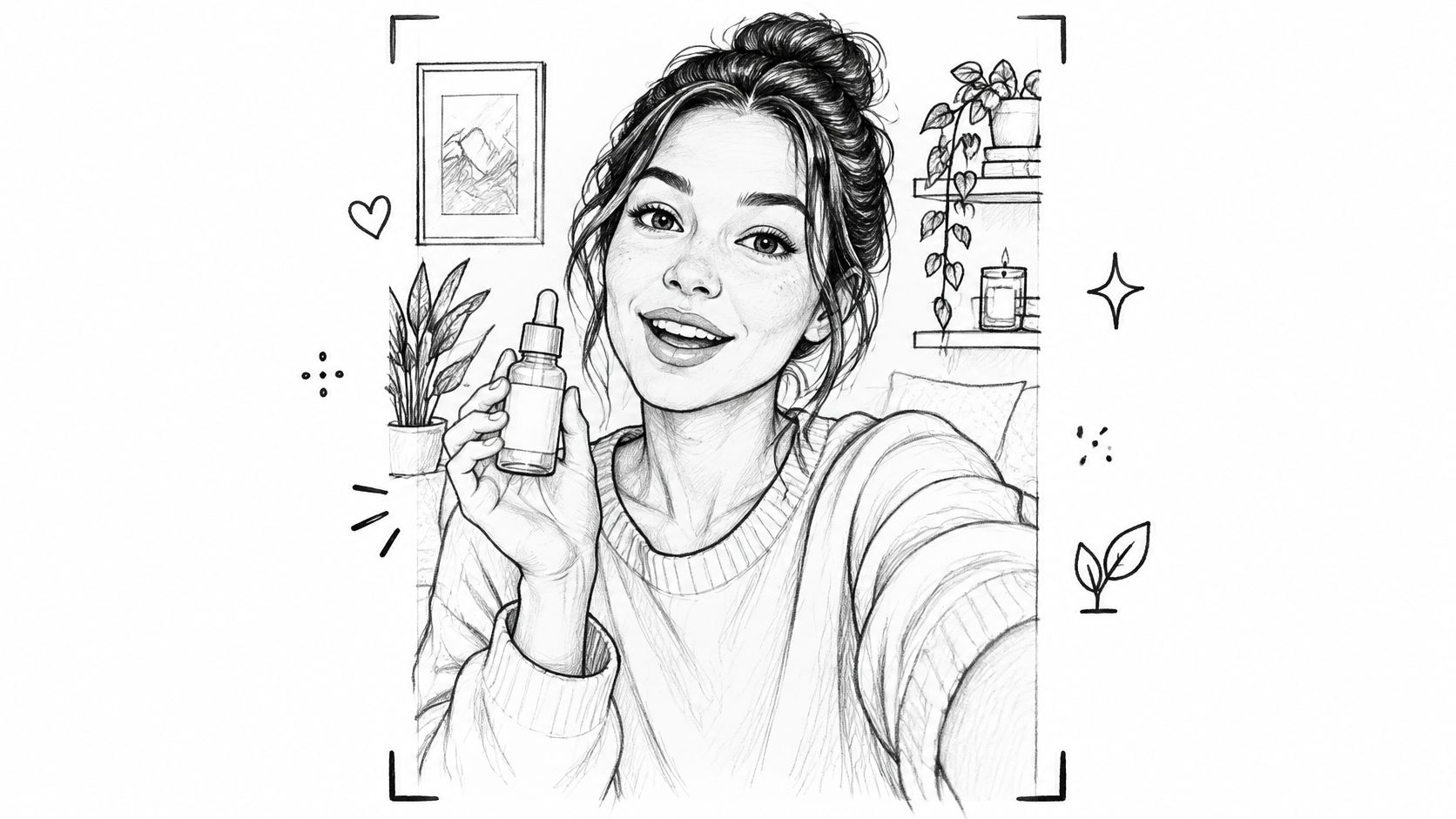
An unboxing sells anticipation, but anticipation needs a payoff. For a jewelry gift, the box, protective wrapping, scale of the piece, and appearance when worn can all answer purchase questions. Extended footage of someone removing tissue paper usually doesn't.
A documented test from Accelerated Digital Media reported a 21% improvement in link click-through rate and a 28% increase in ROAS for UGC-centric ads compared with earlier commercial-style content. Its strongest asset was an unboxing featuring women's straw-hat styles, making the reveal useful for product selection rather than packaging appreciation alone.
Turn the reveal into a buying decision
Say you sell subscription snack boxes. Have the creator open the delivery, show the assortment clearly, then taste a product and describe its actual characteristics. Don't ask them to declare the whole subscription excellent before they've explored it.
Capture a continuous opening take, plus close-ups that make labels and contents legible. Edit out waiting time without manufacturing a spontaneous reaction from unrelated footage.
An unboxing should answer what arrives, what it feels like to receive it, and what the buyer can do next.
For competitor comparisons, open unboxing records and note run dates, reveal timing, assortment, and first-use footage. Compare ads for the same product rather than treating a gift-set reveal and a refill delivery as equivalent.
A longer-running creative is worth examining, but its survival doesn't establish profitability. Copy the selection mechanic, such as showing alternative styles together, then test whether that helps your own shoppers choose.
3. Product Demonstration or How-To Tutorial
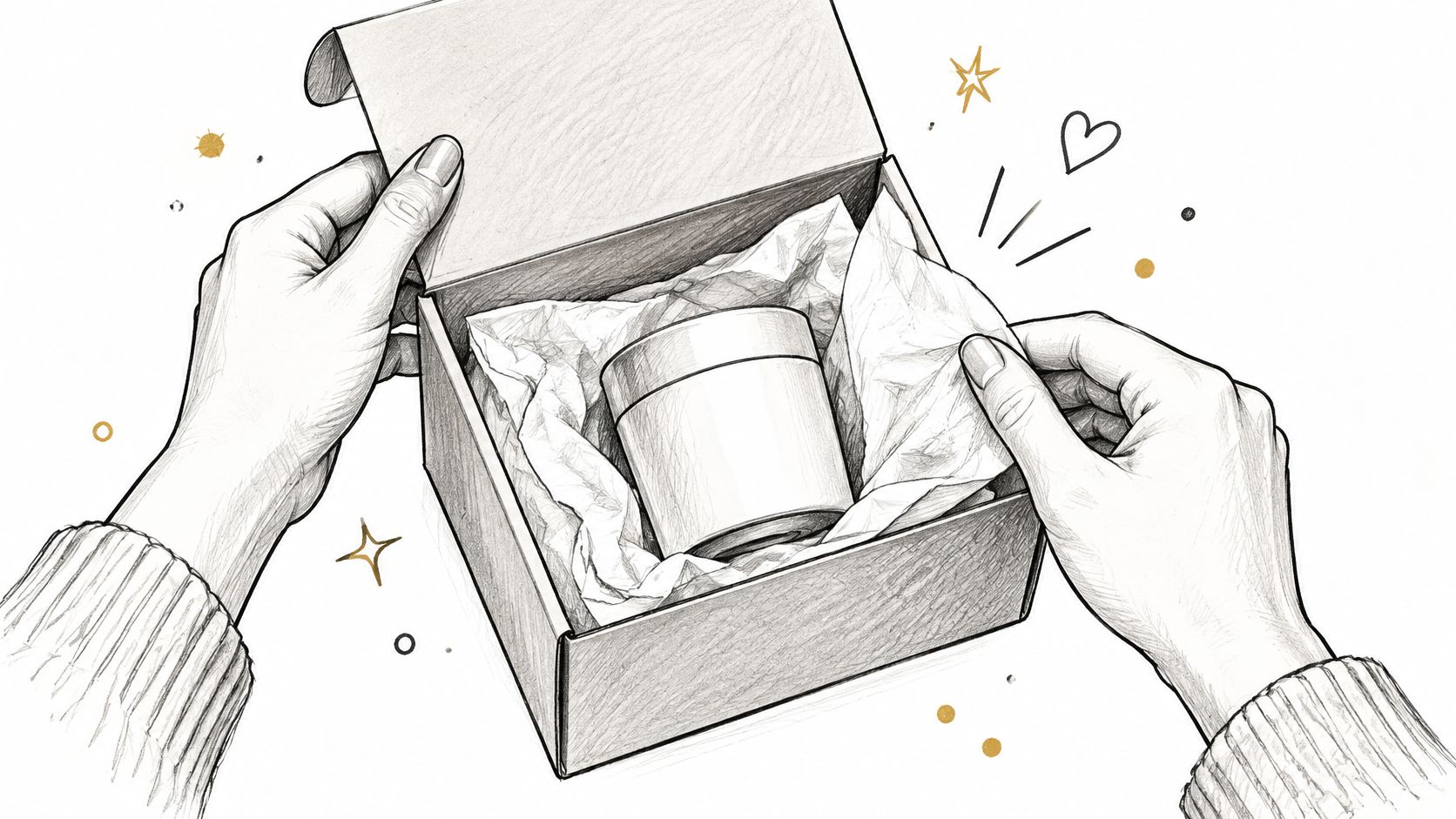
Lead with the operation the shopper is judging. A handheld spiralizer ad earns attention when zucchini goes in and noodles come out within the first seconds; a lecture on healthy eating can wait until the mechanism is already clear.
This kitchen scenario makes the demonstration clear without a studio setup.
Visible operation answers usability objections. Show the grip, the prep, the pressure needed and the finished result. If assembly, blade cleaning or storage changes whether someone buys, leave it in frame; hiding effort can inflate clicks from buyers who will bounce at the instructions.
Show the difficult step
Treat creator-led demos as a testable alternative to product-only ads, not an automatic upgrade. Put the same offer, audience and landing page behind both, then compare thumbstop, holds and downstream CPA rather than assuming a face always wins. The creator earns the click; the demonstration has to earn the purchase.
For your brief, name the step shoppers hesitate over: folding a stroller, fastening a carrier, assembling an organizer, cleaning a blade. Ask for that step slow enough to inspect, with captions for anything the camera cannot make obvious.
Use the video player to inspect the sequence of actions and how clearly the product remains visible.
In AdLibrarySpy, filter a store's Meta ads by format, country and run time, then open each ad for its copy, landing page, run dates and sibling creatives. Classify the opening as finished result, action in progress or verbal explanation, and compare visible steps, camera angle and page instructions.
Change the explanation before you change the effort. A convincing demo can disqualify the wrong buyer, which is cheaper than paying for clicks from people who misunderstand the product.
4. Before-and-After Transformation
A cleaning cloth passing over a stained surface can communicate more than a creator's enthusiastic endorsement. The viewer sees the starting condition, the intervention, and the result. The format becomes less credible when the editor changes lighting, camera distance, or the surface itself.
For a home-cleaning product, film a fixed view of the same marked area before application and after the stated cleaning process. Keep dilution, contact time, scrubbing, and any additional products visible or clearly explained. The demonstration must support the impression the ad creates.
Make the comparison fair
The FTC's endorsement guidance says endorsements must be truthful and not misleading, material connections must be clearly disclosed, and unrepresentative testimonials may require information about what consumers can generally expect. A creator's personal account doesn't remove the advertiser's responsibility for the claim.
Build the brief around these production decisions:
- Match the capture: Use consistent lighting, framing, camera settings, and surface conditions.
- Explain the process: Identify the actual timeframe and relevant usage conditions.
- Review the implication: Check both spoken claims and what the edited sequence suggests.
- Check placement rules: Review the current Meta standards before launching sensitive outcome-based creative.
In competitor records, inspect transformation ads frame by frame. Note whether the brand uses continuous footage, progress images, split screens, or a final reveal, then check whether its landing page explains the conditions behind the result.
Don't treat a live competitor ad as evidence that its claim is substantiated or permitted. Use it to identify a proof structure, then build your own evidence. If you can't demonstrate a fair comparison, a straightforward how-to is a better choice than a dramatic transformation.
5. Problem-Solution Storytelling (POV Format)
Say a shopper is trying to find a charging cable in a crowded drawer. The ad opens on the search, shows the tangled contents, and introduces an organizer that separates cables from small accessories. The viewer understands the problem before anyone names the product.
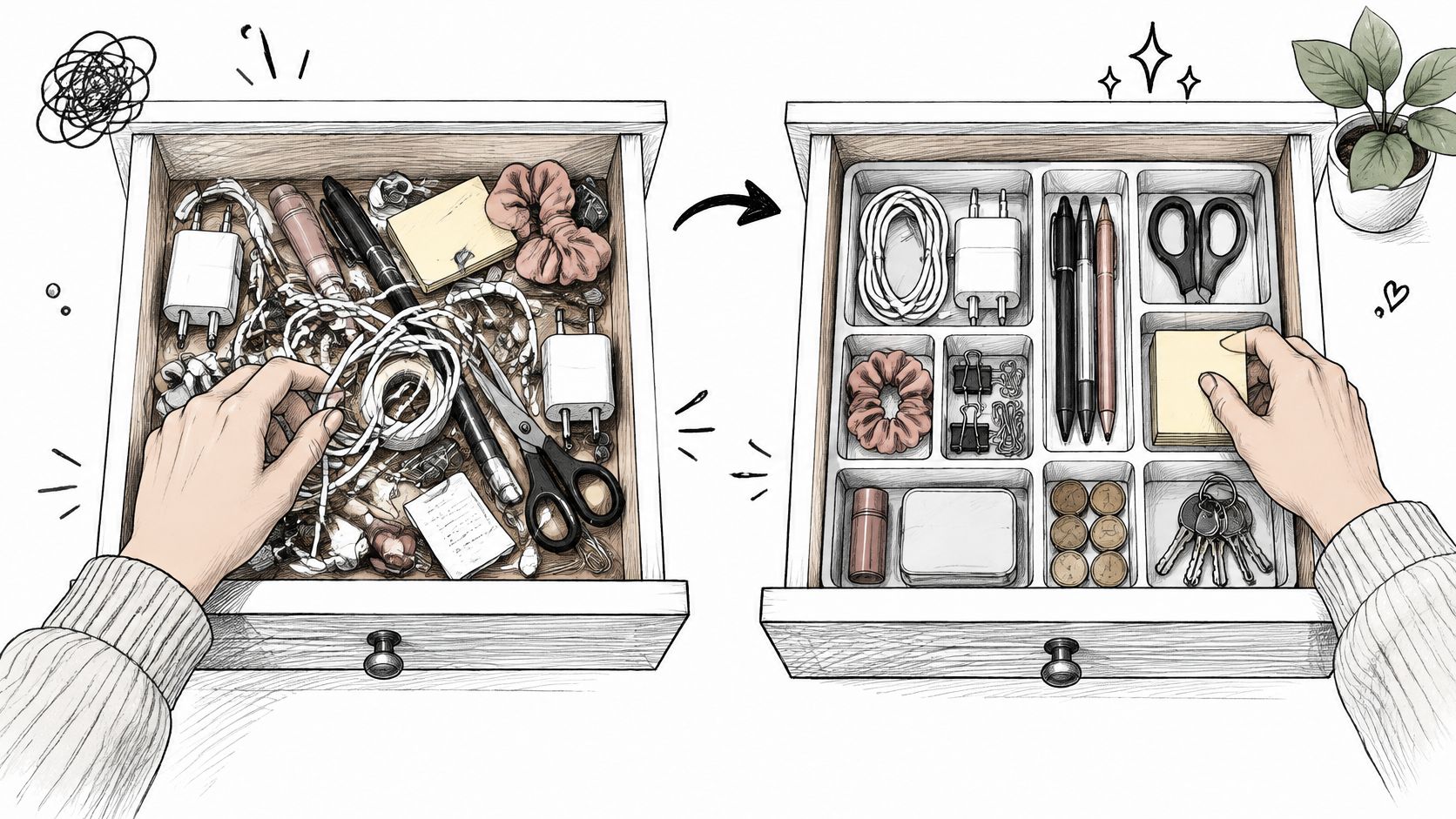
The useful mechanic is recognition followed by visible relief. A POV label alone doesn't create that recognition. The setting, task, and frustration need to resemble something the intended buyer deals with.
Test the situation before changing the product
For a drawer organizer, brief separate scenarios around finding accessories, keeping shared spaces usable, and fitting awkward drawer dimensions. Keep the product demonstration consistent so you can compare which problem attracts qualified interest.
Don't exaggerate the starting mess until the scenario becomes implausible. A staged catastrophe may hold attention while attracting people who enjoy cleanup videos rather than people considering your organizer.
Creative constraint: Show the inconvenience clearly, but spend more of the ad proving the solution than performing frustration.
In the Meta library, compare competitor POV openings within the same niche and placement. Write down the specific trigger: searching, spilling, tangling, carrying, or cleaning. Group ads by trigger rather than by broad labels such as convenience.
Open the associated landing pages and check whether they continue the same story. An ad about fitting shallow drawers should lead to dimensions and configuration options, not just a lifestyle photograph.
Copy the problem-to-demonstration transition, not the competitor's exact scene. The strongest next test may be a neglected use case, especially when competing brands repeat the same exaggerated mess.
6. Reaction or Response Video
The objection is already the hook. A creator responding to a question about an apparel item's price can immediately show the fabric, seams, pockets, and fit. That's more useful than insisting the item is worth it without explaining why.
Start with genuine questions from comments, customer service conversations, or product-page feedback. If you paraphrase a recurring question, present it as a common question rather than fabricating a screenshot from a named customer.
Match the answer to the evidence
Different objections need different response footage:
- Fit: Show the garment on the creator and explain the relevant measurements or size choice.
- Durability: Show actual wear or testing that supports the claim, not a fresh item described as indestructible.
- Price: Explain the features and intended use without inventing a comparison price.
- Convenience: Demonstrate the task from setup through completion.
Broader Facebook ad examples can help distinguish an objection-led opening from a general product pitch. The response format needs a real answer, not a comment sticker placed over unrelated footage.
For competitor research, identify response-style videos within the relevant brand or niche records. Compare the objection wording, the creator's opening answer, and the point where visible evidence begins.
Pay attention to what competitors leave unresolved. If every response discusses softness but none shows pocket depth, that gap may justify a more practical variation.
The trade-off is focus. An ad answering a narrow objection may resonate strongly with informed shoppers while giving cold audiences too little context. Keep the product identifiable, and choose a close that matches the question, such as viewing sizing details rather than a generic instruction to shop.
7. Customer Photo or Review Screenshot Ad
A customer room photograph can make a rug easier to evaluate than another isolated product image. The viewer can inspect its scale beneath a sofa, how the color behaves in an ordinary room, and whether the style resembles their own home.
A review screenshot works differently. It lets the customer's wording carry the claim, so select for relevance rather than maximum praise. A specific observation about fit or assembly gives a buyer something to evaluate.
Preserve context while simplifying the design
Get written permission covering paid advertising use of customer images and reviews. Agree on the permitted edits and usage scope, and avoid exposing personal information unnecessarily.
- Photo treatment: Keep the product visible and resist overlays that obscure the useful room or outfit details.
- Review treatment: Preserve the wording and attribution without cropping away a qualification that changes the meaning.
- Headline treatment: Add a clear buying angle rather than repeating a generic positive sentence.
The guidance on headlines for Facebook ads is relevant when pairing customer material with an advertiser-written headline. Keep that distinction clear: the customer supplies the review, while the brand remains responsible for its added claim.
In the advertising records, compare static and carousel versions from the same brand. Note whether competitors lead with a customer photo, a review, or a product detail, then inspect how the landing page supports that angle.
You can compare creative choices in a competitor library, not competitor conversion rates. Test static UGC against video in your own account while keeping the offer and destination aligned. Refresh the customer material when it no longer represents the product or audience, rather than changing it just to create novelty.
8. Day-in-the-Life or Get-Ready-With-Me Lifestyle Clip
A lifestyle clip should establish the product's job within a routine. For a gym bag, that might mean packing shoes separately, carrying it on a commute, and finding essentials at the locker. Placing the logo in an attractive morning montage doesn't explain the purchase.
For skincare, a get-ready-with-me sequence can show application order, texture, and compatibility with the creator's routine. Keep the product visible early enough that viewers understand what connects the scenes.
Make routine footage commercially useful
Brief the creator on the moment of use and the buying question, not an itinerary. Capture enough context to make the routine believable, then spend the useful screen time on the interaction.
A beverage ad, for example, can show preparation and portability without asking the creator to claim an unsupported health outcome. An apparel clip can show movement and layering without turning every scene into a pose.
Show why the creator reaches for the product, not just where they carry it.
For competitor comparisons, narrow the Meta records by niche and placement, then group lifestyle ads by routine: preparation, commute, workout, or evening use. Note when the product first appears, what the creator does with it, and whether its practical role remains clear without sound.
Check the destination too. A clip centered on a bag's laptop compartment should lead to useful compartment dimensions and product views.
The trade-off is context versus focus. Routine footage can help shoppers picture ownership, but too much unrelated activity buries the selling point. Produce a focused cut from the product-use moment for a separate retargeting test, rather than assuming the full story suits every audience.
UGC ad formats compared by best use, cost, and main risk
| Item | Best for | Production cost | Key risk |
|---|---|---|---|
| Authentic Testimonial Talking-Head Video | Building trust with personal product experiences | Low | Can feel generic if delivery or claims lack authenticity |
| Unboxing and First-Impressions Video | Products where packaging and the reveal matter | Moderate; requires product samples and shipping | Focus may stay on packaging instead of product benefits |
| Product Demonstration or How-To Tutorial | Products with steps, features, or a learning curve | Moderate; requires clear demonstration | Long or staged demos can reduce engagement and authenticity |
| Before-and-After Transformation | Products with visible, demonstrable results | Moderate; needs consistent filming and substantiated claims | Misleading comparisons or unsupported outcome claims |
| Problem-Solution Storytelling (POV Format) | Everyday products that solve a relatable frustration | Low to moderate | Scenarios can feel repetitive or clichéd |
| Reaction or Response Video | Addressing common questions, objections, or myths | Low to moderate | Misrepresenting source content or using references that quickly become dated |
| Customer Photo or Review Screenshot Ad | Social proof using customer content | Very low | Requires permission; reviews must remain accurate and unedited |
| Day-in-the-Life or Get-Ready-With-Me Lifestyle Clip | Products that fit naturally into a routine | Moderate; depends on creator and setting | Product messaging can get lost in the routine |
Turning These UGC Ad Examples Into Your Next Test Plan
The recurring elements aren't handheld footage or informal captions. They're an immediate reason to watch, an inspectable proof device, and an answer to a purchase objection. Aim to establish the hook in the opening moments, but don't force every product into the same edit length or delivery style.
Choose a pair of formats that address different uncertainties. A testimonial and demonstration can compare personal experience with visible operation. An unboxing and lifestyle clip can compare purchase anticipation with everyday usefulness.
Build a comparison you can learn from
Use AdLibrarySpy's Meta advertising records to study competing versions by brand, niche, format, placement, and country; open each record to inspect its copy, landing page, run dates, and related ads. All features are free, with no card required, so this research step costs nothing.
For each candidate, record the hook, product-entry moment, proof, objection, offer, and destination. Treat run duration and repeated variations as reasons to investigate, not as proof that a competitor has found a profitable creative.
Then turn the observations into a controlled production brief:
- Choose the variable: Change the opening angle while retaining the body, or compare formats while retaining the offer.
- Define the evidence: Specify the product action or genuine experience the creator must capture.
- Align the destination: Continue the ad's promise with relevant specifications, instructions, or product options.
- Set the decision rule: Compare purchase efficiency and revenue outcomes alongside attention and click metrics.
Keep audience, placement, optimization event, attribution settings, and budget treatment as consistent as the test allows. Don't declare a winner from a small burst of inexpensive clicks when purchases are the objective.
If production capacity is the constraint, explore UGC ad tools with revid.ai to assess options for preparing variations. Keep real product experience, permissions, disclosures, and claim review separate from production convenience.
The useful output isn't a folder of attractive competitor videos. It's a brief explaining what you'll change, what you'll keep constant, and what result would justify another iteration. That's how UGC ad examples become a repeatable creative process instead of a collection of guesses.
Visit AdLibrarySpy to examine Facebook and Instagram advertising records alongside ecommerce store and product information. Find competing versions of your chosen UGC formats, compare their hooks and landing pages, and save the examples your team will use to brief the next test.
More guides
Try AdLibrarySpy free
Search millions of stores and real Meta ads. No card, no trial — sign up with just your email.